
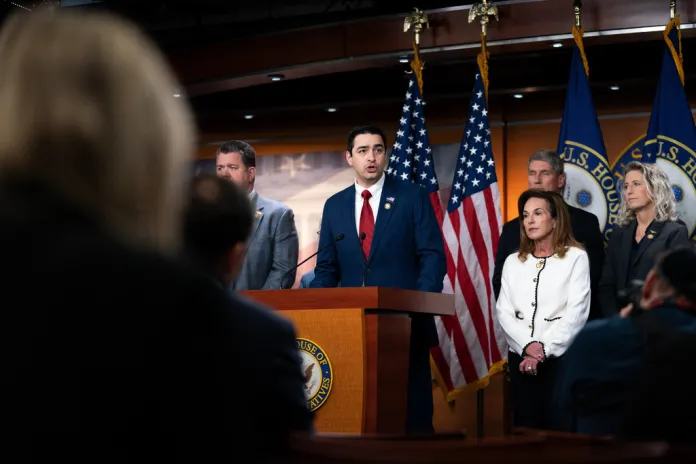
House votes 417-3 to force large data centers to fund grid upgrades
Coveragetap to expand ▾Spectrum: Mostly Center🌍US: 1 · Asia: 1
- Some Democrats, including Rashida Tlaib, criticized the bill and called for a national moratorium on data centers (per Washington Examiner)
- The bill's stated aim is to shield households from rising energy prices by shifting upgrade costs to large energy consumers (per Washington Examiner)
The House of Representatives overwhelmingly approved the Ratepayer Protection Act, voting 417-3 to require large data centers — defined in the legislation as those consuming more than 100 megawatts — to pay for new generation, transmission and other grid infrastructure upgrades (per Washington Examiner).
Backers of the measure presented it as a targeted fix to prevent households from absorbing the rising costs of electricity driven in part by rapid data center growth, saying the largest industrial users should bear the direct cost of the grid improvements they necessitate (per Washington Examiner).
Opponents within the Democratic caucus criticized both the policy and its timing. Representative Rashida Tlaib urged a national moratorium on new data centers, arguing that shifting the burden to corporations does not address broader questions about siting, energy sourcing, or community impacts (per Washington Examiner).
The source reports that criticism primarily came from some Democrats but does not provide extensive detail on amendments, revenue mechanisms, or which utilities would collect or administer the upgrade charges (per Washington Examiner).
The bill's immediate effect, as described in the reporting, is to change who funds generation and transmission upgrades tied to very large electricity loads; Washington Examiner frames that as protecting households from higher bills while Democrats emphasize limits and caution about permitting more data centers without additional safeguards (per Washington Examiner).
The article does not detail how the new charges would be calculated, whether states or utilities would implement them, or the bill's prospects in the Senate — leaving open who ultimately pays and how quickly upgrades would occur (per Washington Examiner).
Policymakers now face decisions about implementation rules, oversight of cost allocation, and whether the Senate will take up the House-passed text (per Washington Examiner).
- House passage shifts the potential financial burden for transmission and generation upgrades from residential electricity consumers in affected utility territories to operators of very large data centers, meaning households in those territories would avoid direct rate increases tied to those specific grid investments (per Washington Examiner). 2) Operators of data centers consuming over 100 megawatts — a narrow subset of hyperscale facilities — would face new infrastructure costs, altering project economics and siting incentives (per Washington Examiner). 3) Democratic critics such as Rashida Tlaib benefit politically by pressing for a moratorium on new data centers, positioning themselves as defenders of community impacts and energy fairness (per Washington Examiner).
Whether the Senate takes up the Ratepayer Protection Act and, if so, whether it amends the threshold, cost-allocation rules, or enforcement mechanisms (per Washington Examiner). 2) Whether House or Senate committees produce implementing language specifying how utilities calculate and collect upgrade fees from data centers consuming over 100 megawatts (per Washington Examiner). 3) Whether any states move to adopt parallel rules or reject federal allocation by changing state utility commission procedures within 6–12 months of enactment (per Washington Examiner).
Left- and right-leaning outlets are covering this story differently — in which facts to emphasize, which context to include, and how to frame causes and consequences.
7 specific areas where coverage diverges — see below.
- Only Washington Examiner is in this pack; it frames the bill as protecting households from rising energy prices and notes Democratic criticism including calls for a moratorium (per Washington Examiner)
- The source does not provide competing accounts to dispute facts; implementation details and practical effects remain unclear (per Washington Examiner)
- No source text explains how the fee would be calculated or collected from data centers or utilities
- No source text names which utilities or states would carry out the upgrades or how costs would be allocated within rate structures
- No source text quantifies the number of data centers or projects that exceed the 100-megawatt threshold or estimates the dollar value of required upgrades
- No source text discusses whether the Senate supports, opposes, or plans amendments to the bill
- Only one numeric figure appears: the vote margin 417-3 and the 100-megawatt threshold are both provided by Washington Examiner (per Washington Examiner)
- The source frames the bill as intended to shield households from rising energy prices — it does not identify a specific triggering legislative event that prompted the measure (per Washington Examiner)
- Washington Examiner attributes the bill's purpose to its supporters and reports Rashida Tlaib as a named critic calling for a moratorium (per Washington Examiner)