
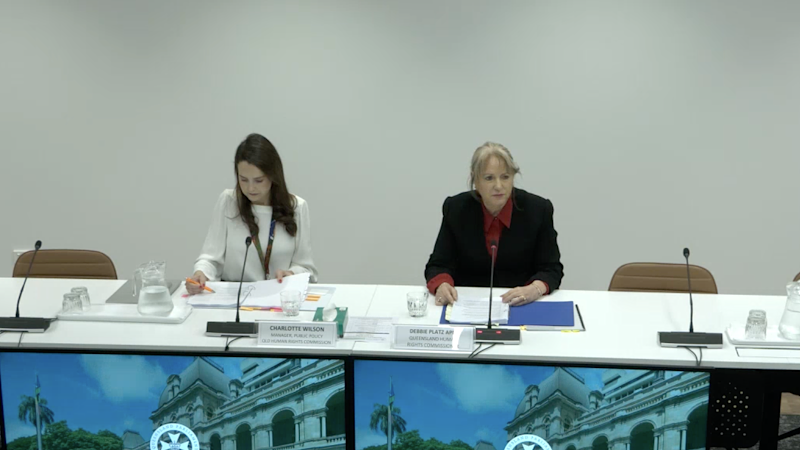
Human Rights Commissioner says Queensland bail crackdown may increase offending, warns of prison harms
Topic: generalRegion: asia pacificUpdated: i1 outletsSources: 1Spectrum: Center Only⏱ 3 min read
Story Summary
SITUATION
Queensland Human Rights Commissioner Debbie Platz told a parliamentary committee the Crisafulli government's proposed bail changes — a new breach-bail offence and mandatory 12-month sentence — are likely to increase incarceration and, over the medium to long term, reoffending (per smh.com.au). Platz also warned the bill will raise prison overcrowding and safety risks for staff and prisoners and the government has conceded the changes would lift the number of people sent to already strained jails (per smh.com.au).
Coveragetap to expand ▾Spectrum: Center Only🌍Asia: 1
Political Spectrum
Position is inferred from coverage mix.
i1 outlets · Center
Left
Center
Right
Left: 0
Center: 1
Right: 0
Geography Coverage
Distribution of where coverage is coming from.
i1 unique outlets · Dominant: Asia
KEY FACTS
- The bill would create a stricter new bail test and a mandatory 12-month jail term for adults and children committing serious crimes while already on bail (per smh.com.au).
- Debbie Platz told a parliamentary committee the available evidence suggests the proposed breach bail offence and mandatory sentencing scheme will not reduce offending except in the short term (per smh.com.au).
- Platz said incarceration is likely to increase the chance that adults and children will reoffend, so the bill may lead to more offending in the medium- to long-term (per smh.com.au).
- Platz warned the increased prison population raises risks to staff and prisoner safety and undermines rehabilitation (per smh.com.au).
HISTORICAL CONTEXT
The immediate backdrop is the broader policy environment of 2025–26 in which state governments moved to tighten criminal-sentencing and bail rules in response to high-profile offending while on bail and rising public concern about violent and repeat crime.
Structurally, those moves sit against international and domestic human-rights frameworks, notably Australia’s obligations under the International Covenant on Civil and Political Rights (ICCPR, 1966) and the Convention on the Rights of the Child (1989), and Queensland’s own Human Rights Act 2019, which came into force to require human-rights compatibility assessments of new laws.
Brief
Queensland Human Rights Commissioner Debbie Platz delivered a direct rebuke of the Crisafulli government's proposed bail overhaul, telling a parliamentary committee that a new breach-bail offence and a mandatory 12-month sentence for people who commit serious crimes while on bail would expand incarceration without reducing offending except briefly (per smh.com.au).
Platz pointed to evidence that imprisonment—especially for children—tends to increase reoffending risk and said the policy will likely raise offending in the medium to long term as more people cycle through detention (per smh.com.au).
Platz also described concrete operational pressures: her office logged 132 prison overcrowding complaints last financial year and more than 100 so far this year, and she warned that sending additional people into an already under-pressure jail system will heighten safety risks for staff and prisoners and further undermine rehabilitation (per smh.com.au).
The government has effectively conceded its package will increase the jail population (per smh.com.au). The commissioner framed her intervention around human rights and practical corrections outcomes rather than political rhetoric, arguing mandatory custodial penalties remove judicial discretion and may produce counterproductive public-safety outcomes (per smh.com.au).
The Crisafulli government is pursuing the bill as a tougher stance on bail for serious offending; Platz’s evidence to the committee emphasized empirical studies and operational complaints to challenge the policy’s likely effectiveness (per smh.com.au).
What happens next is a parliamentary committee process where lawmakers will weigh Platz’s evidence against the government’s stated aims; Platz’s appearance represents a formal human-rights office challenge at a point when the government still needs legislative passage (per smh.com.au).
If the law passes unchanged, Queensland’s prison population will rise and the state corrections system will face increased overcrowding pressures with likely consequences for safety and rehabilitation outcomes (per smh.com.au).
Why it matters
- - People in Queensland prisons bear direct costs: increased incarceration will raise the number of adults and children in custody, worsening overcrowding as shown by 132 complaints last financial year and more than 100 this year (per smh.com.au). - Prison staff and prisoners face heightened safety risk because Platz warns the bill will lift the prison population in an already under-pressure system, undermining rehabilitation (per smh.com.au). - Queensland taxpayers will fund higher incarceration costs if the government’s changes send more people to jail, a fiscal burden the government has effectively acknowledged (per smh.com.au). - The Crisafulli government benefits politically from a tougher bail stance; Platz’s evidence challenges whether those political gains will produce the claimed public-safety benefits (per smh.com.au).
What to watch next
Whether the parliamentary committee incorporates Debbie Platz’s recommendations or amendments to remove mandatory custodial terms before the bill reaches a full vote (per smh.com.au). 2) A specific vote on the bill in the Queensland parliament and any recorded estimates of projected prison population increases provided by the government during committee reporting (per smh.com.au). 3) Whether the Department of Corrective Services records further overcrowding complaints and operational indicators after the bill’s passage or amendment (per smh.com.au).
Where sources differ
7 dimensionsFraming differences
?- Only smh.com.au is in this pack; it frames the issue as a human-rights and corrections-safety problem and reports both Platz’s critique and the government’s concession that jail numbers will rise (per smh.com.au).
Disputed or unclear
?- No other outlets in this pack present a counter-analysis asserting the bill will reduce offending long-term; that claim remains untested in the sources provided (per smh.com.au).
Omitted context
?- No source in this pack provides the government’s detailed modelling of projected prison population increases or the precise projected numbers that would result from the bill.
- No source here cites specific empirical studies or datasets by name that Platz referenced to support her claim that incarceration increases reoffending.
- No source in this pack describes alternative community-based or non-custodial measures the government might deploy instead of mandatory sentences.
Conflicting figures
?- Only smh.com.au provides the complaint counts: 132 prison overcrowding complaints last financial year and more than 100 already this year (per smh.com.au).
Disputed causality
?- smh.com.au reports Platz’s causal claim that mandatory custodial sentences will increase reoffending and prison population; the government concedes population will rise but the pack lacks an empirical rebuttal from the government beyond the concession (per smh.com.au).
Attribution disputes
?- Debbie Platz attributes increased reoffending risk to incarceration; the Crisafulli government concedes higher prison numbers but frames the bill as tougher bail enforcement (per smh.com.au).
Sources
1 of 1 linked articles