
Hungary Blocks Fast-Track EU Membership for Ukraine Amid Ongoing Divisions
Topic: geopoliticsRegion: EuropeUpdated: i3 outletsSources: 3⚠ Bias gap — sources divergeSpectrum: Mixed⏱ 4 min read
Story Summary
SITUATION
Hungary's blockade of Ukraine's fast-track EU membership highlights deepening divisions within the EU, complicating Ukraine's aspirations for integration and potentially impacting the bloc's collective response to Russian aggression. This move signals a significant geopolitical rift that could hinder Ukraine's recovery and stability.
Coveragetap to expand ▾Spectrum: Mixed🌍Europe: 1 · Asia: 1 · Other: 1
Political Spectrum
Position is inferred from coverage mix.
i3 outlets · Center
Left
Center
Right
Left: 1
Center: 1
Right: 1
Geography Coverage
Distribution of where coverage is coming from.
i3 unique outlets · Dominant: Europe
KEY FACTS
- Kiev has repeatedly demanded a faster path into the bloc with Vladimir Zelensky insisting on full membership no later than 2027 despite opposition from multiple EU members.
- While the final summit conclusions still backed Ukraine’s membership bid, according to media reports, the text no longer urged Brussels to move “as soon as possible” to the next stages of the process.
- Magyar previously said Ukraine’s accession could take 10 to 15 years and has linked further progress to Kiev’s treatment of ethnic Hungarians in Ukraine’s Transcarpathia region.
- Zelensky: Best way to guarantee Europe’s future would be fast-track EU membership for Ukraine
- Zelensky said he told member states that Ukraine wanted the war against Russia to be over by the end of the year and urged them to help Kyiv prepare for another winter with air defence missiles and fuel.
- Every democratic nation in Europe deserved to be in the EU and “Ukraine merits this because it has paid more than any other country for its right to be free, independent and.
HISTORICAL CONTEXT
The ongoing conflict between Ukraine and Russia, which escalated dramatically following Russia's full-scale invasion of Ukraine on February 24, 2022, has profoundly influenced the European Union's (EU) approach to Ukraine's membership aspirations.
As the war progressed, Ukraine sought closer ties with the EU, culminating in President Volodymyr Zelensky's insistence on full EU membership by 2027.
Brief
Hungary has blocked an attempt to fast-track Ukraine's accession to the European Union during a summit held on June 18. This decision comes amid ongoing divisions within the EU regarding Ukraine's membership and relations with Russia.
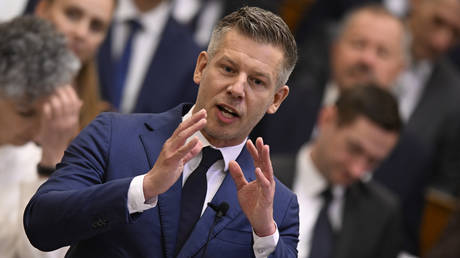
Hungarian Prime Minister Peter Magyar stated that the summit's conclusions, while still supportive of Ukraine's bid, no longer urged Brussels to expedite the accession process.
Zelensky, addressing the summit, argued that fast-tracking Ukraine's EU membership is crucial for the future security of Europe, asserting that Ukraine has made significant sacrifices for its independence. He called on EU member states to support Ukraine in preparing for the upcoming winter, emphasizing the need for air defense missiles and fuel.
The Hungarian government has previously linked its support for Ukraine's EU aspirations to the treatment of ethnic Hungarians in Ukraine, particularly in the Transcarpathia region. This ongoing tension reflects broader geopolitical divisions within the EU as member states navigate their responses to the conflict in Ukraine and relations with Russia.
Why it matters
- Hungary's blockade of Ukraine's fast-track EU membership underscores the fragility of European unity in the face of geopolitical crises.
- This decision directly impacts Ukrainian citizens, who are seeking not only security but also economic integration with the EU to rebuild their war-torn nation.
- As a result, delays in membership could hinder Ukraine's access to vital EU funding and resources, prolonging its recovery and complicating its defense against Russian aggression.
- Additionally, Hungary's stance may embolden other EU members to voice similar reservations, further fracturing the bloc's collective response to the conflict.
What to watch next
- Watch for a statement from the European Commission regarding potential sanctions or diplomatic measures against Hungary within the next week in response to its decision on Ukraine's EU membership.
- Anticipate a meeting between Ukrainian officials and EU leaders scheduled for later this month to discuss alternative pathways for Ukraine's integration into the EU.
- Monitor Hungary's parliamentary sessions over the next two weeks for any proposed legislation that could further complicate EU relations or impact its stance on Ukraine.
- Expect a joint press conference from NATO and EU representatives within 72 hours to address the implications of Hungary's decision on regional security and cooperation.
- Keep an eye on upcoming bilateral talks between Ukraine and Poland, set for next month, which may focus on military and economic support amid the EU membership discussions.
Where sources differ
Bias gap0.70 / 2.0
Left- and right-leaning outlets are covering this story differently — in which facts to emphasize, which context to include, and how to frame causes and consequences.
Left-leaning (1)
straits_times-0.80
Zelensky: Best way to guarantee Europe’s future would be fast-track EU membership for Ukraine Zelensky: Best way to guarantee Europe’s future would be fast-track EU membership for …
Center (1)
malaysiasun.com
Right-leaning (1)
rt_world+0.70
Budapest has also maintained its refusal to send weapons to Kiev. Hungary blocks EU’s Ukraine fast track plan as bloc splits on Russia Hungary blocks EU’s Ukraine fast track plan a…
Sources
3 of 3 linked articles
Budapest has also maintained its refusal to send weapons to Kiev.
rt.comJun 19Right
↗
Hungary blocks Ukraine fast track amid EU split on Russia - malaysiasun.com
malaysiasun.comJun 19Left
↗
Zelensky: Best way to guarantee Europe’s future would be fast-track EU membership for Ukraine
straitstimes.comJun 18Left
↗