
Chicago May Day Rally: Taxpayer
Coveragetap to expand ▾Spectrum: Right Only🌍US: 1
- The Chicago Teachers Union (CTU) organized a deal with Chicago Public Schools (CPS) to bus students to a May Day rally at Union Park (per Washington Examiner).
- The rally began with an 'ICE out' protest in Logan Square, attended by fourth and fifth graders brought by their teachers (per Washington Examiner).
- The event has sparked debate about the role of public schools in political activism and the appropriate use of educational resources (per Washington Examiner).
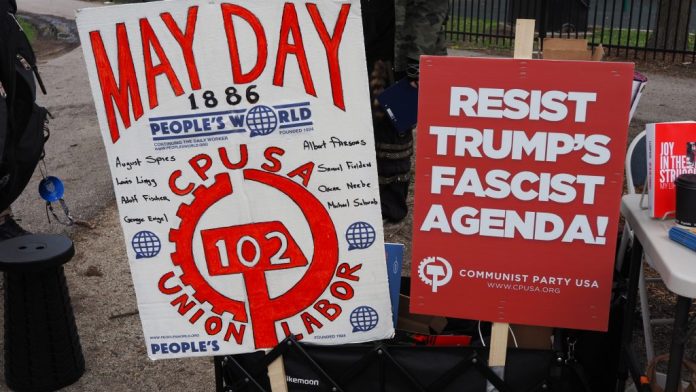
The Chicago Teachers Union (CTU) recently orchestrated an initiative to transport students from Chicago Public Schools (CPS) to a May Day rally at Union Park, presenting it as a labor history lesson.
This move was intended to provide students with a practical learning experience outside the classroom, aimed at helping them 'find their voice.' However, the event has drawn criticism for diverging from its educational intent, as observed by those who attended.
The rally commenced with an 'ICE out' protest in Logan Square, where classes of fourth and fifth graders were brought by their teachers. This aspect of the event has raised questions about the appropriateness of involving young students in politically charged activities, especially when funded by taxpayer dollars.
Critics argue that the rally did not fulfill its advertised purpose as an educational experience. Instead, they claim it served more as a platform for political activism, which has led to a broader debate about the role of public schools in such activities.
The use of public resources for this event has been particularly contentious, with some questioning whether it was an appropriate allocation of taxpayer funds. The CTU's decision to involve students in the rally reflects ongoing tensions within the union and the broader educational community in Chicago.
These tensions have been exacerbated by recent controversies surrounding the CTU's leadership and the performance of Chicago Public Schools, particularly concerning literacy rates. This incident highlights the complex interplay between education, politics, and public funding.
It raises important questions about how educational institutions should engage with political issues and the extent to which they should involve students in such activities.
As the debate continues, stakeholders are considering the implications of this event for future educational initiatives and the potential need for clearer guidelines regarding the use of public resources in politically sensitive contexts.
- Chicago taxpayers bear the financial cost of transporting students to politically charged events, raising concerns about the appropriate use of public funds.
- The Chicago Teachers Union benefits from increased visibility and engagement in political activism, potentially influencing public opinion and policy.
- The involvement of young students in political rallies may impact their educational experience and the perception of public schools' roles in political discourse.
- Whether the Chicago Public Schools will review their policies on student participation in political events.
- Potential responses from Chicago taxpayers and local government officials regarding the use of public funds for such events.
- Any changes in the Chicago Teachers Union's approach to political activism involving students.
- Washington Examiner emphasizes the divergence from educational intent, while other outlets may not cover the event.
- The educational value of the rally as claimed by the CTU is disputed by observers.
- No source mentions the specific educational outcomes or feedback from students and teachers involved.
- No specific figures on the number of students transported or the cost to taxpayers are provided.
- There is no disagreement on causality; the event was organized by the CTU as described.
- Washington Examiner attributes the organization of the event to the CTU and CPS.