
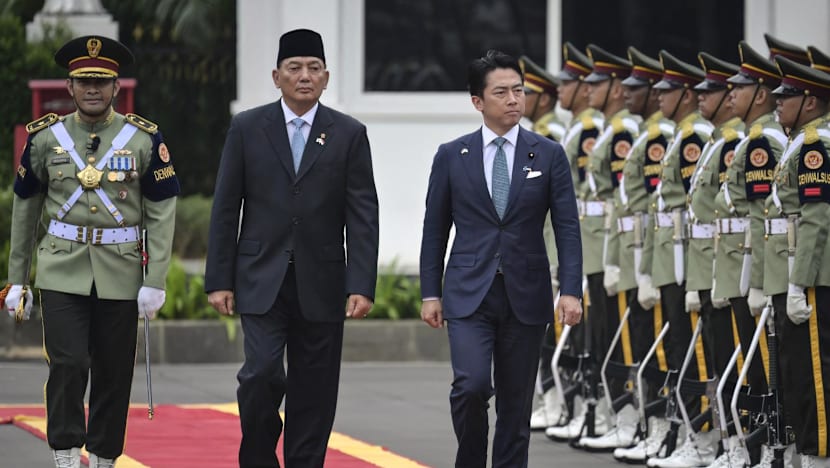
Japan and Indonesia Enhance Defense Cooperation Following Tokyo's Arms Export Shift
Coveragetap to expand ▾Spectrum: Mixed🌍Asia: 1 · Other: 1
- Japan has recently revised its arms export policy, allowing for increased defense cooperation with other nations (per The Straits Times).
- Indonesia and Japan are in discussions to enhance their defense ties in light of Japan's new policy (per The Straits Times).
- Japan's policy shift is part of a broader strategy to strengthen regional security alliances (per The Straits Times).
- Indonesia is seeking to modernize its military capabilities and sees Japan as a key partner in this effort (per The Straits Times).
- Japan's decision to unlock arms exports is seen as a response to increasing regional security challenges (per The Straits Times).
Japan and Indonesia are actively engaging in discussions to bolster their defense cooperation following Japan's recent decision to unlock its arms export policy. This policy shift allows Japan to export arms more freely, marking a significant change in its post-World War II defense posture.
The discussions between the two nations focus on potential arms deals and joint military exercises, reflecting a mutual interest in enhancing regional security. Indonesia, aiming to modernize its military capabilities, views Japan as a strategic partner in this endeavor.
Japan's decision to revise its arms export policy is part of a broader strategy to strengthen its regional security alliances amid growing security challenges. This move is seen as a response to the evolving geopolitical landscape in the Asia-Pacific region, where tensions have been rising.
By enhancing defense ties with Indonesia, Japan seeks to play a more proactive role in regional security. The outcome of these discussions could lead to significant developments in the defense capabilities of both nations, potentially impacting the balance of power in the region.
- Indonesia's military modernization efforts could lead to increased defense spending, impacting its economy and regional military balance.
- Japan's arms export policy shift benefits its defense industry, potentially boosting economic growth and technological advancements.
- Regional security dynamics may shift as Japan strengthens alliances, affecting neighboring countries' defense strategies.
- Whether Japan and Indonesia finalize any arms deals by the end of the year.
- Potential joint military exercises between Japan and Indonesia in the coming months.
- Reactions from neighboring countries to Japan's increased defense cooperation with Indonesia.
- The Straits Times emphasizes Japan's strategic shift in regional security, while other outlets may focus on economic implications.
- No disputes or unclear facts identified from the source.
- No source mentions the specific regional security challenges prompting Japan's policy shift.
- No differing figures identified from the source.
- No causality disagreements identified from the source.
- No differing attributions identified from the source.