
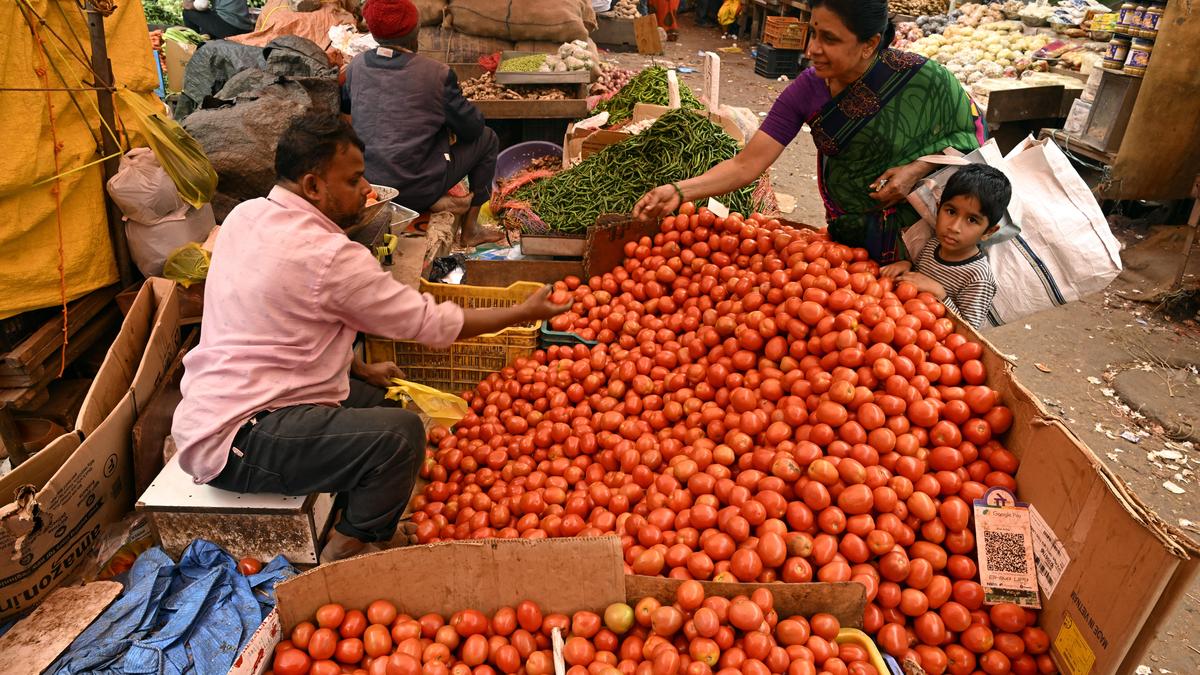
India's Inflation Projected to Reach 4% in April Amid Rising Food Prices
Coveragetap to expand ▾Spectrum: Center Only🌍Other: 3 · Asia: 1
- India's Consumer Price Index (CPI) inflation is projected to hit 4% in April 2026 (per boldnewsonline.com).
- The increase in inflation is attributed to rising food prices and global economic pressures (per businessnewsthisweek.com).
- Food prices have been a significant contributor to the inflationary trend, exacerbated by supply chain disruptions (per boldnewsonline.com).
- Global economic uncertainties, including geopolitical tensions, are impacting inflation rates (per businessnewsthisweek.com).
- The Reserve Bank of India may need to adjust monetary policy in response to inflationary pressures (per boldnewsonline.com).
- There is a debate among economists about the effectiveness of current fiscal policies in mitigating inflation (per boldnewsonline.com).
India is bracing for a rise in inflation, with the Consumer Price Index (CPI) expected to reach 4% in April 2026. This increase is primarily driven by escalating food prices and compounded by global economic pressures. Analysts from boldnewsonline.com and businessnewsthisweek.com agree that these factors are creating significant challenges for the Indian economy.
The rise in food prices is largely due to supply chain disruptions, which have been exacerbated by ongoing geopolitical tensions. These disruptions have led to increased costs for essential goods, impacting consumers across the country. The Reserve Bank of India (RBI) faces pressure to respond to these inflationary trends.
While some analysts suggest that monetary policy adjustments may be necessary, others debate the effectiveness of current fiscal policies in addressing the root causes of inflation. The potential impact on consumer purchasing power and overall economic growth is a major concern for policymakers.
Global economic uncertainties, including geopolitical tensions, are further influencing inflation rates. These external factors are making it difficult for domestic policies to stabilize the economy effectively. As the situation evolves, the Indian government and the RBI will need to carefully consider their strategies to mitigate the impact on the economy.
The debate among economists highlights differing views on how best to tackle inflation. Some argue for more aggressive monetary policy interventions, while others emphasize the need for structural reforms to address supply chain issues. The outcome of these discussions will likely shape India's economic policy in the coming months.
Overall, the projected rise in inflation underscores the complex interplay between domestic and global factors affecting the Indian economy. As policymakers navigate these challenges, the focus will remain on balancing inflation control with sustainable economic growth.
- Indian consumers face reduced purchasing power due to rising inflation, impacting their ability to afford essential goods.
- The Reserve Bank of India may need to adjust interest rates, affecting borrowing costs for businesses and individuals.
- Global economic pressures, including geopolitical tensions, contribute to inflation, complicating domestic policy responses.
- Supply chain disruptions are a key factor in rising food prices, highlighting vulnerabilities in India's economic infrastructure.
- Whether the Reserve Bank of India adjusts interest rates in response to inflationary pressures.
- The impact of geopolitical tensions on global supply chains and subsequent effects on Indian inflation.
- Potential government interventions to stabilize food prices and support consumer purchasing power.
- Both sources agree on the inflation projection but differ in emphasis on the role of global pressures versus domestic policy challenges.
- The effectiveness of current fiscal policies in mitigating inflation is debated among analysts.
- No source mentions specific geopolitical events contributing to global economic pressures affecting India.
- Both sources consistently report the 4% inflation projection.
- Sources agree on the causes of inflation but differ on the primary driver — food prices versus global pressures.
- Both sources attribute inflation to rising food prices and global pressures but do not specify particular geopolitical events.