
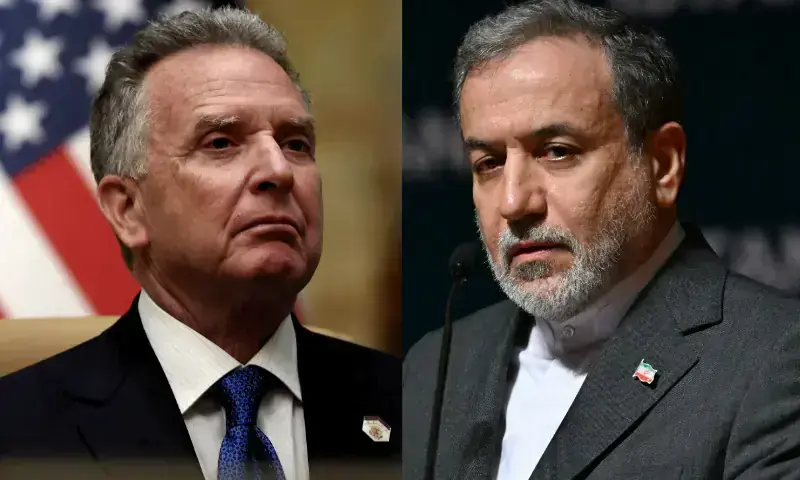
Iran Delays Response to US Amid Naval Clashes in Gulf
Coveragetap to expand ▾Spectrum: Center Only🌍ME: 1
- On Friday, a US fighter jet fired on and disabled two Iranian-flagged tankers, accusing them of challenging its naval blockade (per dawn.com).
- Iran's navy responded to the US actions, claiming to have acted against 'American terrorism' (per dawn.com).
- US President Donald Trump stated he expected Iran's response to Washington's proposal for a deal 'supposedly tonight' (per dawn.com).
- A state of relative calm has returned to the Strait of Hormuz following days of naval clashes (per dawn.com).
- Iran has not publicly indicated whether it has sent a response to the US proposal (per dawn.com).
Tensions in the Gulf have escalated following a recent incident where a US fighter jet disabled two Iranian-flagged tankers, prompting Iran to keep Washington waiting for a response to its latest negotiating position.
US President Donald Trump had anticipated a reply from Iran regarding a proposal aimed at extending a fragile truce and initiating peace talks, suggesting that a response was expected 'supposedly tonight.' However, as of now, there are no public indications that Iran has communicated its stance.
In the wake of these developments, Iranian Foreign Minister Abbas Araghchi has publicly questioned the seriousness of American diplomacy, indicating a lack of trust in US leadership. The Iranian navy has claimed to have responded to what it termed 'American terrorism,' although the situation has reportedly calmed in the Strait of Hormuz after days of sporadic clashes.
The US is keen on negotiating a deal to stabilize the region after more than two months of fighting, yet Iran's silence raises concerns about the viability of these diplomatic efforts. The ongoing military actions and diplomatic maneuvers reflect the complex dynamics at play, as both nations navigate a path fraught with mistrust and strategic interests.
- The US disabled two Iranian-flagged tankers, escalating military tensions and risking further conflict in the Gulf.
- Iran's delay in responding to US proposals could prolong instability in the region, affecting shipping routes critical for global oil supply.
- The lack of trust in US diplomacy, as expressed by Iranian officials, complicates efforts to negotiate a lasting peace and could lead to further military engagements.
- Whether Iran provides a formal response to the US proposal by the end of the week.
- Any further military actions by the US in the Gulf following the incident with the Iranian tankers.
- The outcome of ongoing negotiations between US and Iranian officials through Pakistani mediators.
- {"framing":[],"numbers":[],"causality":[],"attribution":[],"omitted_context":[],"disputed_or_unclear":[],"notable_quotes_or_claims":[]}