
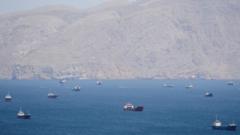
US Warns Shipping Firms of Sanctions for Paying Iran in Hormuz
Coveragetap to expand ▾Spectrum: Mostly Center🌍Other: 3 · US: 1 · Europe: 1
- The United States has warned shipping companies they could face sanctions if they pay Iran for safe passage through the Strait of Hormuz (per BBC, Chicago Tribune).
- The US Office of Foreign Assets Control (OFAC) issued an alert stating that US persons and companies are generally banned from paying Iranian government entities (per BBC).
- Non-US persons may also risk exposure to sanctions if they pay Iran for transit through the strait (per BBC).
- Iran has severely limited traffic through the Strait of Hormuz since the war began in February (per BBC).
- The US has enforced a naval blockade on Iranian ports, further complicating maritime traffic in the region (per BBC, Inshorts).
- The Strait of Hormuz is a critical chokepoint for global oil shipments, with a significant portion of the world's oil passing through it (per Chicago Tribune).
- The US sanctions threat aims to prevent Iran from benefiting financially from the tolls imposed on shipping companies (per Chicago Tribune).
The United States has issued a stern warning to shipping companies, threatening them with sanctions if they pay Iran for safe passage through the Strait of Hormuz. This move comes as Iran has significantly restricted traffic through the strait since the onset of the war in February.
The US Office of Foreign Assets Control (OFAC) has made it clear that US persons and companies are generally prohibited from making payments to Iranian government entities. Non-US entities are also at risk of sanctions if they engage in such transactions. The Strait of Hormuz is a vital maritime corridor, with a substantial portion of the world's oil supply passing through it.
Iran's recent actions to limit traffic have heightened tensions in the region, prompting the US to enforce a naval blockade on Iranian ports. This blockade further complicates the already strained maritime traffic, as shipping companies navigate the geopolitical complexities of the area.
The US sanctions threat is part of a broader strategy to prevent Iran from financially benefiting from the tolls it imposes on shipping companies. The OFAC alert emphasized the significant sanctions risk for maritime industry participants involved with vessels calling at Iranian ports.
This warning underscores the US's commitment to maintaining pressure on Iran's shipping sector and ports. Iran's restrictions on the Strait of Hormuz are seen as a response to the ongoing conflict and the US's military actions in the region. The strait's strategic importance cannot be overstated, as it serves as a critical chokepoint for global oil shipments.
The potential for disruption in this area poses significant risks to international energy markets. The US's actions reflect its broader policy objectives in the Middle East, aiming to curtail Iran's influence and economic gains. The sanctions threat is a clear message to the maritime industry about the risks of engaging with Iran under the current geopolitical climate.
As the situation unfolds, shipping companies must carefully assess their operations in the region to avoid potential sanctions. The US's firm stance on this issue highlights the complexities of navigating international trade amid ongoing conflicts and geopolitical tensions.
- Shipping companies face significant financial risks if they pay Iran for transit, as they could be sanctioned by the US, impacting their operations and profitability.
- The US's sanctions threat aims to prevent Iran from gaining financial benefits from tolls, affecting Iran's economy amid ongoing conflicts.
- The Strait of Hormuz is a critical chokepoint for global oil shipments, and disruptions here could lead to increased oil prices, affecting global energy markets.
- The US's enforcement of a naval blockade on Iranian ports further complicates maritime traffic, impacting global trade routes and shipping efficiency.
- Whether shipping companies comply with the US sanctions threat and avoid paying Iran for transit.
- The impact of the US naval blockade on Iranian ports on global shipping and oil prices.
- Potential responses from Iran to the US's sanctions threat and naval blockade.
- Any changes in US policy or additional sanctions related to the Strait of Hormuz.
- BBC emphasizes the sanctions risk for non-US persons, while Chicago Tribune focuses on the US's broader strategy to prevent Iran's financial gains.
- No source mentions the specific impact on global oil prices or the potential economic consequences for Iran beyond the immediate sanctions threat.
- The sources do not provide detailed information on the specific maritime companies affected by the sanctions threat.