
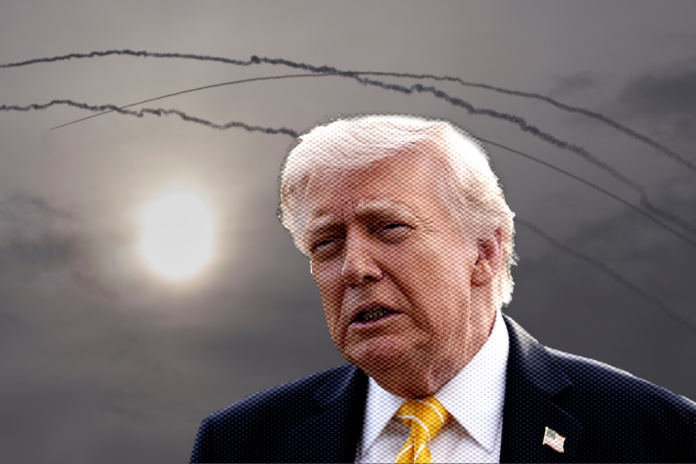
Trump's Iran Strategy Faces Criticism Amid Nuclear Concerns
Coveragetap to expand ▾Spectrum: Mixed🌍US: 2 · Other: 1
- The Trump administration's military action against Iran is unpopular among Americans, with 61% disapproving (per washingtonexaminer.com).
- Two potential errors in the administration's strategy are identified: attacking Iran without nuclear weapons and failing to act if Iran develops them (per washingtonexaminer.com).
- The Trump administration's approach is characterized by risk-taking, as seen in both Trump's business and political careers (per washingtonexaminer.com).
The Trump administration's military strategy towards Iran is under scrutiny, with significant public disapproval and concerns about potential strategic missteps. Secretary of State Marco Rubio recently announced the cessation of offensive measures under Operation Epic Fury, yet the administration's actions remain deeply unpopular among the American public.
A Pew Research poll highlights that 61% of Americans disapprove of the military action, with a stark partisan divide: 70% of Republicans support the operation, while 90% of Democrats oppose it. Critics point to two major potential errors in the administration's approach.
The first is the risk of attacking Iran when it does not possess nuclear weapons or is not on the verge of developing them. This could lead to unnecessary escalation without a clear threat. The second error would be failing to act if Iran were to develop nuclear capabilities and intend to use them, potentially compromising regional security.
President Donald Trump, known for his risk-taking in both business and politics, faces a complex decision-making landscape. The administration's actions are part of a broader strategy that has been met with skepticism both domestically and internationally.
The cessation of Operation Epic Fury's offensive measures marks a pause in active military engagement, but the underlying tensions and strategic uncertainties persist. The administration's calculus must balance immediate security concerns with long-term geopolitical implications.
As the situation evolves, the administration's decisions will be closely watched by both allies and adversaries. The potential for miscalculation remains a significant concern, with the stakes involving not only military outcomes but also diplomatic relations and regional stability.
The broader context of U.S.-Iran relations, marked by historical tensions and recent escalations, adds complexity to the administration's strategic choices. The outcome of these decisions will have lasting impacts on the region and on U.S. foreign policy.
- American public opinion is divided, with 61% disapproving of the military action, impacting domestic support for the administration's foreign policy.
- The potential strategic errors identified could lead to unnecessary military escalation or failure to prevent nuclear proliferation, affecting regional security.
- The Trump administration's risk-taking approach influences its decision-making process, with implications for both domestic and international relations.
- Whether the Trump administration adjusts its strategy in response to public disapproval and strategic concerns.
- Any developments in Iran's nuclear capabilities that might trigger a U.S. response.
- The impact of the cessation of Operation Epic Fury's offensive measures on regional dynamics.
Left- and right-leaning outlets are covering this story differently — in which facts to emphasize, which context to include, and how to frame causes and consequences.
7 specific areas where coverage diverges — see below.
- The Washington Examiner highlights public disapproval and potential strategic errors, while other outlets may focus on different aspects of the administration's strategy.
- The exact status of Iran's nuclear capabilities and intentions remains a point of contention.
- No source mentions the specific actions by Iran that may have triggered the U.S. military response.
- Different sources may report varying levels of public support or opposition to the military action.
- There is a lack of clarity on what specific actions by Iran prompted the U.S. military response.
- Responsibility for escalating tensions is attributed differently across sources.