
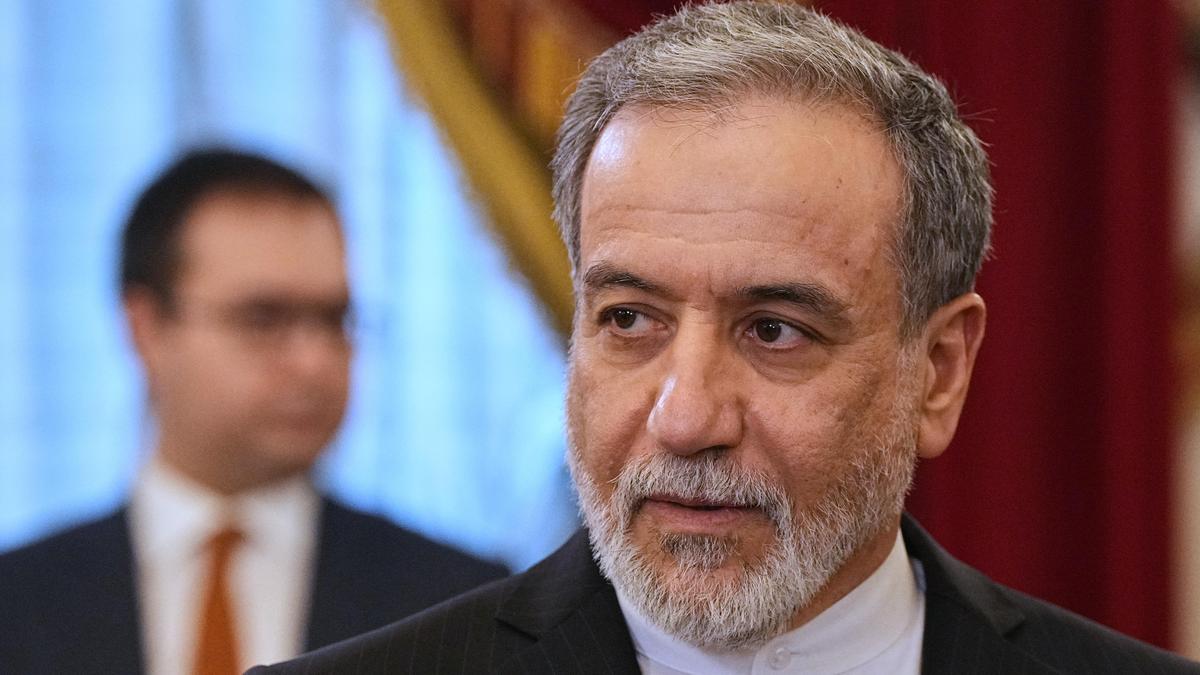
Iran FM says seeking China's support for 'new post-war' regional framework
Coveragetap to expand ▾Spectrum: Center Only🌍Asia: 3 · Other: 2
- Iranian Foreign Minister Abbas Araghchi announced Tehran's intention to seek China's support for a new regional framework on May 6, 2026 (per thehindu.com).
- The proposed framework aims to balance development and security in the region (per thehindu.com).
Iran is actively seeking China's support to establish a new regional framework in the aftermath of its conflict with the United States. On May 6, 2026, Iranian Foreign Minister Abbas Araghchi articulated Tehran's vision for a framework that balances development and security, emphasizing the strategic importance of China's involvement.
This move underscores Iran's efforts to realign its regional alliances and stabilize its geopolitical standing following the recent hostilities. Araghchi's statement highlights Iran's trust in China as a pivotal partner in this initiative.
The Iranian government views Beijing's support as crucial for the success of the proposed framework, which aims to foster a stable and secure environment conducive to economic growth and development in the region. The backdrop to this diplomatic outreach is the ongoing conflict between Iran and the United States, which has significantly impacted regional dynamics.
Iran's appeal to China reflects a strategic pivot towards strengthening ties with major global powers outside the Western sphere, seeking to counterbalance the influence of the United States and its allies.
China's potential role in this framework could signal a shift in the balance of power in the Middle East, as Beijing has increasingly sought to expand its influence through economic and diplomatic means. Iran's initiative may also align with China's broader Belt and Road Initiative, which aims to enhance connectivity and cooperation across Asia and beyond.
The success of this proposed framework will depend on China's willingness to engage and the broader international community's response. As Iran navigates its post-conflict landscape, the support of a major power like China could prove pivotal in shaping the region's future trajectory.
This development highlights the complex interplay of regional and global interests, as Iran seeks to redefine its role and relationships in a rapidly changing geopolitical environment.
- Iranian civilians bear the concrete costs of the conflict with the United States, facing economic instability and security challenges.
- China benefits from the conditions that produced this event by potentially expanding its influence in the Middle East through Iran's proposed framework.
- The balance of power in the Middle East could shift if China supports Iran's initiative, affecting regional security dynamics.
- Whether China formally agrees to support Iran's proposed regional framework in the coming months.
- Iran's diplomatic engagements with other regional powers to garner additional support for the framework.
- The United States' response to Iran's outreach to China and any potential diplomatic or economic measures.
- No source mentions the specific economic interests China might have in supporting Iran's framework.
- The impact of the Iran-United States conflict on regional civilian populations is not detailed.
- No source discusses the potential implications for other regional actors, such as Saudi Arabia or Israel.