
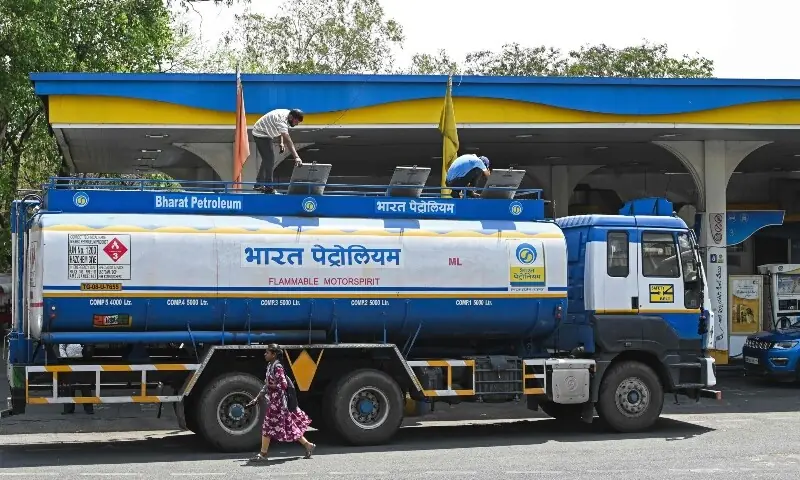
Amid Mideast conflict, Indian finance minister calls for focus on '3Fs' — fuel, fertiliser and forex
Topic: defense & securityRegion: middle eastUpdated: i2 outletsSources: 2Spectrum: Mixed⏱ 4 min read⚠ 3d+ old
Story Summary
SITUATION
Indian Finance Minister Nirmala Sitharaman emphasized the urgent need to address rising costs of fuel, fertiliser, and forex, warning that high prices could significantly impact India's revenue and economic stability, with a projected loss of one trillion rupees by FY27 due to reduced excise duties.
Coveragetap to expand ▾Spectrum: Mixed🌍ME: 2
Political Spectrum
Position is inferred from coverage mix.
i2 outlets · Center
Left
Center
Right
Left: 1
Center: 1
Right: 0
Geography Coverage
Distribution of where coverage is coming from.
i2 unique outlets · Dominant: Middle East
KEY FACTS
- Sitharaman said that the Indian government’s revenue is expected to be hit by one trillion rupees in FY27 due to a reduction in excise duties on fuel.
- Iran has hinted that the United States may end the ongoing conflict in a manner that aligns with Tehran's terms, describing it as a ‘Persian-style’ peace.
HISTORICAL CONTEXT
The recent remarks by Indian Finance Minister Nirmala Sitharaman regarding the need to focus on fuel, fertilizer, and foreign exchange come against a backdrop of escalating geopolitical tensions in the Middle East, particularly in relation to the ongoing conflict involving Israel and Hamas that reignited on October 7, 2023.
This conflict has not only led to significant humanitarian crises but has also disrupted global supply chains, particularly in energy and agricultural sectors, which are crucial for economies like India’s. The immediate backdrop of Sitharaman's comments can be traced to the rising prices of crude oil, fertilizers, and gold, which have been exacerbated by the conflict.
Brief
Iran has indicated that the United States might conclude the ongoing conflict in a manner that aligns with Tehran's terms, suggesting a resolution characterized as a 'Persian-style' peace. This statement emerges amid ongoing discussions about a ceasefire, reflecting Iran's expectations for how the war should be resolved.
The notion of a 'Persian-style' peace implies that Iran seeks a diplomatic outcome that favors its interests, potentially reshaping the dynamics of the negotiations. The ongoing conflict has involved significant military actions from both the United States and Iran, with each side maintaining firm positions.
Iran's hints at a peace agreement suggest a possible shift in its diplomatic strategy, as it navigates the complexities of the current situation. As discussions progress, the implications of Iran's proposed terms will be critical in determining the future of US-Iran relations and the broader regional stability.
The outcome of these negotiations could have lasting effects on the geopolitical landscape in the Middle East.
Why it matters
- The Indian finance minister's emphasis on the '3Fs'—fuel, fertiliser, and forex—highlights the immediate economic pressures facing India as rising global prices threaten to strain its fiscal health.
- With an anticipated revenue loss of one trillion rupees in FY27 due to reduced fuel excise duties, Indian consumers may face higher costs for essential goods, impacting their purchasing power.
- Additionally, the geopolitical dynamics surrounding the Mideast conflict, particularly Iran's potential influence over U.S. decisions, could further complicate India's energy security and trade relations, making it crucial for the government to navigate these challenges effectively.
What to watch next
- The Indian government is expected to announce new policies on fuel and fertilizer subsidies within the next 72 hours to address rising costs amid the ongoing Mideast conflict.
- The Reserve Bank of India will hold a monetary policy meeting next week, where it may discuss adjustments to forex reserves in response to global market fluctuations.
- The United Nations is set to convene an emergency session within the next month to address humanitarian aid in the Mideast, which could influence international diplomatic efforts.
- Major oil-producing nations, including OPEC members, are likely to meet within the next two weeks to discuss production levels in light of the conflict's impact on global oil prices.
- Indian exporters are preparing to reassess contracts and pricing strategies for agricultural products before the upcoming harvest season, which could be affected by fertilizer availability.
Sources
2 of 2 linked articles