
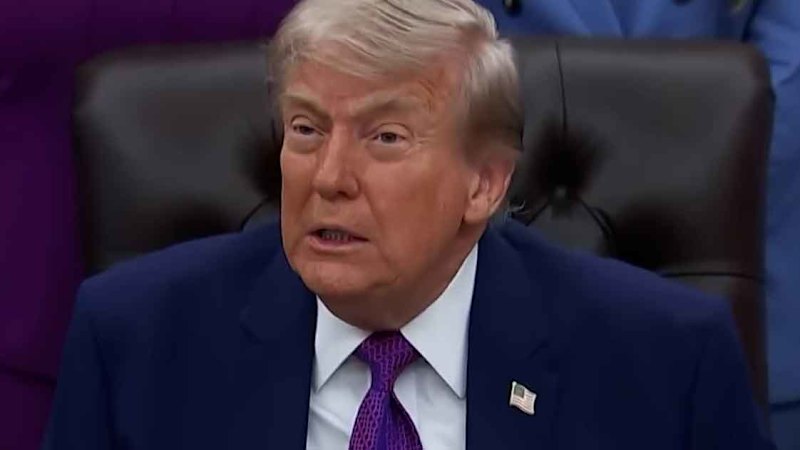
Trump Declares Iran War Ceasefire 'On Life Support' After Rejecting Proposal
Topic: defense & securityRegion: North AmericaUpdated: i4 outletsSources: 26⚠ Bias gap — sources divergeSpectrum: Mostly Center⏱ 4 min read📡 Wire pickup
Story Summary
SITUATION
In a recent statement, President Donald Trump declared that the ceasefire with Iran is 'on life support' after he rejected Tehran's latest peace proposal, which he described as 'totally unacceptable.' This rejection comes amid escalating military actions in the region, with Trump indicating that the U.S. is preparing for further military engagement.
Coveragetap to expand ▾Spectrum: Mostly Center🌍Other: 10 · US: 5 · ME: 5 · Asia: 4 · Europe: 2
Political Spectrum
Position is inferred from coverage mix.
i4 outlets · Center
Left
Center
Right
Left: 6
Center: 17
Right: 3
Geography Coverage
Distribution of where coverage is coming from.
i4 unique outlets · Dominant: Global
KEY FACTS
- Donald Trump stated that the ceasefire with Iran is 'on life support' after rejecting Tehran's latest proposal, which he called 'totally unacceptable' (per Al Jazeera).
- Iran's Foreign Ministry spokesman, Esmail Qaani, criticized Trump's rejection, asserting that the U.S. has 'no alternative but to accept' Tehran's terms (per Al Jazeera).
- Trump's rejection of the proposal comes amid ongoing military actions in the region, with reports indicating that the U.S. is planning further military engagement (per 24/7 Wall St.).
- Iran's Parliament Speaker Mohammad Bagher Ghalibaf stated that the U.S. must acknowledge Iran's demands for a ceasefire (per Al Jazeera).
- The rejection of the proposal has intensified fears of escalating conflict in the region, particularly around the Strait of Hormuz (per DNA India).
- Trump's administration has faced criticism for its handling of the ceasefire negotiations, with some lawmakers arguing that the war is ongoing despite Trump's claims (per news.google.com).
HISTORICAL CONTEXT
As President Donald Trump prepares for his upcoming visit to China in 2026, the geopolitical landscape is fraught with complexities stemming from the ongoing conflict involving Iran. This conflict, which has intensified in recent months, is rooted in a series of historical events that have shaped U.S.-Iran relations and, by extension, U.S.-China relations.
The immediate backdrop to this situation is the military actions undertaken by the United States and Israel against Iran since early March 2026. These actions are part of a broader strategy to curb Iran's nuclear ambitions, which the Trump administration has framed as a critical national security issue.
Brief
Iran's Foreign Ministry spokesman, Esmail Qaani, responded by asserting that the U.S. must accept Iran's terms for a ceasefire, highlighting the ongoing tensions between the two nations. Trump's comments reflect a broader strategy as he navigates the complexities of the conflict, with some lawmakers criticizing his administration's approach to the negotiations.
The situation remains precarious, particularly around the Strait of Hormuz, where fears of escalating conflict are mounting. As both sides dig in, the prospects for a peaceful resolution appear increasingly distant, underscoring the challenges ahead in U.S.-Iran relations.
Why it matters
- The rejection of Iran's ceasefire proposal by Trump increases the likelihood of further military actions, which could lead to significant civilian casualties in Iran (per Al Jazeera).
- Iran's government faces pressure to respond to U.S. military actions, potentially escalating the conflict and impacting regional stability (per 24/7 Wall St.).
- Trump's declaration affects U.S. domestic politics, as lawmakers express concerns over the ongoing war and its implications for American foreign policy (per news.google.com).
What to watch next
- Whether Donald Trump issues further military orders against Iran in the coming weeks.
- The response from Iran's government following Trump's rejection of their proposal.
- Any congressional actions or statements regarding U.S. military involvement in Iran.
Where sources differ
6 dimensionsBias gap1.10 / 2.0
Left- and right-leaning outlets are covering this story differently — in which facts to emphasize, which context to include, and how to frame causes and consequences.
Left-leaning (6)
middleeasteye.net-0.35
US lawmaker says Trump falsely declared Iran war ended US lawmaker says Trump falsely declared Iran war ended - Middle East Eye. Reporting is limited at this stage.
cnn.com-0.30
Trump says the ceasefire with Iran is on ‘massive life support’ after he rejected Tehran’s proposal. Live updates: Trump says ceasefire with Iran on ‘massive life support’ after he…
nbcnews.com-0.25
Trump says Iran ceasefire is ‘on life support’ after rejecting ‘unacceptable’ peace proposal from Tehran Trump says Iran ceasefire is ‘on life support’ after rejecting ‘unacceptabl…
aljazeera_en-0.20
Iran war live: Trump criticizes Iranian proposal as ceasefire hangs by a thread Iran war live: Trump criticizes Iranian proposal as ceasefire hangs by a thread Iran war live: Trump…
sydney_morning_herald-0.15
Trump says Iran ceasefire is on 'life support' after rejecting 'garbage' proposal Trump says Iran ceasefire is on 'life support' after rejecting 'garbage' proposal Trump says Iran …
npr.org-0.15
Trump rejects Iran's latest response to U.S. ceasefire proposal Trump rejects Iran's latest response to U.S.
Center (17)
247wallst.comfinance.yahoo.comreuters.comharici.com.trindexbox.ioaol.comtimesofindia.indiatimes.commsn.comnews24online.comeuronews.comthenews.com.pkdnaindia.comdw.commsn.comiranintl.comthehindu.comthenationalnews.com
Right-leaning (3)
foxnews.com+0.80
jerusalem_post+0.75
'Bibi's hair was on fire:' Inside the call between Trump, Netanyahu on Iran ceasefire talks 'Bibi's hair was on fire:' Inside the call between Trump, Netanyahu on Iran ceasefire ta…
jpost.com+0.75
6 specific areas where coverage diverges — see below.
Framing differences
?- Al Jazeera emphasizes Trump's rejection of the proposal as a significant escalation, while other outlets focus on the implications for U.S. military strategy.
Disputed or unclear
?- The exact nature of Iran's proposal and the specific terms being discussed remain unclear across sources.
Omitted context
?- No source mentions the historical context of U.S.-Iran relations that has led to the current conflict.
Disputed causality
?- Sources agree that Trump's rejection of the proposal is a direct response to Iran's offer, but the implications of this rejection vary.
Attribution disputes
?- Al Jazeera attributes the statement about the ceasefire being 'on life support' directly to Trump, while other sources paraphrase his comments.
Notable claims
?- Trump referred to Iran's proposal as 'garbage' and stated that the ceasefire is 'on life support' (per Al Jazeera).
Sources
26 of 26 linked articles
As Trump Plans Next Round in Iran War, Fresh Gas Price Shocks Rattle Consumers - 24/7 Wall St.
247wallst.comMay 23Left
↗
As Trump Plans Next Round in Iran War, Fresh Gas Price Shocks Rattle Consumers
finance.yahoo.comMay 23Left
↗
'Bibi's hair was on fire': Inside the call between Trump, Netanyahu on Iran ceasefire talks
jpost.comMay 20Right
↗
Investors bet on stability after Trump-Xi summit as Iran war concerns linger
reuters.comMay 18Left
↗
Investors see limited gains from Trump-Xi summit as Iran war risks cloud outlook
harici.com.trMay 18Left
↗
Trump-Xi Summit Shifts Focus to Strategic Stability, But Trade and Iran War Cap Gains
indexbox.ioMay 18Left
↗