
Iran's Supreme Leader Vows to Defend Nuclear and Missile Programs
Coveragetap to expand ▾Spectrum: Mostly Center🌍Other: 3 · US: 2 · Asia: 1
- Iran's supreme leader, Mojtaba Khamenei, stated that Tehran will protect its nuclear and missile capabilities (per The Hindu).
- Iran's nuclear and missile programs have been a point of contention with Western nations, particularly the United States (per news.google.com).
- Iran's leadership has consistently emphasized the defensive nature of its military programs (per news.google.com).
- many governments, particularly Western governments, has expressed concerns over Iran's nuclear program (per news.google.com).
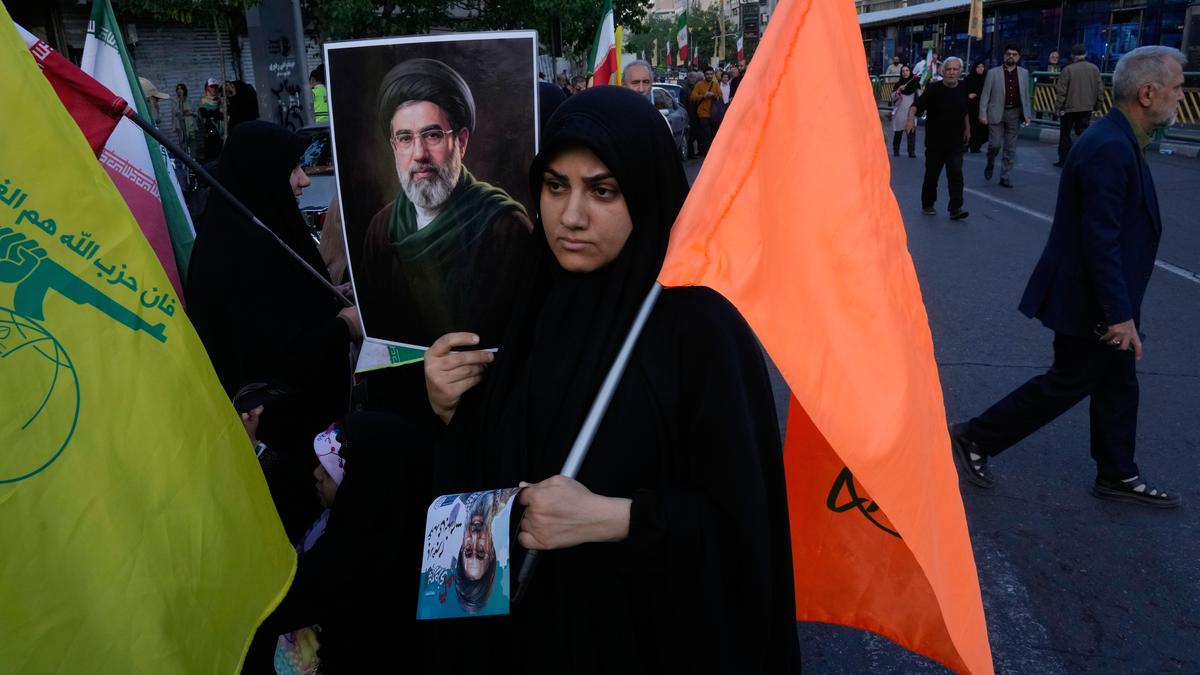
Iran's supreme leader, Mojtaba Khamenei, has made a firm declaration that Tehran will safeguard its nuclear and missile capabilities, a move that highlights the ongoing tensions between Iran and the United States.
Khamenei's statement, which also included a claim that the U.S. has suffered a 'disgraceful defeat,' reflects Iran's steadfast position on maintaining its defense programs despite international pressure. This announcement comes in the wake of recent military actions by the United States and Israel against Iran, which have further strained relations.
Khamenei's remarks underscore Iran's determination to continue its nuclear and missile development, which it insists are for defensive purposes. This stance has been a longstanding point of contention with Western nations, particularly the United States, which views Iran's nuclear program with suspicion.
The U.S. and its allies have repeatedly called for Iran to curb its nuclear activities, citing concerns over potential weaponization. The context of Khamenei's statement is crucial, as it follows a series of coordinated military strikes by the United States and Israel targeting Iranian facilities.
These actions have been justified by the U.S. as necessary to counter perceived threats from Iran, but they have also been criticized for escalating regional tensions. Iran's leadership has consistently framed its military programs as essential for national defense, a narrative that resonates domestically amid perceptions of external threats.
The supreme leader's latest comments are likely to bolster this narrative, reinforcing the government's commitment to its strategic capabilities. International reactions to Khamenei's statement are likely to vary, with Western governments expressing concern over Iran's defiance, while some regional actors may view it as a legitimate assertion of sovereignty.
The ongoing geopolitical dynamics in the Middle East, particularly the complex relationship between Iran and the United States, continue to shape the discourse around Iran's military capabilities. As the situation develops, the focus will remain on how both Iran and the United States navigate these tensions.
The potential for diplomatic engagement or further escalation will depend on the actions and responses of both parties, as well as the broader international community's involvement in mediating the conflict.
- Iranian civilians bear the concrete costs of potential military escalations, facing threats to safety and economic stability due to international sanctions and military actions.
- The United States and its allies benefit from maintaining pressure on Iran, aiming to curb its nuclear program and influence in the region.
- Iran's government seeks to bolster national unity and sovereignty by framing its nuclear and missile programs as defensive necessities against perceived external threats.
- Whether the United States will respond to Khamenei's statement with further diplomatic or military actions.
- Potential discussions or negotiations involving Iran's nuclear program at international forums.
- Any changes in Iran's military posture or announcements regarding its nuclear capabilities in the coming months.
- The Hindu emphasizes Khamenei's claim of a U.S. 'disgraceful defeat,' while other sources focus on the defense of nuclear capabilities.
- No source mentions the specific military strikes by the United States and Israel that preceded Khamenei's statement.
- The impact of international sanctions on Iran's economy and civilian population is not detailed in the sources.
- Mojtaba Khamenei claims the U.S. suffered a 'disgraceful defeat' (per The Hindu).