
Iraqi militia leader accused of leading at least 18 attacks abroad against Iran war
Coveragetap to expand ▾Spectrum: Mostly Left🌍US: 1 · ME: 1 · Other: 1
- US Says Iran-backed Militia Commander Planned Jewish Site Attacks - Barron's
- An Iraqi national has been accused of at least 18 reported terrorist attacks in Europe and Canada against Israeli and U.S.
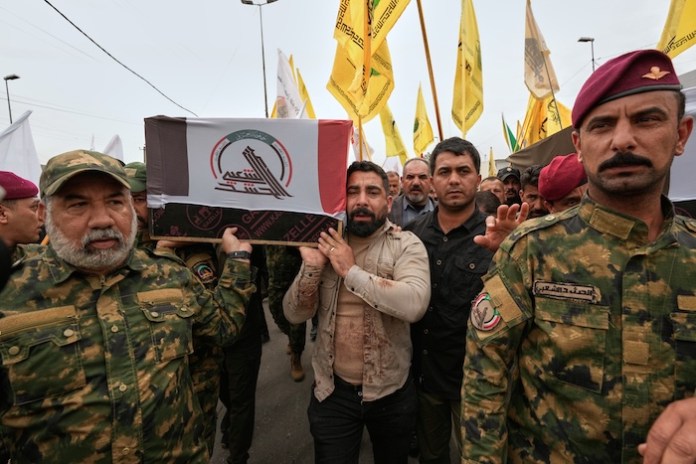
- Al Saadi is a commander of Kataib Hezbollah, an Iraqi militia that serves as a proxy for the Islamic Revolutionary Guard Corps and threatens U.S.
- Iran-linked Militia Commander Arrested for Planning Attacks on U.S. Jewish Sites
Mohammad Baqer Saad Dawood al Saadi, a commander of the Iraqi militia Kataib Hezbollah, is accused of orchestrating at least 18 terrorist attacks targeting U.S. and Israeli interests in Europe and Canada. These attacks are reportedly in retaliation for the ongoing war in Iran, which began in early March 2026.
Among the alleged incidents, al Saadi is said to have firebombed a Bank of New York Mellon building in Amsterdam and attempted to detonate explosives at a Bank of America building in Paris. Additionally, he coordinated an attack against a Jewish synagogue in the United States and was involved in a stabbing incident in London.
The court filings detail these actions as part of a broader pattern of violence linked to the conflict, highlighting the increasing risks faced by U.S. and Israeli entities abroad.
Al Saadi's role as a commander of Kataib Hezbollah, a militia that acts as a proxy for the Islamic Revolutionary Guard Corps, underscores the complex dynamics of the Iran war and its international ramifications. As tensions continue to rise, the implications of these attacks may further complicate U.S. foreign policy in the region and beyond.
- The allegations against Mohammad Baqer Saad Dawood al Saadi highlight the increasing threat posed by Iran-backed militias to U.S. and Israeli interests abroad, particularly in Europe and Canada.
- If confirmed, these attacks could lead to heightened security measures at Jewish sites and U.S. diplomatic missions, directly impacting the safety of communities and individuals associated with these entities.
- Additionally, this situation may strain diplomatic relations between the U.S. and Iran, complicating efforts to address broader regional conflicts and potentially escalating military responses.
- Watch for potential U.S. military responses to the attacks, as the Pentagon is expected to assess the situation and may announce new defensive measures within the next 72 hours.
- Monitor statements from the Israeli government regarding their security posture in Europe, particularly in response to the firebombing in Amsterdam, which could lead to increased intelligence sharing with European allies.
- Keep an eye on the European Union's counter-terrorism efforts, as they may convene an emergency meeting to discuss enhanced security protocols in light of the attempted bombing in Paris, likely within the next week.
- Anticipate a public address from the Iraqi government regarding their stance on Kataib Hezbollah's actions, which could be scheduled before the upcoming regional summit in two weeks.
- Look for updates from Canadian law enforcement as they investigate the implications of these attacks on domestic security, with a report expected in the next month.
Left- and right-leaning outlets are covering this story differently — in which facts to emphasize, which context to include, and how to frame causes and consequences.