
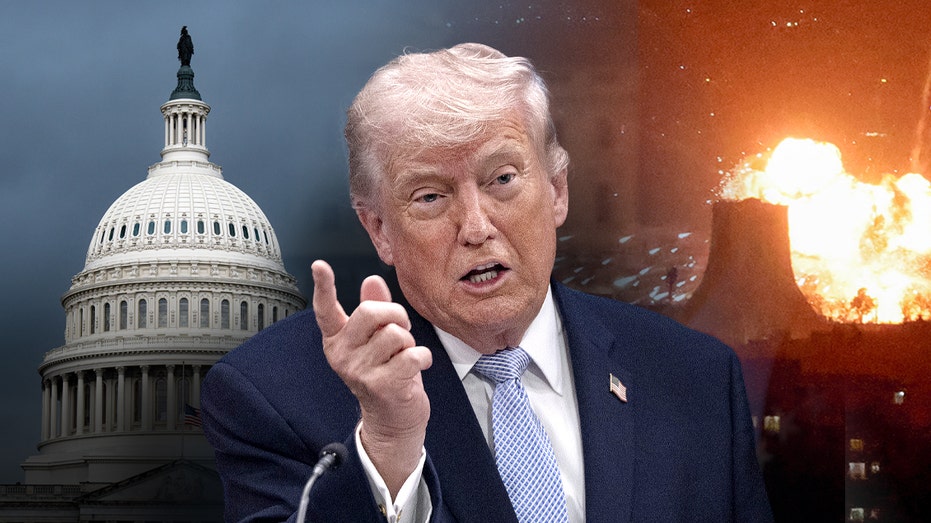
Trump aims to reset war powers clock with controversial bid to bypass Congress
Coveragetap to expand ▾Spectrum: Mixed🌍US: 3 · Other: 2
- Trump aims to reset war powers clock with controversial bid to bypass Congress is involved in the war because of this situation.
- Trump Tells Congress Iran Conflict Is Over, Sidestepping War Authorization
- Trump is supposed to get Congress’ approval when the Iran war hits 60 days. Lawmakers can’t agree when that is
- Trump is supposed to get Congress’ approval when the Iran war hits 60 days.
In a controversial move, the Trump administration has declared the Iran war 'terminated,' effectively bypassing the War Powers Resolution's requirement for Congressional approval of military actions extending beyond 60 days.
This declaration has sparked significant debate among lawmakers, who are divided on when the 60-day period began, thus complicating the legal interpretation of the deadline. The administration's decision is seen as an attempt to reset the war powers clock, allowing continued military engagement without legislative oversight.
The War Powers Resolution, enacted to check the president's power to commit the United States to armed conflict without the consent of Congress, mandates that any military action must receive Congressional approval if it exceeds 60 days.
However, the Trump administration's declaration of the war as 'terminated' seeks to circumvent this requirement, raising questions about executive overreach and the balance of power between the branches of government.
Lawmakers are currently at an impasse, unable to agree on the exact start date of the 60-day period, which is crucial for determining the legality of the administration's actions. This disagreement highlights the broader tensions between the executive and legislative branches over military engagements and the interpretation of war powers.
The White House's rhetoric suggests a strategic maneuver to maintain military flexibility in the region without being constrained by legislative processes. This approach has been met with criticism from some lawmakers who view it as an undermining of Congressional authority and a potential precedent for future executive actions.
The decision comes amid ongoing military operations and geopolitical tensions involving Iran, with the administration seeking to assert its strategic objectives while avoiding the procedural hurdles of Congressional approval. The implications of this move are significant, as it could redefine the scope of executive power in military matters and influence future engagements.
As the debate continues, the outcome will likely have lasting effects on the relationship between the executive branch and Congress, as well as on the United States' approach to military interventions abroad. The situation remains fluid, with potential legal challenges and political ramifications on the horizon.
- The American public bears the concrete costs of unchecked military engagements, as executive actions without Congressional oversight may lead to prolonged conflicts and increased military spending.
- The Trump administration benefits from maintaining strategic military flexibility without legislative constraints, allowing for rapid response to geopolitical developments.
- Congress faces challenges in asserting its constitutional role in authorizing military actions, potentially weakening its influence over foreign policy decisions.
- Whether Congress will challenge the administration's declaration legally or legislatively.
- Potential legal challenges to the administration's interpretation of the War Powers Resolution.
- Congressional hearings or debates on the scope of executive power in military engagements.
Left- and right-leaning outlets are covering this story differently — in which facts to emphasize, which context to include, and how to frame causes and consequences.
5 specific areas where coverage diverges — see below.
- Geo News emphasizes the administration's strategic rhetoric, while Fox News focuses on the legal implications of bypassing Congress.
- The exact start date of the 60-day period under the War Powers Resolution is disputed among lawmakers.
- No source mentions the specific military actions or operations that have been conducted under the current engagement with Iran.
- Sources disagree on the causality of the administration's declaration and its impact on the War Powers Resolution timeline.
- Geo News attributes the declaration to a strategic maneuver by the Trump administration, while Fox News highlights the legal controversy.