
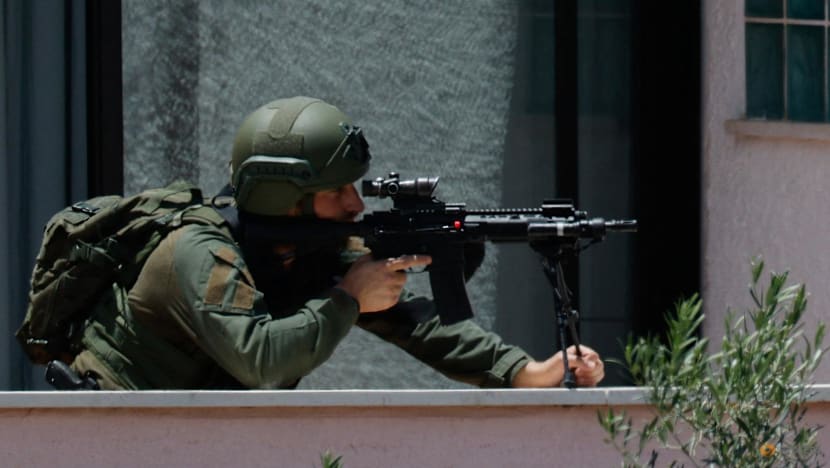
Israel Demands Hezbollah Disarmament as Condition for Troop Withdrawal
Topic: defense & securityRegion: Middle EastUpdated: i2 outletsSources: 5Spectrum: Mostly Center⏱ 4 min read📡 Wire pickup
Story Summary
SITUATION
Israel stated it will only withdraw troops from Lebanon after Hezbollah disarms. This demand underscores the ongoing tensions in the region amid military operations involving various parties.
Coveragetap to expand ▾Spectrum: Mostly Center🌍Other: 2 · US: 1 · ME: 1 · Asia: 1
Political Spectrum
Position is inferred from coverage mix.
i2 outlets · Center
Left
Center
Right
Left: 1
Center: 4
Right: 0
Geography Coverage
Distribution of where coverage is coming from.
i2 unique outlets · Dominant: Global
KEY FACTS
- Israel says will only withdraw troops from Lebanon after Hezbollah disarmed
- Israel Says will Only Withdraw Troops from Lebanon after Hezbollah Disarmed - Asharq Al-Awsat
- Israel says will only withdraw from Lebanon after Hezbollah disarmed - Middle East Eye
- Israel, Lebanon deny US claim that Israel has withdrawn from part of southern Lebanon
HISTORICAL CONTEXT
The current demand by Israel for Hezbollah's disarmament before any troop withdrawal from Lebanon is rooted in the ongoing tensions that have persisted since the 2006 Lebanon War, which saw a significant military confrontation between Israel and Hezbollah.
This conflict began on July 12, 2006, when Hezbollah launched a cross-border raid into Israel, killing three Israeli soldiers and capturing two others. In response, Israel initiated a military campaign in Lebanon aimed at degrading Hezbollah's military capabilities, which included extensive airstrikes and a ground invasion.
Brief
Israel has made it clear that it will only consider withdrawing its troops from Lebanon once Hezbollah is disarmed. This demand highlights the ongoing military tensions in the region, particularly in the context of Israel's broader military operations against Iranian influence.
Israel's insistence on disarmament stems from its long-standing concerns about Hezbollah's military capabilities, which it views as a direct threat to its national security. The call for disarmament is not merely a tactical maneuver but reflects a deeper strategic objective to neutralize Hezbollah's influence in Lebanon and the surrounding areas.
Meanwhile, Hezbollah has not publicly indicated any willingness to comply with Israel's demands, which could prolong the military presence of Israeli forces in Lebanon. The situation is further complicated by the ongoing conflicts involving Iran and its allies, which have created a volatile environment in the region.
As military operations continue, the potential for escalation remains high, with both sides preparing for possible confrontations.
Why it matters
- Israel's insistence on Hezbollah's disarmament as a precondition for troop withdrawal highlights the precarious security situation in southern Lebanon, where civilians remain caught in the crossfire of ongoing military tensions.
- Should Israel proceed with its withdrawal without disarmament, it risks emboldening Hezbollah, potentially leading to increased hostilities and further destabilization in the region.
- This demand directly impacts Lebanese civilians, who face the threat of renewed conflict and humanitarian crises, as military operations could disrupt essential services and exacerbate existing economic hardships.
What to watch next
- Monitor Hezbollah's response to Israel's disarmament demand, which is expected within the next 72 hours, as it could influence regional military dynamics.
- Watch for statements from the Lebanese government regarding Israel's troop withdrawal conditions, anticipated before the upcoming Arab League summit.
- Keep an eye on U.S. diplomatic efforts to mediate between Israel and Hezbollah, with potential announcements expected in the next week.
- Observe any shifts in public sentiment within Lebanon regarding Hezbollah's role, particularly in light of Israel's demands, as local polls are scheduled for release next month.
- Track developments in international reactions, especially from Iran, which may issue a response to Israel's ultimatum within the next few days.
Sources
5 of 5 linked articles
Israel says will only withdraw troops from Lebanon after Hezbollah disarmed
channelnewsasia.comJun 25Center
↗
Israel Says will Only Withdraw Troops from Lebanon after Hezbollah Disarmed - Asharq Al-Awsat
english.aawsat.comJun 25Left
↗
Israel says will only withdraw from Lebanon after Hezbollah disarmed
middleeasteye.netJun 25Left
↗
Israel, Lebanon deny US claim that Israel has withdrawn from part of southern Lebanon
reuters.comJun 25Left
↗
Israel, Lebanon deny that Israel has withdrawn from part of southern Lebanon - Al-Monitor
al-monitor.comJun 25Left
↗