
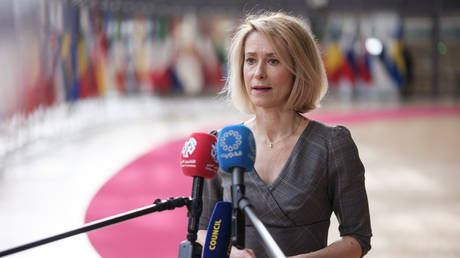
Israel Cuts Ties with EU's Kallas Over Apartheid Comments
Topic: geopoliticsRegion: Middle EastUpdated: i2 outletsSources: 5⚠ Bias gap — sources divergeSpectrum: Mostly CenterFiltered: Asia (1/5)· Clear⏱ 4 min read
Story Summary
SITUATION
After Kaja Kallas reportedly compared Israel to apartheid-era South Africa, Israel severed all contact with the EU top diplomat. Israeli Foreign Minister Gideon Sa’ar condemned her remarks as a 'blood libel' and demanded a retraction.
Coveragetap to expand ▾Spectrum: Mostly Center🌍ME: 2 · Europe: 1 · Asia: 1 · Other: 1
Political Spectrum
Position is inferred from coverage mix.
i2 outlets · Center
Left
Center
Right
Left: 0
Center: 4
Right: 1
Geography Coverage
Distribution of where coverage is coming from.
i2 unique outlets · Dominant: Middle East
KEY FACTS
- Israel severs contact with EU’s Kallas over reported apartheid remarks
- On Thursday, Sa’ar referenced recent media reports that Kallas had compared modern Israel to apartheid-era South Africa during a private meeting.
- “As the Foreign Minister of the State of Israel, I have no choice but to sever all contact with Ms.
- Kallas until she retracts the blood libel she directed at the world’s only Jewish state, which is also the only democracy in the Middle East,” Sa’ar wrote on X.
- The response landed poorly with Sa’ar, who reiterated the demand for Kallas to explicitly comment on the reported apartheid comparison.
HISTORICAL CONTEXT
The current tensions between Israel and the European Union, particularly highlighted by the severing of contact with EU diplomat Kaja Kallas, are situated within a broader context of geopolitical strife and accusations surrounding Israel's treatment of Palestinians.
This situation has escalated significantly since March 2026, when the United States and Israel initiated coordinated military strikes against Iran, targeting its power plants, air defenses, and military infrastructure.
Brief
Israel has severed all diplomatic contact with Kaja Kallas, the European Union's top diplomat, following her reported comparison of the country to apartheid-era South Africa.
Israeli Foreign Minister Gideon Sa’ar announced this decision, stating that Kallas's remarks, made during a private meeting, were not only inappropriate but also a 'blood libel' against Israel, which he emphasized is the only democracy in the Middle East.
Sa’ar's condemnation reflects a broader frustration within the Israeli government regarding perceived unfair criticisms from European officials. The remarks attributed to Kallas have not only sparked outrage in Israel but also highlight the ongoing tensions between Israel and the EU over the latter's stance on Israeli policies towards Palestinians.
The Israeli government has consistently defended its actions as necessary for national security, while critics argue that these actions amount to systemic discrimination against Palestinians. The severing of ties with Kallas underscores the delicate balance of diplomatic relations in a time of heightened scrutiny of Israel's policies. As this situation unfolds,
Where sources differ
Bias gap0.70 / 2.0
Left- and right-leaning outlets are covering this story differently — in which facts to emphasize, which context to include, and how to frame causes and consequences.
Center (4)
sg.news.yahoo.comscmp.comtimesofisrael.comhaaretz.com
Right-leaning (1)
rt_world+0.70
Israel severs contact with EU’s Kallas over reported apartheid remarks Israel severs contact with EU’s Kallas over reported apartheid remarks Israel severs contact with EU’s Kallas…
Sources
1 of 5 linked articles · Filter: Asia