
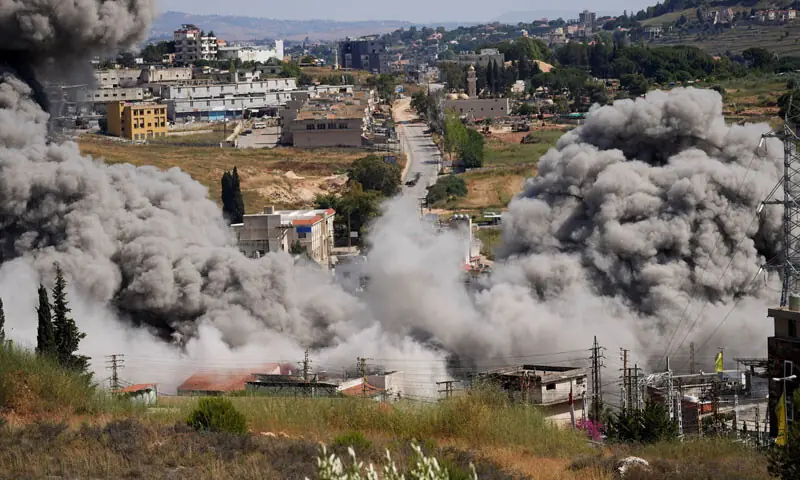
Israeli Air Strikes Kill Five in Southern Lebanon Amid Ceasefire Violations
Topic: defense & securityRegion: Middle EastUpdated: i2 outletsSources: 5Spectrum: Center OnlyFiltered: Global (0/5)· Clear⏱ 4 min read
Story Summary
SITUATION
Israeli air raids across southern Lebanon killed five people as attacks continued despite a United States-brokered ceasefire. The strikes included an attack on the town of Maarakeh and resulted in the death of Ali Badie, the mayor of Ar Rihan municipality (per dawn.com).
Coveragetap to expand ▾Spectrum: Center Only🌍ME: 2 · Other: 2 · Asia: 1
Political Spectrum
Position is inferred from coverage mix.
i2 outlets · Center
Left
Center
Right
Left: 0
Center: 5
Right: 0
Geography Coverage
Distribution of where coverage is coming from.
i2 unique outlets · Dominant: Middle East
KEY FACTS
- Five killed in air strikes as Israel flouts Lebanon ceasefire
- Lebanon’s National News Agency (NNA) reported that one person was killed in an air strike targeting the town of Maarakeh, in the Tyre district.
- BEIRUT: Israeli air raids across southern Lebanon killed five people as attacks continued on Saturday despite a United States-brokered ceasefire.
- Ali Badie, the mayor of Ar Rihan municipality, was killed in an Israeli attack on the area in the Jezzine district of southern Lebanon.
- Three people were killed in the towns of Deir al Zahrani and Kafr Reman, in Nabatieh district.
- The Israeli army warning urged residents to “evacuate your homes immediately and move to the north of the Zahrani River”, around 45 kilometres from the southern border with Israel.
HISTORICAL CONTEXT
The ongoing conflict between Israel and Lebanon has intensified against the backdrop of a fragile ceasefire that was brokered by the United States. This ceasefire, established in late 2023, was meant to halt hostilities following the 2023 Israel-Lebanon conflict, which saw significant military engagements and casualties on both sides.
In the months leading up to the current situation, tensions escalated as both Israel and Hezbollah, the militant group based in Lebanon, engaged in a series of skirmishes along the border. These skirmishes were characterized by cross-border rocket fire and retaliatory air strikes, culminating in the need for a ceasefire agreement to prevent further escalation.
Brief
Israeli air raids across southern Lebanon have killed five people, marking a significant escalation in violence despite a United States-brokered ceasefire.
The attacks, which occurred on Saturday, included a strike on the town of Maarakeh, where one individual was killed, and another strike that resulted in the death of Ali Badie, the mayor of Ar Rihan municipality, in the Jezzine district. Additionally, three more individuals were killed in the towns of Deir al Zahrani and Kafr Reman, located in the Nabatieh district.
These strikes followed an evacuation warning issued by the Israeli army for 20 locations, including the city of Nabatieh, urging residents to move north of the Zahrani River. The situation reflects ongoing tensions in the region, exacerbated by the recent military actions initiated by Israel.
While the Israeli government has not publicly commented on the specific strikes, the military's actions are part of a broader campaign that has seen increased hostilities in southern Lebanon. The United States, which brokered the ceasefire, has yet to respond to the latest developments, raising questions about the effectiveness of diplomatic efforts in the region.
Sources
0 of 5 linked articles · Filter: Global