
Iran said targets had included F-35 fighter jet hangars and a command-and-control centre.
Topic: defense & securityRegion: Middle EastUpdated: i9 outletsSources: 16⚠ Bias gap — sources divergeSpectrum: Mixed⏱ 4 min read📡 Wire pickup⚠ 3d+ old
Story Summary
SITUATION
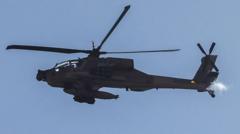
After Iran shot down a US Army Apache helicopter near the Strait of Hormuz, the US launched retaliatory strikes against Iran on June 9, 2026. This escalation raises concerns about Israel's diplomatic standing as it continues military operations in the region amid ongoing tensions.
Coveragetap to expand ▾Spectrum: Mixed🌍US: 4 · Europe: 3 · Asia: 3 · Other: 3 · ME: 2
Political Spectrum
Position is inferred from coverage mix.
i9 outlets · Center
Left
Center
Right
Left: 5
Center: 8
Right: 2
Geography Coverage
Distribution of where coverage is coming from.
i9 unique outlets · Dominant: US/Canada
KEY FACTS
- The attacks triggered a wave of retaliatory strikes from Iran on Wednesday morning, with Tehran saying it had targeted Kuwait, Bahrain and Jordan.
- US officials told Reuters nearly all the missiles and drones launched by Iran were intercepted.
- US Central Command said Trump had directed the military to launch strikes beginning at 10pm UK time on Tuesday in response to the downing of the Apache helicopter gunship off the coast of Oman earlier.
- Air defence systems, ground control stations and radar sites were targeted near the Strait of Hormuz, the US military Central Command (Centcom) said.
HISTORICAL CONTEXT
The ongoing conflict between Israel and Iran has escalated significantly since March 2026, when the United States and Israel launched coordinated military strikes against Iranian military infrastructure, including power plants and air defenses.
This aggressive campaign was a response to Iran's increasing military actions in the region, which had been perceived as a direct threat to both Israeli and American interests. The strikes marked a turning point in the long-standing tensions between Israel and Iran, leading to a series of confrontations that have shaped the current geopolitical landscape.
Brief
On June 9, 2026, the United States launched retaliatory strikes against Iran after the Islamic Republic shot down a US Army Apache helicopter over the Strait of Hormuz on June 8. US Central Command characterized the strikes as a proportional response to what they termed unjustified Iranian military actions.
The incident has heightened tensions in a region already fraught with conflict, particularly as Israel continues its military operations against various adversaries. President Donald Trump has vowed to respond decisively to Iranian military actions, which he claims threatens US interests and allies in the region.
Meanwhile, Iran's military is reportedly on high alert, indicating a potential for further escalation. The situation poses significant risks for Israel, which is already facing diplomatic challenges as it pursues aggressive military strategies without engaging in diplomatic negotiations.
The ongoing conflict has also impacted global oil markets, with prices rising in response to the renewed hostilities. As both the US and Iran prepare for possible further confrontations, the implications for regional stability and Israel's diplomatic standing remain uncertain.
Why it matters
- The recent escalation between the US and Iran, marked by retaliatory strikes following the downing of an Apache helicopter, significantly impacts military dynamics in the Middle East.
- Israel, already engaged in military operations against Iranian interests, faces increased pressure as Iran retaliates against neighboring countries like Kuwait and Bahrain, potentially drawing them into the conflict.
- This situation heightens the risk of broader regional instability, affecting civilian populations in these countries who may experience heightened military activity and insecurity.
- Additionally, the ongoing conflict could disrupt vital shipping routes through the Strait of Hormuz, impacting global oil supply and prices.
What to watch next
- Watch for a potential statement from the US Department of Defense regarding further military actions or strategic adjustments in the region within the next 72 hours.
- Monitor Israel's response to the US strikes, particularly any announcements regarding military support or operations in the coming week.
- Expect Iran to issue a formal response or retaliatory measures, possibly within the next 48 hours, which could include increased military activity or diplomatic maneuvers.
- Keep an eye on the United Nations Security Council for an emergency meeting called by member states concerned about the escalating conflict, likely to occur before the June summit.
- Observe the reactions from Gulf Cooperation Council (GCC) countries regarding their security policies and potential joint military exercises in the region within the next month.
Where sources differ
Bias gap1.25 / 2.0
Left- and right-leaning outlets are covering this story differently — in which facts to emphasize, which context to include, and how to frame causes and consequences.
Left-leaning (5)
straits_times-0.80
Oil climbs after fresh US strikes on Iran over helicopter attack Oil climbs after fresh US strikes on Iran over helicopter attack Oil climbs after fresh US strikes on Iran over hel…
ft_world-0.70
US and Iran exchange strikes after downing of American helicopter US launches strikes on Iran after downing of American helicopter US launches strikes on Iran after downing of Amer…
guardian_world-0.50
Trump launches strikes against Iran after downing of US army helicopter Trump launches strikes against Iran after downing of US army helicopter Trump blames Iran for downing of arm…
middle_east_eye-0.35
US says it is striking Iran in response to helicopter shootdown US forces carried out "proportional" strikes against Iran on Tuesday in response to the Islamic Republic shooting do…
nbcnews.com-0.25
begins retaliatory strikes on Iran after Apache helicopter downed near Strait of Hormuz - NBC News
Center (8)
bbc_worldapnews.comtimes_of_indiai24news.tval-monitor.comwsj.comabc_australiaabc30.com
Right-leaning (2)
jerusalem_post+0.75
Israel beats enemies on multiple fronts but risks diplomatic setbacks - analysis Israel beats enemies on multiple fronts but risks diplomatic setbacks - analysis Israel beats enemi…
washingtonexaminer.com+0.70
Sources
15 of 15 linked articles
US strikes Iran in response to downing of military helicopter
bbc.comJun 10Center
↗
US and Iran exchange strikes after downing of American helicopter
ft.comJun 10Left
↗
Trump launches strikes against Iran after downing of US army helicopter
theguardian.comJun 10Left
↗
US and Iran launch airstrikes after Trump blames Tehran for downing Army helicopter
apnews.comJun 10Left
↗
Oil climbs after fresh US strikes on Iran over helicopter attack
straitstimes.comJun 9Left
↗
US launches strikes on Iran after helicopter downing near Hormuz; Tehran vows retaliation
timesofindia.indiatimes.comJun 9Left
↗