
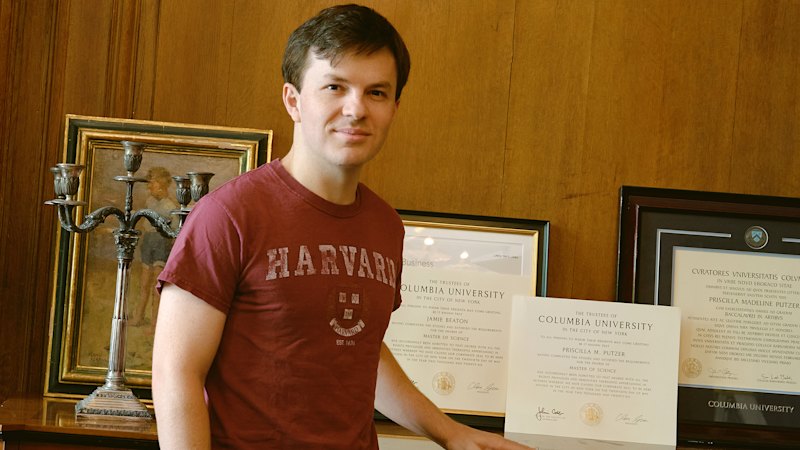
Jamie Beaton built Crimson Education after collecting degrees from elite universities
Topic: healthRegion: asia pacificUpdated: i1 outletsSources: 1Spectrum: Center Only⏱ 3 min read⚠ 48h+ old
Story Summary
SITUATION
Jamie Beaton amassed multiple degrees from universities including Harvard and Oxford while founding and running Crimson Education. The reporting highlights that Columbia adjunct professor Lisa Belkin discovered Beaton’s multiple enrolments after he missed a class and learned he was teaching in New Zealand (per smh.com.au).
Coveragetap to expand ▾Spectrum: Center Only🌍Asia: 1
Political Spectrum
Position is inferred from coverage mix.
i1 outlets · Center
Left
Center
Right
Left: 0
Center: 1
Right: 0
Geography Coverage
Distribution of where coverage is coming from.
i1 unique outlets · Dominant: Asia
KEY FACTS
- Jamie Beaton founded and serves as chief executive of Crimson Education, a company that has been valued at more than $US600 million ($840 million) (per smh.com.au).
- Columbia University adjunct professor Lisa Belkin noticed early in the autumn semester of the 2025-26 academic year that Jamie Beaton had not shown up for her class (per smh.com.au).
- Beaton told Lisa Belkin he had mixed up his schedule and was teaching a course in entrepreneurship at the University of Auckland in New Zealand, and would return to New York the next week (per smh.com.au).
- Smh.com.au characterizes Beaton as a 31-year-old who has pursued numerous degrees from institutions including Harvard, Stanford, Yale and Oxford (per smh.com.au).
HISTORICAL CONTEXT
The immediate backdrop is the active 2026 Iran war: in March 2026 the United States and Israel carried out coordinated strikes on Iranian power plants, air-defence sites and military infrastructure after a period of escalating Tehran-linked military activity in the region and attacks on assets the US and its partners said were linked to Iranian-backed proxies.
Those strikes and subsequent Iranian military responses have driven heightened diplomatic and economic pressure across the Asia–Pacific and global supply chains. Structurally, the crisis sits atop the collapse of the 2015 Joint Comprehensive Plan of Action (JCPOA) and the layered sanctions regime that followed.
Brief
Jamie Beaton is best known as the founder and chief executive of Crimson Education, a tutoring and admissions company valued at more than $US600 million, but recent reporting underscores a parallel story: he has accumulated a long list of degrees from elite universities.
Smh.com.au reports that Beaton graduated magna cum laude from Harvard in 2016 with an additional master’s in applied mathematics and has also enrolled at institutions including Stanford, Yale and Oxford. That same profile describes him as a 31-year-old whose appetite for credentials has drawn attention inside the academy.
Columbia adjunct professor Lisa Belkin noticed early in the autumn semester of the 2025-26 academic year that Beaton had not attended her class; after a dean queried him, Beaton said he had mixed up his schedule because he was teaching an entrepreneurship course at the University of Auckland and would return to New York the following week (per smh.com.au).
The article treats those details as emblematic of a broader contrast between Beaton’s public role as a company founder managing a high-value education business and his private pursuit of multiple academic enrolments.
Smh.com.au frames the pattern as part of Beaton’s ambition to accumulate credentials and influence; it documents both the Harvard magna cum laude distinction and the company valuation but does not present competing interpretations from other outlets.
The report limits claims to verifiable particulars — degrees cited, the Columbia professor’s discovery, and Beaton’s account that he was teaching in New Zealand — and distinguishes those confirmed facts from broader questions about motive or the business practices of Crimson Education.
Readers should note the piece links the personal detail (multiple enrolments and concurrent teaching) directly to Beaton’s public profile as Crimson’s CEO rather than asserting wrongdoing.
What comes next is unclear from this single profile: the article does not report academic discipline actions, company governance reviews, or any formal inquiries into Beaton’s concurrent roles (per smh.com.au).
Why it matters
- Students at Columbia University: a named student (Jamie Beaton) missed classes while simultaneously enrolled and teaching elsewhere, which raises questions about enrollment transparency and classroom access for other students (per smh.com.au).
- Crimson Education stakeholders: the company’s valuation of more than $US600 million ties Beaton’s personal academic profile to investor and public reputational stakes (per smh.com.au).
- Higher education institutions: multiple concurrent enrolments and cross-appointments can strain administrative oversight and credential verification processes at universities like Harvard, Stanford, Yale, Oxford and the University of Auckland (per smh.com.au).
What to watch next
- Whether Columbia University or the journalism school conducts any formal review of Jamie Beaton’s enrollment or attendance status during the 2025-26 autumn semester (per smh.com.au).
- Whether Crimson Education’s board or investors publicly respond to scrutiny connecting Jamie Beaton’s academic enrollments to his leadership of the company valued at more than $US600 million (per smh.com.au).
- Whether other universities named in the profile (Harvard, Stanford, Yale, Oxford, University of Auckland) disclose details about Beaton’s enrollment or teaching status in their records (per smh.com.au).
Where sources differ
7 dimensionsFraming differences
?- Only smh.com.au is in this pack; it frames Beaton’s multiple degrees and concurrent teaching as evidence of extraordinary ambition and highlights the Columbia professor’s discovery (per smh.com.au).
Disputed or unclear
?- No source in this pack disputes any fact; the article reports Beaton’s account that he mixed up his schedule and was teaching in New Zealand (per smh.com.au).
Omitted context
?- No source in this pack mentions any formal academic or corporate inquiries, university enrollment rules that might apply, or independent verification of all listed degrees beyond the article’s reporting.
- The articles do not provide comprehensive lists of all universities’ official records confirming dates of enrollment or graduation for Jamie Beaton.
- No source here addresses whether Crimson Education’s valuation reflects investor assessments tied to Beaton’s academic credentials.
Conflicting figures
?- Only smh.com.au provides the company valuation figure: more than $US600 million ($840 million) (per smh.com.au).
Disputed causality
?- Smh.com.au reports that Lisa Belkin’s notice of Beaton’s absence triggered an inquiry to a dean, which led to Beaton’s explanation he was teaching in New Zealand; no other causal chains are claimed (per smh.com.au).
Attribution disputes
?- Facts about Beaton’s degrees and the Columbia professor’s discovery are attributed to smh.com.au reporting and to Lisa Belkin’s account as described in that article (per smh.com.au).
Sources
1 of 1 linked articles