
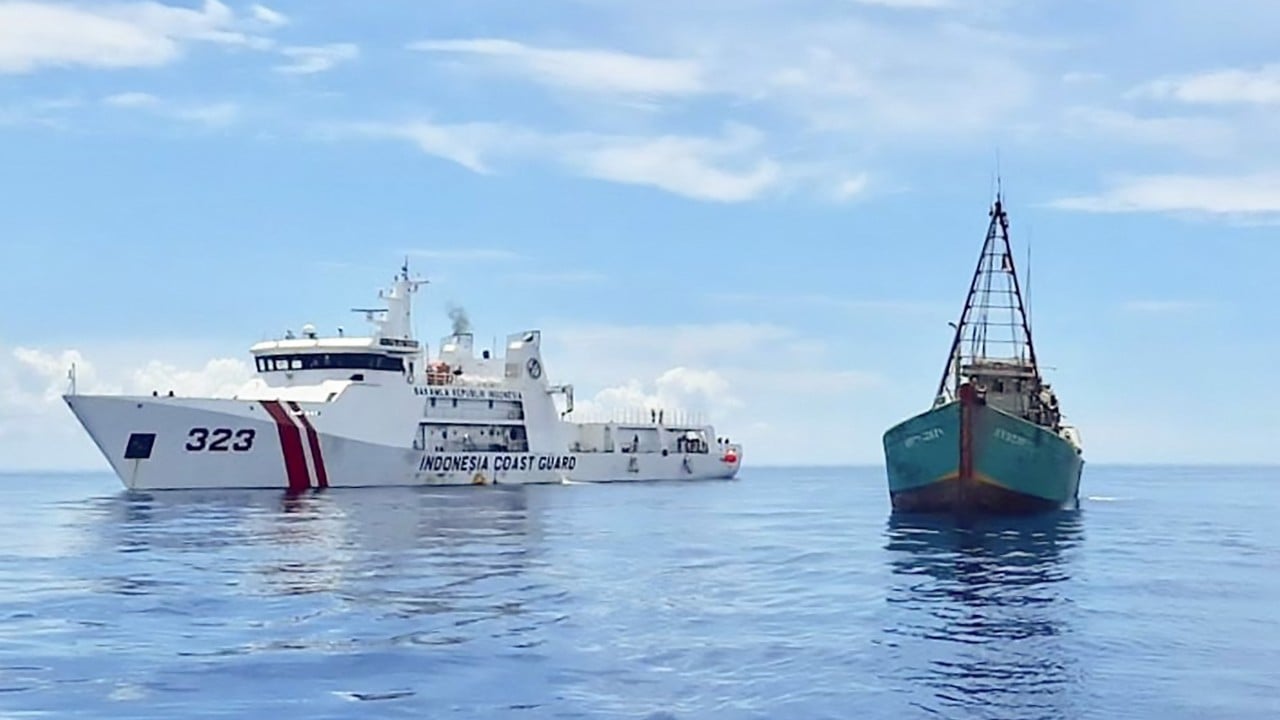
Japan Offers Natuna Port Upgrades to Host Patrol Vessels, Deepening Ties with Indonesia
Coveragetap to expand ▾Spectrum: Center Only🌍Europe: 1 · Asia: 1
- Japan proposed upgrades to ports in Indonesia’s Natuna Islands to allow patrol vessels to operate there (per scmp.com)
- The port-upgrade proposal is framed by the source as intended to bolster security in the South China Sea (per scmp.com)
Japan has proposed upgrading ports in Indonesia’s Natuna Islands to host patrol vessels, a concrete step that Tokyo and Jakarta say will strengthen security in the South China Sea (per scmp.com).
Indonesian officials and outside analysts cited by the report characterize the move as pragmatic bilateral cooperation rather than an explicit alignment against China, while Tokyo describes it as part of broader defence-industrial and intelligence ties (per scmp.com).
The proposal would allow patrol vessels to operate from Natuna ports and accompanies promises of expanded military exercises and joint defence-industry development between the two governments (per scmp.com).
Jakarta’s public framing, as quoted in the article, stresses pragmatic maritime security and safeguarding Indonesian territorial waters; Tokyo’s framing emphasizes deeper security partnership and capacity-building (per scmp.com).
Analysts cited by the source note the proposal fits a pattern of Japan strengthening practical security links with Southeast Asian states without phrasing them as confrontational moves toward Beijing (per scmp.com).
The move comes as Tokyo and Jakarta broaden cooperation on intelligence sharing and defence industry ties, which the source links directly to the Natuna port upgrade proposal as part of an integrated package (per scmp.com).
- Natuna island residents and Indonesian maritime authorities bear concrete costs if upgraded ports host foreign patrol vessels: expanded patrol activity changes local maritime operations and resource access patterns (per scmp.com)
- Japan benefits by gaining operational access for its patrol vessels and by deepening defence-industry ties with Indonesia, strengthening Tokyo’s security footprint in the South China Sea (per scmp.com)
- Indonesia benefits by receiving port infrastructure upgrades and enhanced patrol capability to safeguard its claimed waters around the Natuna Islands (per scmp.com)
- Whether Japan and Indonesia sign a formal agreement to begin Natuna port upgrades and specify timelines for vessel basing within the next 12 months (per scmp.com).
- Whether Tokyo and Jakarta finalise the scope of their joint defence-industry development and intelligence cooperation in formal memoranda or protocols (per scmp.com).
- Whether the planned expansion of military exercises between Japan and Indonesia includes patrol operations from the Natuna ports and a schedule for those exercises (per scmp.com).
- scmp.com frames the proposal as pragmatic cooperation intended to bolster South China Sea security and stresses Indonesian and analyst views that it is not explicitly anti-Beijing (per scmp.com)
- No source in this pack disputes any specific factual claim in the scmp.com piece; the single-source reporting leaves details like timelines, cost, and force levels unclear (per scmp.com)
- No source mentions specific timelines, budgets, or contracts for the Natuna port upgrades.
- No source provides data on potential civilian impacts in Natuna such as displacement, economic change, or fishing access changes.
- No source cites any Chinese reaction to the proposal or Beijing’s official stance on Japan–Indonesia security cooperation.
- No differing figures provided — the source gives no numerical estimates for costs, vessel numbers, or timelines (per scmp.com)
- scmp.com presents Japan’s port-upgrade proposal as part of expanded bilateral security ties rather than explicitly as a response to specific Chinese actions; no source in this pack identifies a direct triggering event (per scmp.com)
- scmp.com attributes the characterization of the proposal as 'pragmatic' to analysts and Indonesian officials; it attributes the proposal and its described elements to Japan and Jakarta (per scmp.com)