
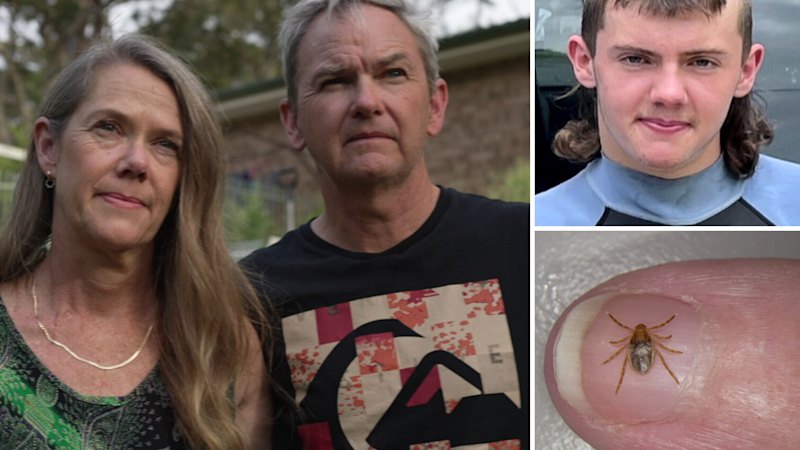
Teenager's Death Highlights Tick-Induced Allergy Risks in Sydney
Coveragetap to expand ▾Spectrum: Left Only🌍Asia: 1
- Jeremy Webb, 16, died from anaphylaxis due to Mammalian Meat Allergy after a camping trip (per smh.com.au).
- The allergy is triggered by ticks and can cause severe reactions to mammalian meat (per smh.com.au).
- Initially, Jeremy's death was attributed to asthma, a condition he had since childhood (per smh.com.au).
- In February, the NSW Deputy Coroner concluded the cause of death was anaphylaxis due to the meat allergy, not asthma (per smh.com.au).
- Sydney's northern region is recognized as a global hotspot for tick-induced meat allergies (per smh.com.au).
Jeremy Webb, a 16-year-old from Sydney, tragically died from anaphylaxis caused by a tick-induced meat allergy, highlighting the severe risks associated with this condition. During a camping trip on the Central Coast, Jeremy consumed sausages and marshmallows, after which he began to feel breathless and nauseous.
Despite his friends' efforts to resuscitate him and the swift arrival of an ambulance, Jeremy passed away at Gosford Hospital. Initially, his death was attributed to asthma, a condition he had battled since childhood.
However, a recent investigation by the NSW Deputy Coroner determined that the true cause was anaphylaxis due to Mammalian Meat Allergy, a condition triggered by tick bites. This revelation underscores the dangers posed by tick-induced allergies, particularly in Sydney's northern region, which is recognized as a global hotspot for the disease.
The case of Jeremy Webb serves as a stark reminder of the need for increased awareness and preventive measures against tick bites, especially in areas where the allergy is prevalent. As the community mourns the loss of a young life, there is a growing call for better education and resources to manage and prevent such allergic reactions.
The tragic incident has sparked discussions on public health strategies to address the risks associated with tick-induced allergies, aiming to prevent future tragedies.
- Jeremy Webb's death highlights the severe risks of tick-induced meat allergies, particularly affecting residents in Sydney's northern region.
- The case underscores the need for increased awareness and preventive measures against tick bites in areas identified as hotspots.
- Public health strategies may need to be revised to better manage and prevent allergic reactions, potentially saving lives.
- Whether public health authorities in Sydney implement new preventive measures against tick bites.
- Potential updates from the NSW Deputy Coroner's office regarding guidelines for diagnosing and managing tick-induced allergies.
- Community initiatives aimed at raising awareness about Mammalian Meat Allergy and its risks.
- No source mentions specific public health measures currently in place to address tick-induced allergies in Sydney.
- The economic impact of the allergy on affected families and healthcare systems is not discussed.
- There is no mention of ongoing research or funding aimed at understanding or mitigating tick-induced allergies.