
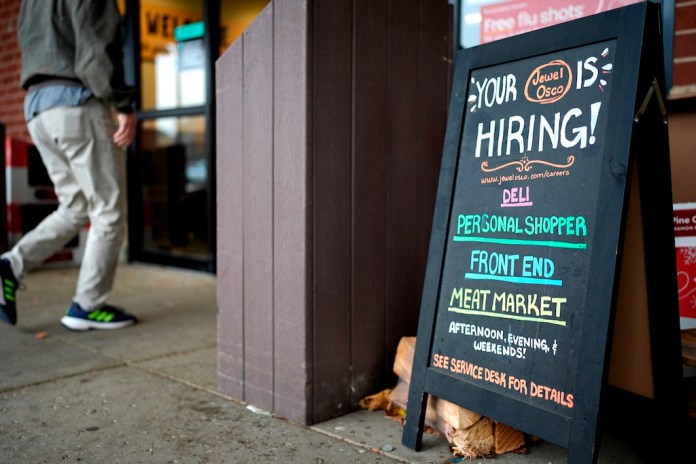
US Job Growth Surpasses Expectations with Unemployment Steady at 4.3%
Coveragetap to expand ▾Spectrum: Mostly Center🌍Other: 3 · US: 2
- US job growth reached 115,000 in April 2026, exceeding expectations (per Sherwood News).
- Analysts had predicted a lower job growth figure, highlighting the positive surprise in the report (per Sherwood News).
In April 2026, the US labor market demonstrated unexpected strength, with job growth recorded at 115,000, surpassing analysts' forecasts. The unemployment rate remained unchanged at 4.3%, indicating stability amidst various economic pressures. This increase in employment figures is particularly notable as it comes after a period of uncertainty regarding economic recovery.
Analysts had anticipated a lower job growth figure, which makes this report a positive surprise for the market. The resilience of the labor market is being viewed as a crucial element in shaping the economic outlook for the coming months. Many experts suggest that this growth could bolster consumer confidence and spending, further supporting economic expansion.
As the economy continues to navigate challenges, including inflation and global uncertainties, the job market's performance will be closely monitored for its implications on future economic policies and decisions.
- The increase of 115,000 jobs directly benefits workers seeking employment, enhancing their financial stability (per Sherwood News).
- A steady unemployment rate of 4.3% indicates a stable job market, which is crucial for economic confidence (per Sherwood News).
- The positive job growth may influence Federal Reserve decisions regarding interest rates, impacting borrowers and investors (per Sherwood News).
- Whether the job growth trend continues in May 2026, as further data is released.
- Any potential Federal Reserve meetings or announcements regarding interest rates in response to the labor market data.
Left- and right-leaning outlets are covering this story differently — in which facts to emphasize, which context to include, and how to frame causes and consequences.
1 specific area where coverage diverges — see below.
- {"framing":[],"numbers":[],"causality":[],"attribution":[],"omitted_context":[],"disputed_or_unclear":[],"notable_quotes_or_claims":[]}