
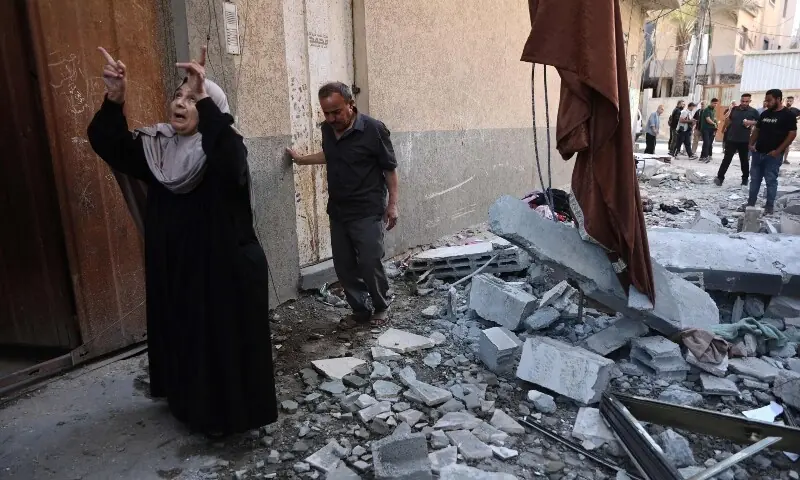
Israeli Strikes Kill Al Jazeera Journalist Amid Ongoing Gaza Conflict
Topic: defense & securityRegion: Middle EastUpdated: i2 outletsSources: 5⚠ Bias gap — sources divergeSpectrum: Mostly Center⏱ 4 min read
Story Summary
SITUATION
Israeli airstrikes killed an Al Jazeera cameraman in Gaza, with the Israeli army claiming he was a Hamas terrorist. The incident highlights the contentious narratives surrounding the roles of journalists in conflict zones, with differing accounts on the victim's affiliations (per NBC News, Arab News, The Times of Israel).
Coveragetap to expand ▾Spectrum: Mostly Center🌍ME: 2 · Asia: 2 · US: 1
Political Spectrum
Position is inferred from coverage mix.
i2 outlets · Center
Left
Center
Right
Left: 1
Center: 4
Right: 0
Geography Coverage
Distribution of where coverage is coming from.
i2 unique outlets · Dominant: Middle East
KEY FACTS
- Journalist among 11 killed in Israel’s assault on Gaza
- IDF says Al Jazeera photographer killed in Gaza strike was Hamas sniper, moonlighted as journalist - The Times of Israel
- Al Jazeera cameraman killed in Gaza months after his journalist brother died in a separate strike - NBC News
- Israel army confirms killing of journalist in Gaza, says he was ‘Hamas terrorist’ - arabnews.jp
- Israeli Army Confirms Journalist Killed In Gaza, Calls Him 'Hamas' Terrorist - NDTV
HISTORICAL CONTEXT
The ongoing conflict between Israel and Hamas has escalated significantly since the beginning of 2026, particularly following the coordinated military strikes by the United States and Israel against Iran in March 2026.
This military campaign was aimed at crippling Iran's military infrastructure, including its power plants and air defenses, in response to perceived threats from Iranian-backed groups in the region.
Brief
Israeli airstrikes in Gaza recently killed an Al Jazeera cameraman, with the Israeli army asserting that he was affiliated with Hamas. This incident has reignited debates about the safety and roles of journalists in conflict zones, particularly in light of the ongoing military campaign that has resulted in significant Palestinian casualties.
The IDF claims that the cameraman was not just a journalist but also a Hamas sniper, a characterization that has been met with skepticism by media organizations. The cameraman's death follows the earlier killing of his brother, who was also a journalist, highlighting the personal toll of the conflict on media families.
The situation in Gaza remains dire, with over 45,000 Palestinians reported killed since the escalation of hostilities began in early March 2026. The backdrop of this violence includes a long-standing Israeli military occupation and blockade that has contributed to the current humanitarian crisis.
As the conflict continues, the narratives surrounding the roles of journalists and their safety in such environments are increasingly scrutinized, with differing accounts complicating the public's understanding of these tragic events.
Where sources differ
Bias gap0.70 / 2.0
Left- and right-leaning outlets are covering this story differently — in which facts to emphasize, which context to include, and how to frame causes and consequences.
Left-leaning (1)
nbcnews.com-0.25
Al Jazeera cameraman killed in Gaza months after his journalist brother died in a separate strike - NBC News
Center (4)
dawn_pakistantimesofisrael.comarabnews.jpndtv.com
Sources
5 of 5 linked articles
Journalist among 11 killed in Israel’s assault on Gaza
dawn.comJun 21Center
↗
IDF says Al Jazeera photographer killed in Gaza strike was Hamas sniper, moonlighted as journalist
timesofisrael.comJun 20Center
↗
Al Jazeera cameraman killed in Gaza months after his journalist brother died in a separate strike
nbcnews.comJun 20Left
↗
Israel army confirms killing of journalist in Gaza, says he was ‘Hamas terrorist’ - arabnews.jp
arabnews.jpJun 20Left
↗
Israeli Army Confirms Journalist Killed In Gaza, Calls Him 'Hamas' Terrorist
ndtv.comJun 20Center
↗