
Federal Judge Denies Disqualification Motion in WHCA Dinner Shooting Case
Topic: politicsRegion: North AmericaUpdated: i2 outletsSources: 2⚠ Bias gap — sources divergeSpectrum: MixedFiltered: US/Canada (1/2)· Clear⏱ 4 min read
Story Summary
SITUATION
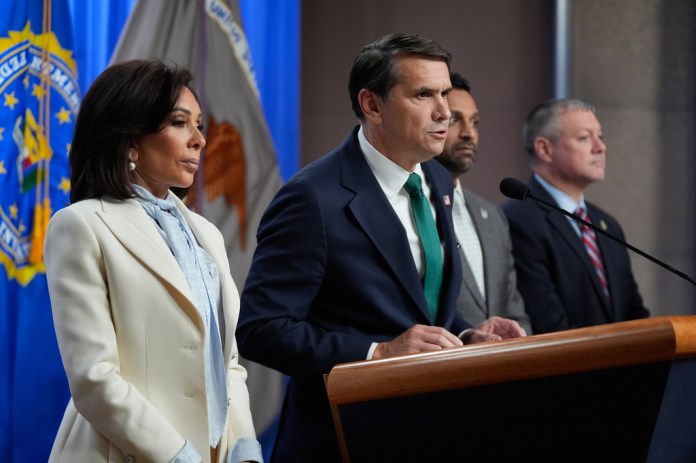
A federal judge rejected Cole Tomas Allen's motion to disqualify prosecutors Todd Blanche and Jeanine Pirro from his case. The judge found no conflict of interest stemming from their connections to the White House Correspondents' Association dinner.
Coveragetap to expand ▾Spectrum: Mixed🌍US: 1 · Other: 1
Political Spectrum
Position is inferred from coverage mix.
i2 outlets · Center
Left
Center
Right
Left: 0
Center: 1
Right: 1
Geography Coverage
Distribution of where coverage is coming from.
i2 unique outlets · Dominant: US/Canada
KEY FACTS
- Judge rejects accused WHCA dinner shooter’s bid to disqualify Blanche and Pirro
- District Judge Trevor McFadden denied Allen’s motion, concluding that Blanche and Pirro’s attendance at the April 26 event and Pirro’s friendship with President Donald Trump did not warrant recusal.
HISTORICAL CONTEXT
The ongoing legal proceedings surrounding the alleged shooting incident at the White House Correspondents' Association (WHCA) dinner have emerged against a backdrop of heightened political tensions and security concerns in the United States.
The incident, which occurred on April 26, 2026, involved Cole Tomas Allen, who is accused of opening fire at the event, prompting significant public and media scrutiny. In the wake of this event, Allen's legal team has sought to disqualify key prosecutors from the case, arguing that their connections to President Donald Trump could compromise the fairness of the trial.
Brief
In a significant ruling, U.S. District Judge Trevor McFadden denied Cole Tomas Allen's motion to disqualify U.S. Attorney Jeanine Pirro and acting Attorney General Todd Blanche from his prosecution related to the shooting incident at the White House Correspondents' Association dinner.
The judge determined that their prior attendance at the event and Pirro's personal ties to President Donald Trump did not present a conflict of interest that would necessitate their removal from the case. This decision underscores the complexities involved in high-profile criminal prosecutions, particularly those that intersect with political figures.
Allen's case has attracted considerable media scrutiny, reflecting broader concerns about the intersection of politics and justice. The ruling is viewed as a win for the prosecution, which aims to maintain the integrity of the case amid public interest and potential political ramifications.
As the case proceeds, it will likely continue to draw attention regarding the legal standards applied to conflicts of interest in such politically charged environments.
Where sources differ
Bias gap0.50 / 2.0
Left- and right-leaning outlets are covering this story differently — in which facts to emphasize, which context to include, and how to frame causes and consequences.
Center (1)
news.meaww.com
Right-leaning (1)
washington_examiner+0.70
Judge rejects accused WHCA dinner shooter’s bid to disqualify Blanche and Pirro Judge rejects accused WHCA dinner shooter’s bid to disqualify Blanche and Pirro Judge rejects accuse…
Sources
1 of 2 linked articles · Filter: US/Canada