
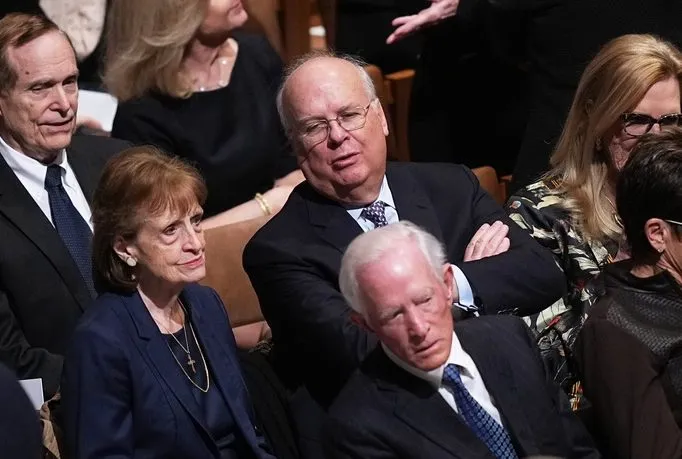
Karl Rove says he will vote for Democrat Jon Rosenthal after Bo French’s ‘raw, uncut bigotry’ post
Topic: politicsRegion: North AmericaUpdated: i2 outletsSources: 5⚠ Bias gap — sources divergeSpectrum: Mostly Center⏱ 2 min read
Story Summary
SITUATION
After Bo French posted a social-media image of University of Texas students that Karl Rove called “raw, uncut bigotry,” Rove said he will vote for Democrat Jon Rosenthal (per Washington Examiner). Rove made the declaration in a Wall Street Journal op-ed and labeled French a “bigot” while saying “the GOP's stables need a cleaning” (per Washington Examiner).
Coveragetap to expand ▾Spectrum: Mostly Center🌍US: 2
Political Spectrum
Position is inferred from coverage mix.
i2 outlets · Center
Left
Center
Right
Left: 0
Center: 1
Right: 1
Geography Coverage
Distribution of where coverage is coming from.
i2 unique outlets · Dominant: US/Canada
KEY FACTS
- Karl Rove announced he will vote for Democrat Jon Rosenthal in the race against Republican Bo French.
- Rove called a social-media post by Bo French showing University of Texas at Austin students “raw, uncut bigotry.”
- Rove had previously called French a “bigot” and cited other alleged racist remarks against Hispanics.
- Rove said French has also made controversial comments about women and non-Christians.
- Rove wrote this will be only the second time he has voted for a Democrat, the first being Lt. Gov. Bob Bullock in 1994.
HISTORICAL CONTEXT
The immediate backdrop is a high-stakes, polarized U.S. political environment in which prominent Republican operatives have publicly rebuked party allies over rhetoric and social-media conduct, intensifying intraparty conflict ahead of ongoing election cycles. Structurally, this fracturing builds on post-2010 campaign-finance and media shifts — notably Citizens United v.
FEC (Jan. 21, 2010) and the rapid rise of social platforms in the late 2000s — that altered funding, messaging and grassroots mobilization.
Brief
Karl Rove announced he will cast his vote for Democrat Jon Rosenthal after Bo French posted a social-media image of University of Texas students that Rove described as "raw, uncut bigotry," and Rove called French a "bigot" in a Wall Street Journal op-ed (per Washington Examiner).
Rove framed his decision as a moral rebuke to behavior he sees as unacceptable within his own party, writing that "the GOP's stables need a cleaning" in the same piece (per Washington Examiner).
The Washington Examiner reports Rove used the op-ed to explain his personal vote choice rather than announcing any organizational endorsement or broader party shift (per Washington Examiner).
Rove's move places a prominent Republican strategist publicly against Bo French while signaling willingness to cross party lines in at least this race; the story centers on Rove's unique standing and the rhetorical weight his statement carries inside Republican circles (per Washington Examiner).
The source does not quote Bo French's original social post text beyond describing the image Rove reacted to, nor does it include reaction from Jon Rosenthal, Bo French, or other Republican leaders in the district (per Washington Examiner).
This account is limited to Rove's own published words in the Wall Street Journal and the Washington Examiner's reporting of them; it documents a high-profile intra-party dispute made public through an op-ed rather than through campaign or party machinery (per Washington Examiner).
Where sources differ
Bias gap0.50 / 2.0
Left- and right-leaning outlets are covering this story differently — in which facts to emphasize, which context to include, and how to frame causes and consequences.
Center (4)
nytimes.comdiyatvusa.comkeranews.orgaudacy.com
Right-leaning (1)
washington_examiner+0.70
Karl Rove said he will vote for Democrat Jon Rosenthal after Republican Bo French posted a social-media image Rove called “raw, uncut bigotry,” and Rove labeled French a “bigot.” R…
Sources
5 of 5 linked articles
Karl Rove says he will vote for Democrat Jon Rosenthal after Bo French’s ‘raw, uncut bigotry’ post
washingtonexaminer.comSep 17Center
↗
Bo French Faces Backlash Over Posts About University of Texas Students
nytimes.comSep 16Left
↗
Karl Rove backs Democrat Jon Rosenthal
diyatvusa.comSep 15Left
↗
Karl Rove said he’ll break 30 years of only supporting Republicans to vote against 'bigot' Bo French
keranews.orgSep 15Left
↗
Karl Rove says he’ll vote Democrat after French’s UT student comments
audacy.comSep 15Left
↗