
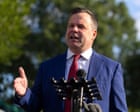
Pulte will remain director of the FHFA, the president said.
Topic: finance & marketsRegion: latin americaUpdated: i4 outletsSources: 7⚠ Bias gap — sources divergeSpectrum: Mixed⏱ 4 min read⚠ 3d+ old
Story Summary
SITUATION
Pulte's continued leadership at the FHFA signals stability in U.S. housing finance, crucial for addressing the economic challenges facing Latin America, particularly as Chile navigates its fiscal deficit and seeks recovery under new leadership.
Coveragetap to expand ▾Spectrum: Mixed🌍US: 4 · Europe: 2 · LatAm: 1
Political Spectrum
Position is inferred from coverage mix.
i4 outlets · Center
Left
Center
Right
Left: 3
Center: 3
Right: 1
Geography Coverage
Distribution of where coverage is coming from.
i4 unique outlets · Dominant: US/Canada
KEY FACTS
- Trump taps ally Bill Pulte to serve as top intelligence chief Donald Trump has tapped a close ally to serve as the country’s top intelligence official, days after Tulsi Gabbard announced her exit from the role.
- The US president said that Bill Pulte, head of the Federal Housing Finance Agency (FHFA), and heir to a home construction company fortune, will serve as acting director of national intelligence.
HISTORICAL CONTEXT
In June 2026, the political landscape in Chile is marked by the recent transition of power from Gabriel Boric to José Antonio Kast, who has taken office amidst significant economic challenges. The country is grappling with a structural fiscal deficit of 3.6% of GDP, a situation that Kast has publicly criticized as a consequence of the previous administration's management.
This deficit is a critical issue as it reflects broader economic struggles that have been exacerbated by the global economic environment, including inflationary pressures and the lingering effects of the COVID-19 pandemic.
Brief
In his first annual Cuenta Pública address on June 1, 2026, Chilean President José Antonio Kast sharply criticized the 3.6% of GDP structural fiscal deficit he inherited from the previous Boric administration.
Kast emphasized the urgency of addressing the fiscal disarray, stating, 'We inherited a country with the accounts in disarray,' and underscored the government's obligation to restore order rather than complain about the situation.
The address, which lasted two hours and twenty-five minutes, was delivered before the National Congress in Valparaíso and focused primarily on the fiscal challenges facing the nation. While Kast did not directly name the Boric administration, his remarks clearly pointed to the previous government's financial management as a significant concern.
The speech reflects Kast's commitment to fiscal responsibility and sets the tone for his administration's economic policies moving forward. As the country grapples with these fiscal challenges, the implications of Kast's critique may influence public perception and future policy decisions.
Why it matters
- Bill Pulte's appointment as acting director of national intelligence could significantly impact the U.S. approach to intelligence sharing and housing policy, particularly in Latin America, where economic instability is prevalent.
- His leadership at the Federal Housing Finance Agency (FHFA) suggests a potential alignment of housing policy with national security interests, which could lead to increased investment in affordable housing initiatives in countries like Chile.
- This shift may provide much-needed support to vulnerable populations facing economic hardship, as governments grapple with fiscal deficits and the need for sustainable development solutions.
What to watch next
- Watch for the FHFA's upcoming policy announcements regarding housing finance reforms, expected within the next month.
- Monitor the actions of major Latin American banks as they respond to potential changes in U.S. interest rates, particularly during their next quarterly earnings calls.
- Keep an eye on the upcoming meeting of the Latin American finance ministers scheduled for next week, where discussions on cross-border investment strategies may take place.
- Anticipate statements from key financial analysts regarding the implications of Pulte's continued leadership at the FHFA, expected to be released within the next 72 hours.
- Look for updates from the Biden administration on housing policy initiatives that may be influenced by Pulte's direction, likely to be announced before the June summit.
Where sources differ
Bias gap1.30 / 2.0
Left- and right-leaning outlets are covering this story differently — in which facts to emphasize, which context to include, and how to frame causes and consequences.
Left-leaning (3)
ft.com-0.70
Donald Trump appoints ally Bill Pulte as acting director of US national intelligence - Financial Times
guardian_us-0.50
Pulte will remain director of the FHFA, the president said. Trump taps ally Bill Pulte to serve as top intelligence chief Donald Trump has tapped a close ally to serve as the count…
wsj.com-0.20
Trump Names Housing Chief Bill Pulte as Acting Director of National Intelligence - WSJ. Reporting is limited at this stage.
Center (3)
theglobeandmail.comcbsnews.commercopress
Right-leaning (1)
fox_politics+0.80
Trump names Bill Pulte acting director of national intelligence Trump names Bill Pulte acting director of national intelligence. Reporting is limited at this stage.
Sources
7 of 7 linked articles
Trump taps ally Bill Pulte to serve as top intelligence chief
theguardian.comJun 2Left
↗
Trump appoints housing finance chief Bill Pulte as acting director of national intelligence
theglobeandmail.comJun 2Center
↗
Donald Trump appoints ally Bill Pulte as acting director of US national intelligence
ft.comJun 2Left
↗
Trump names Bill Pulte acting director of national intelligence
foxnews.comJun 2Right
↗
Trump Names Housing Chief Bill Pulte as Acting Director of National Intelligence
wsj.comJun 2Center
↗
Trump names controversial housing official Bill Pulte as acting director of national intelligence
cbsnews.comJun 2Left
↗