
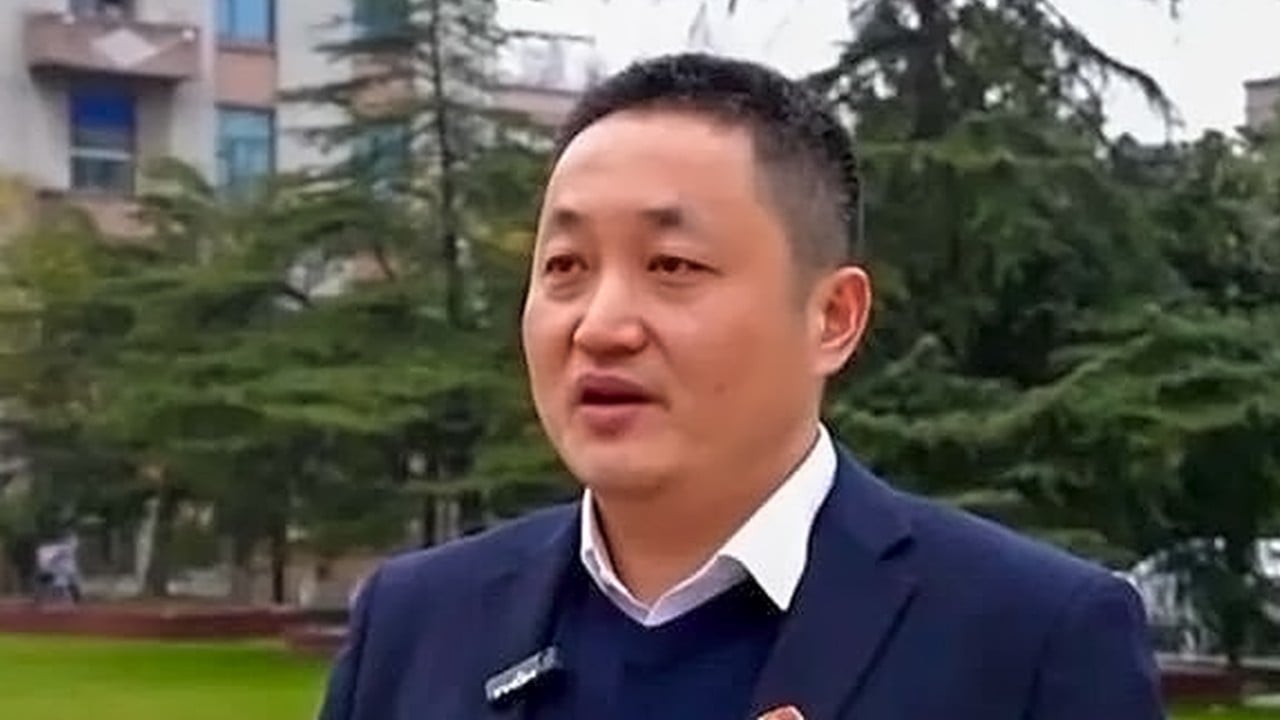
Ke Tao, China’s remote sensing expert who was ‘devoted’ to national defence, dies at 48
Coveragetap to expand ▾Spectrum: Left Only🌍Asia: 1
- Ke Tao, a prominent Chinese remote sensing expert, died from an illness at the age of 48 (per scmp.com).
- Ke Tao was a professor at Wuhan University's School of Remote Sensing and Information Engineering (per scmp.com).
- Ke Tao's expertise was in photogrammetry and its applications in aerospace, aviation, and low-altitude, close-range environments (per scmp.com).
Ke Tao, a leading figure in China's remote sensing field, has passed away at the age of 48 due to an illness, as reported by Wuhan University. Known for his dedication to national defense, Ke Tao made significant contributions to the field of remote sensing and photogrammetry, particularly in applications related to aerospace and aviation.
His work was recognized in 2015 when he received a prestigious military scientific advancement award for his research on an unnamed key technology. Ke Tao's academic journey was rooted at Wuhan University, where he completed his undergraduate, master's, and doctoral studies before joining the faculty in 2008.
As a professor at the School of Remote Sensing and Information Engineering, he was instrumental in advancing the university's research capabilities in remote sensing. The university's obituary praised his outstanding achievements in national defense science and technology, underscoring his impact on the field.
Ke Tao's expertise in photogrammetry, especially in low-altitude and close-range environments, positioned him as a pivotal figure in China's scientific community. His untimely death marks a significant loss for the field of remote sensing and for national defense research in China.
- Ke Tao's death represents a significant loss for China's scientific community, particularly in the field of remote sensing and national defense technology.
- His contributions to photogrammetry and its applications in aerospace and aviation have been pivotal, impacting both academic research and practical implementations in national defense.
- Wuhan University, where Ke Tao spent his entire academic and professional career, loses a key figure in its School of Remote Sensing and Information Engineering.
- Whether Wuhan University announces a successor to Ke Tao's research projects in remote sensing.
- Any potential shifts in China's national defense research focus following Ke Tao's death.
- Future recognition or memorials for Ke Tao's contributions to remote sensing and national defense.
- No source mentions the specific key technology for which Ke Tao received the military scientific advancement award.
- The broader impact of Ke Tao's work on China's national defense strategy is not detailed.