
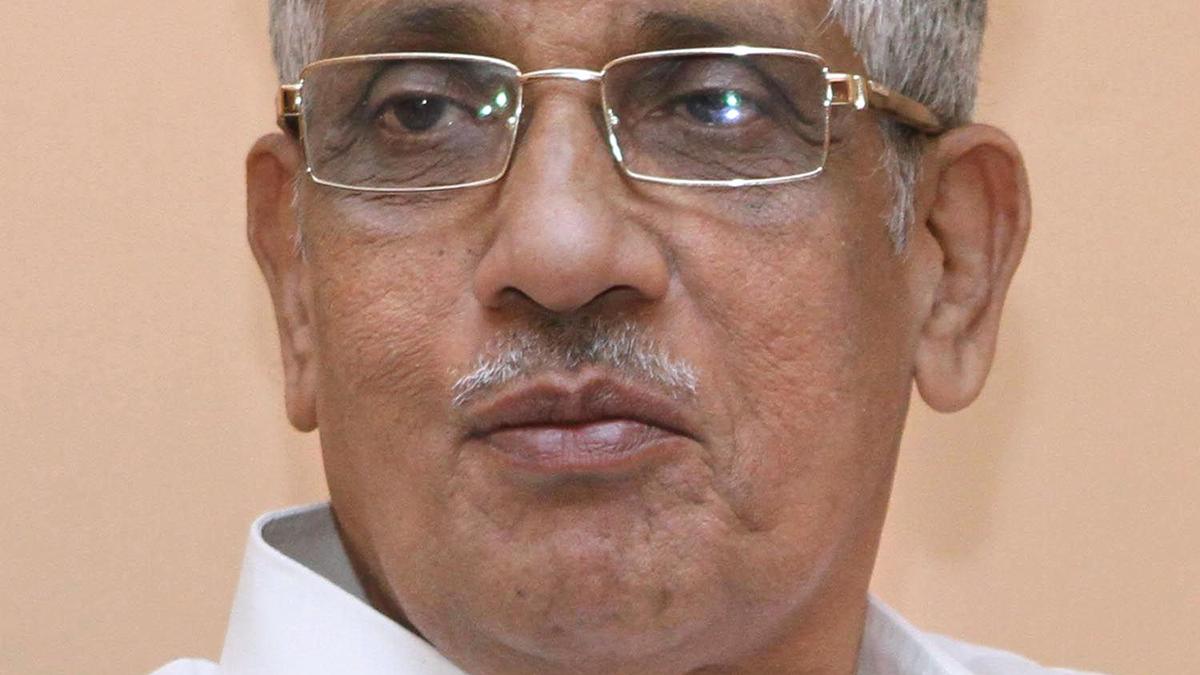
NSS Leader Attributes UDF's Kerala Victory to Public Discontent, Not Individual Efforts
Coveragetap to expand ▾Spectrum: Center Only🌍Asia: 2 · Other: 2
- G. Sukumaran Nair, NSS general secretary, stated that the UDF's victory in the Kerala Assembly elections was due to public discontent with the incumbent government, not individual efforts (per thehindu.com).
- The Congress-led UDF secured a significant lead in the 2026 Kerala Assembly elections (per news.google.com).
- The UDF's victory is seen as a response to dissatisfaction with the previous government's performance (per thehindu.com).
The Congress-led United Democratic Front (UDF) has emerged victorious in the 2026 Kerala Assembly elections, a result attributed by G. Sukumaran Nair, the general secretary of the Nair Service Society (NSS), to widespread public dissatisfaction with the incumbent government.
Nair emphasized that the victory was not due to the efforts of any single individual but rather a collective desire for change among the electorate. This sentiment was echoed in the celebrations that erupted at the Kerala Pradesh Congress Committee (KPCC) headquarters as the UDF's lead became evident.
Nair's comments came in response to questions about the role of Congress leader V.D. Satheesan in the UDF's success. While acknowledging ongoing differences with Satheesan, Nair maintained that the election outcome was a 'victory for democracy,' suggesting that internal issues within the Left, rather than anti-incumbency sentiment, contributed to their defeat.
The election results highlight a significant shift in political sentiment in Kerala, with voters expressing their discontent with the previous government's performance. The UDF's ability to capitalize on this dissatisfaction underscores the electorate's demand for change and accountability.
The celebrations at the KPCC office reflect the party's optimism and renewed mandate to address the concerns of the people. The UDF's victory is seen as a mandate to implement policies that resonate with the public's aspirations and address the challenges faced by the state.
As the UDF prepares to assume power, the focus will likely be on delivering on campaign promises and addressing the issues that led to the previous government's unpopularity. The outcome of the elections serves as a reminder of the electorate's power to influence political change and the importance of addressing public grievances.
The political landscape in Kerala is set for a transformation as the UDF takes the helm, with expectations high for effective governance and responsive leadership. The coming months will be crucial in determining how the UDF navigates the challenges ahead and fulfills the expectations of the voters who propelled them to victory.
- The people of Kerala bear the concrete costs of governance changes, as dissatisfaction with the previous government led to the UDF's victory, reflecting a demand for improved policies and accountability.
- The Congress-led UDF benefits from the electoral shift, gaining a mandate to implement their agenda and address public concerns, potentially altering the state's political dynamics.
- The election results underscore the electorate's power to demand change, influencing political strategies and priorities in Kerala.
- Whether the UDF implements key policy changes in response to public dissatisfaction.
- The role of V.D. Satheesan in the new government, given ongoing differences with NSS leadership.
- The response of the Left to internal issues that contributed to their electoral defeat.
- Thehindu.com emphasizes public dissatisfaction as the primary reason for the UDF's victory, while news.google.com focuses on the celebratory atmosphere at the KPCC office.
- The specific internal issues within the Left that contributed to their defeat are not detailed.
- No source mentions specific policies or actions by the previous government that led to public dissatisfaction.
- G. Sukumaran Nair described the election outcome as a 'victory for democracy' (per thehindu.com).