
↑Part of: OpenAI, Anthropic and Google DeepMind held weeks-long safety talks, planned third-party evaluators


King Charles III urges AI firms to impose controls, warns of ‘existential dangers’
Topic: technologyRegion: north americaUpdated: i2 outletsSources: 5Spectrum: Center Only⏱ 2 min read📡 Wire pickup
Story Summary
SITUATION
King Charles III told executives from OpenAI, Anthropic, Google DeepMind and Nvidia that “we need sufficient means of control before it is all too late,” urging guardrails on AI development (per Fortune). His comments heightened pressure for oversight and drew public pushback from President Trump and Nvidia CEO Jensen Huang (per Fortune).
Coveragetap to expand ▾Spectrum: Center Only🌍Europe: 1 · Other: 1
Political Spectrum
Position is inferred from coverage mix.
i2 outlets · Center
Left
Center
Right
Left: 0
Center: 2
Right: 0
Geography Coverage
Distribution of where coverage is coming from.
i2 unique outlets · Dominant: Europe
KEY FACTS
- King Charles III warned executives from OpenAI, Anthropic, Google DeepMind and Nvidia that “we need sufficient means of control before it is all too late,” urging guardrails on AI development (per Fortune).
- Fortune says the king’s remarks increased pressure for oversight of AI developers (per Fortune).
HISTORICAL CONTEXT
A global governance crisis over advanced AI has been building since late 2022, driven by rapid commercial releases and public fears about unchecked capability growth. That crisis prompted international attention at the UK-hosted AI Safety Summit at Bletchley Park in November 2023, where states and firms agreed on the need for shared safety norms.
The current regulatory architecture rests on the EU’s 2018 General Data Protection Regulation and the EU’s provisional AI Act negotiated in 2023, alongside the United States’ National AI Initiative Act (2020) and subsequent federal guidance and standards work by NIST through 2024.
Brief
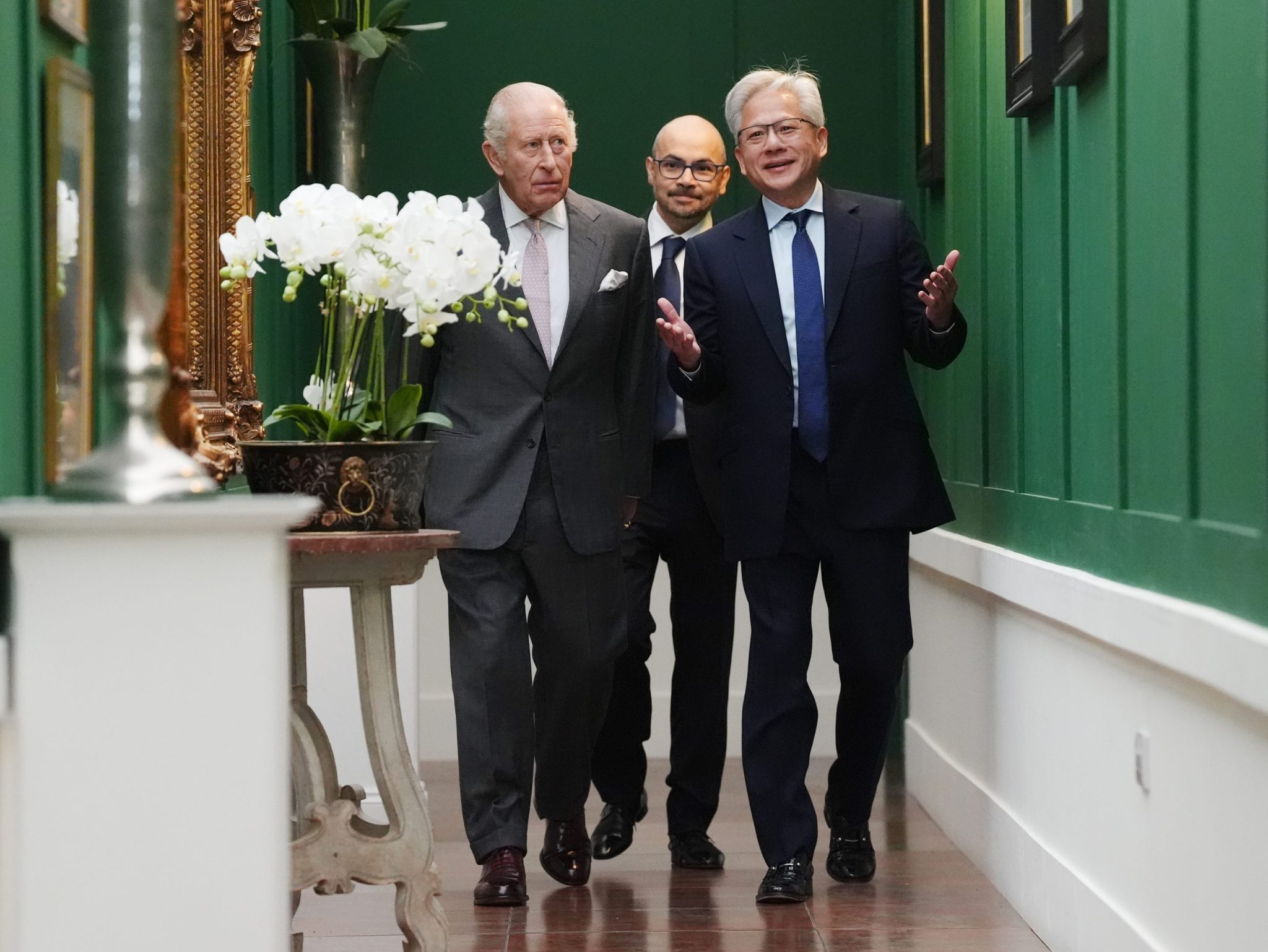
King Charles III warned executives from OpenAI, Anthropic, Google DeepMind and Nvidia that the development of artificial intelligence needs stronger guardrails because without them “we need sufficient means of control before it is all too late,” according to Fortune.
The king told the assembled leaders that AI poses “existential dangers” if left unchecked, a framing that pushed debate over oversight into the public spotlight and prompted immediate pushback from President Trump and Nvidia CEO Jensen Huang, Fortune reports.
The gathering included senior figures from four major AI organizations — OpenAI, Anthropic, Google DeepMind and Nvidia — underscoring the UK monarch’s decision to address the companies most closely tied to cutting‑edge generative AI development (per Fortune).
Supporters of tighter rules see Charles’s intervention as amplifying calls for new regulation and enforcement mechanisms; critics highlighted by Fortune, including President Trump and Jensen Huang, publicly rejected aspects of the king’s warnings and signaled resistance to heavy‑handed constraints (per Fortune).
The exchange reflects growing friction between political and private‑sector leaders over how to balance rapid AI innovation with safety measures; Fortune frames the moment as raising political pressure for oversight without documenting a specific policy outcome or new legal step.
Observers quoted in Fortune emphasize the reputational and political weight of a monarch speaking directly to major AI companies, while Fortune also records that key industry figures pushed back, illustrating the unsettled divide over the pace and shape of any regulatory response.
What comes next is uncertain in Fortune’s account: the piece documents the warning, the company participants and the public rebuttals but does not report any immediate commitments from the companies or concrete regulatory actions following the meeting (per Fortune).
Why it matters
- UK policymakers and regulators face political pressure to propose concrete AI rules after King Charles III’s public warning; that pressure targets executives at OpenAI, Anthropic, Google DeepMind and Nvidia (per Fortune).
- Executives at four major AI companies — OpenAI, Anthropic, Google DeepMind and Nvidia — bear reputational risk and potential compliance costs if governments pursue the guardrails the king urged (per Fortune).
- President Trump and Nvidia CEO Jensen Huang publicly pushed back, indicating powerful political and corporate actors may resist strict regulatory measures, which benefits companies that prioritize rapid deployment and market advantage (per Fortune).
What to watch next
- Whether the UK government or Parliament introduces specific AI regulatory proposals citing the king’s remarks within the next parliamentary session (per Fortune).
- Whether OpenAI, Anthropic, Google DeepMind or Nvidia issue formal policy commitments or joint safety measures after the king’s warning (per Fortune).
- Whether President Trump or the U.S. administration responds with policy statements or executive actions opposing new international AI constraints (per Fortune).
Where sources differ
7 dimensionsFraming differences
?- Fortune frames King Charles III’s comments as a high‑profile warning that increases pressure for oversight; no other outlets are provided for a contrasting frame in this source pack (per Fortune).
Disputed or unclear
?- Whether the king’s remarks will translate into concrete regulatory action or merely raise public debate is unverified; Fortune reports increased pressure but cites no immediate policy steps (per Fortune).
Omitted context
?- No source in this pack mentions any specific regulatory proposals, draft legislation, or timelines that would follow the king’s remarks.
- No source here provides statements from OpenAI, Anthropic, Google DeepMind or Nvidia responding directly to the king’s warning.
Conflicting figures
?- No sources in this pack provide differing numerical figures related to the event (per Fortune).
Disputed causality
?- Fortune reports the king’s warning increased pressure for oversight and that Trump and Jensen Huang pushed back; the chain of cause (whether the warning directly caused the pushback or simply coincided with it) is presented as contemporaneous rather than a legally documented sequence (per Fortune).
Attribution disputes
?- Fortune attributes the warning to King Charles III and the pushback to President Trump and Nvidia CEO Jensen Huang (per Fortune).
Sources
5 of 5 linked articles
Britain's King Charles warns Nvidia and OpenAI bosses of 'existential dangers' posed by tech - thejournal.ie
thejournal.ieSep 17Left
↗
‘We need sufficient means of control before it is all too late’: King Charles III warns AI players on concerns of ‘existential dangers’
fortune.comSep 17Left
↗
King Charles ‘warns’ Nvidia CEO Jensen Huang, Google DeepMind’s Demis Hassabis and other tech leaders: ‘S
timesofindia.indiatimes.comSep 17Left
↗
AI Existential Dangers Warned Of By King Charles
stratnewsglobal.comSep 17Left
↗
OpenAI is working with Anthropic, Google on AI safety, Bloomberg News reports
reuters.comSep 15Left
↗