
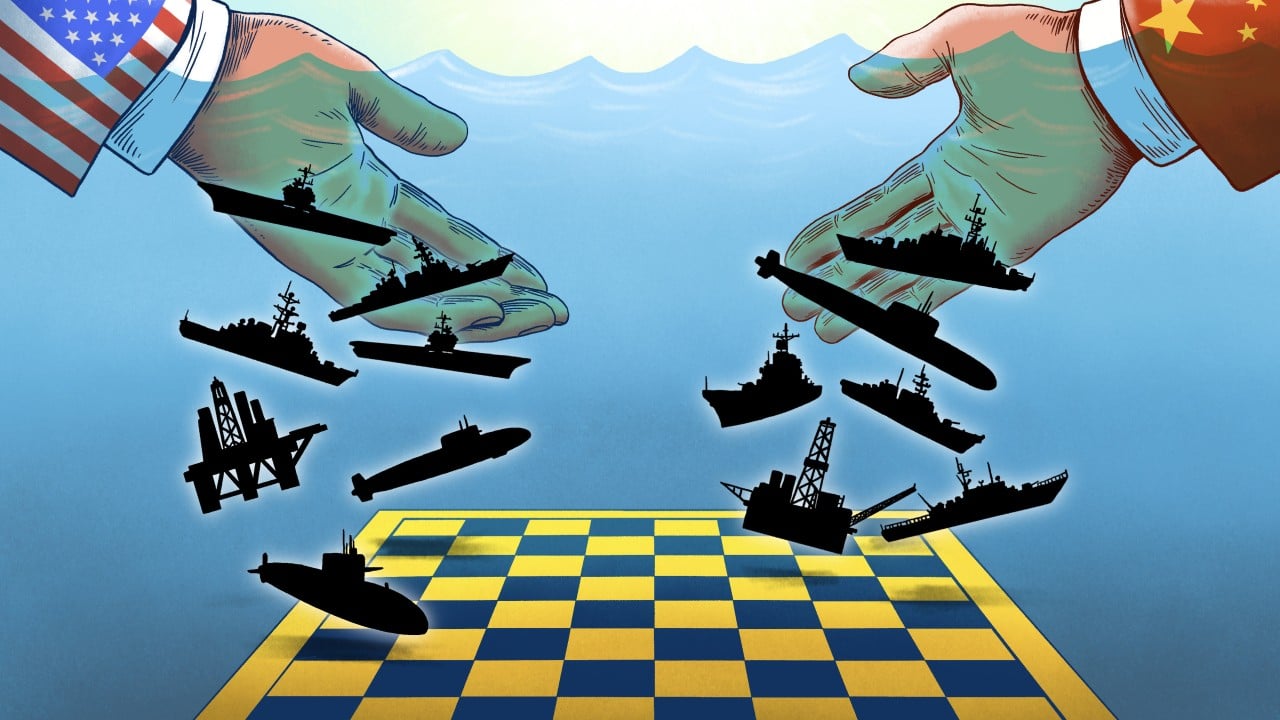
US-China Undersea Rivalry Intensifies Amid Global Energy Strains
Coveragetap to expand ▾Spectrum: Left Only🌍Asia: 1
- US President Donald Trump is scheduled to visit China amid these tensions, with the Iran war impacting global energy supplies (per scmp.com).
- The rivalry is part of a broader effort by China to enhance its influence and control over deep-sea resources (per scmp.com).
- The upcoming leaders' summit in Beijing is expected to address these issues, highlighting the geopolitical crises affecting US-China relations (per scmp.com).
The United States and China are locked in an escalating rivalry for control over undersea territories and resources, a contest that is intensifying against the backdrop of global energy disruptions caused by the ongoing war in Iran.
Michael Brookes, a commander at the US Office of Naval Intelligence, has pointed to China's efforts to modernize its submarine fleet as a key component of its strategy to expand its influence and secure deep-sea resources.
This competition is not only about military might but also involves advanced mining technologies, as both nations seek to assert dominance beneath the ocean's surface. The geopolitical stakes are high, with US President Donald Trump preparing for a landmark visit to China.
This visit comes at a time when the Iran conflict is causing significant disruptions in global energy supplies, adding further strain to the already tense relations between Washington and Beijing. Experts are closely watching the upcoming leaders' summit in Beijing, where these issues are expected to be at the forefront of discussions.
China's push for undersea dominance is seen as part of a broader effort to enhance its global power and influence. The modernization of the People's Liberation Army Navy's submarine capabilities is a critical element of this strategy, as it seeks to secure valuable deep-sea resources.
This move has prompted the United States to bolster its own undersea capabilities, leading to a high-stakes contest that could have far-reaching implications for global security and economic stability. The rivalry between the two superpowers is unfolding in a complex geopolitical landscape, where interdependence and competition coexist.
The Iran war has exacerbated these tensions, as disruptions in energy supplies have heightened economic uncertainties and added fresh challenges to US-China relations. As both nations vie for control over undersea territories, the potential for conflict looms large, with significant consequences for regional and global stability.
The upcoming summit in Beijing is expected to address these critical issues, as leaders from both countries seek to navigate the complexities of their relationship. The outcome of these discussions could shape the future of US-China relations and determine the balance of power in the undersea domain.
As the world watches closely, the stakes could not be higher for both nations and many governments.
- The competition for undersea resources directly affects global energy markets, impacting countries reliant on stable energy supplies.
- China's submarine modernization efforts could shift the balance of power in the Asia-Pacific region, affecting regional security dynamics.
- The US-China rivalry has significant economic implications, as both nations seek to secure valuable deep-sea resources that are crucial for technological advancements.
- The ongoing Iran war exacerbates tensions, as disruptions in energy supplies add economic strain and complicate diplomatic relations between the US and China.
- Whether US President Donald Trump addresses the undersea rivalry during his visit to China next week.
- Outcomes of the leaders' summit in Beijing, particularly regarding military and mining technologies.
- Any announcements from the US Office of Naval Intelligence regarding countermeasures to China's submarine advancements.
- scmp.com emphasizes the technological aspects of the rivalry, while other outlets might focus on geopolitical tensions.
- The specific impact of the Iran war on US-China relations is not fully detailed.
- No source mentions the specific economic interests of companies involved in deep-sea mining.
- Michael Brookes' comments on China's submarine modernization are highlighted by scmp.com.