
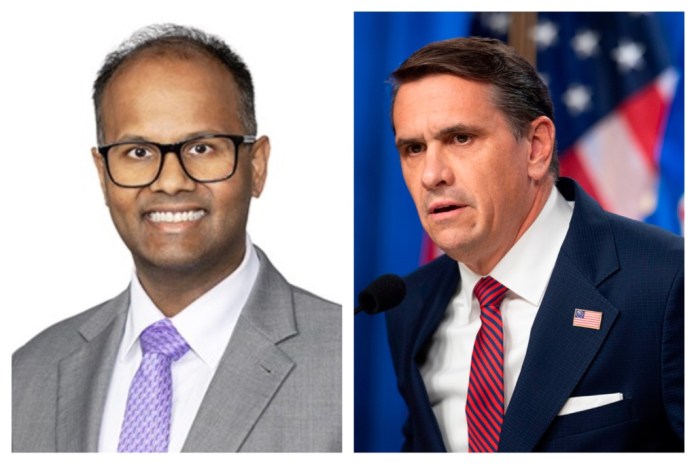
Kambli to Argue Key Trump Cases Before Leaving DOJ
Coveragetap to expand ▾Spectrum: Right Only🌍US: 1
- Abhishek Kambli is scheduled to argue next Thursday before the U.S. (per washingtonexaminer.com).
- Kambli will leave the Department of Justice at the end of May after 15 months of service (per washingtonexaminer.com).
- He will argue two major cases concerning President Donald Trump’s executive authority (per washingtonexaminer.com).
- These cases will explore the boundaries of presidential authority over national security access and federal contracting (per washingtonexaminer.com).
- Kambli will face off against veteran attorneys Paul Clement and Abbe Lowell (per washingtonexaminer.com).
- The cases are considered significant showdowns over executive branch control (per washingtonexaminer.com).
- Kambli has been working under acting Attorney General Todd Blanche and previously under Pam Bondi (per washingtonexaminer.com).
Abhishek Kambli, a deputy associate attorney general, is set to argue two pivotal cases concerning President Donald Trump's executive authority before departing the Department of Justice later this month. These cases, scheduled for oral arguments next Thursday, will challenge the limits of presidential power over national security access and federal contracting.
Kambli's departure comes after 15 months of service, during which he has defended some of the Trump administration's most contentious legal positions. The cases Kambli will argue are seen as critical tests of executive branch control, with implications for how far presidential authority can extend in areas traditionally governed by other branches of government.
Representing the challengers to the administration's actions are seasoned Washington attorneys Paul Clement and Abbe Lowell, both known for their expertise in appellate advocacy. Kambli has been working under acting Attorney General Todd Blanche, having previously served under Pam Bondi.
His role in these cases underscores the ongoing legal battles over the scope of executive power, a theme that has been prominent throughout Trump's presidency. The outcomes of these cases could have significant ramifications for the balance of power between the executive branch and other governmental entities.
They are expected to address fundamental questions about the president's ability to unilaterally make decisions impacting national security and federal contracts. Kambli's impending departure from the DOJ marks the end of a notable tenure during which he has been at the forefront of defending the administration's legal strategies.
His arguments next week will be closely watched by legal experts and political analysts alike, as they could set important precedents for future administrations. As Kambli prepares for these high-stakes arguments, the legal community is keenly observing how the courts will interpret the boundaries of executive authority.
The decisions in these cases will likely influence the legal landscape surrounding presidential powers for years to come.
- The outcomes of these cases could redefine the limits of presidential authority, directly affecting how future administrations exercise power over national security and federal contracting.
- Veteran attorneys Paul Clement and Abbe Lowell, representing the challengers, could influence the legal arguments that shape the court's decision, impacting the balance of power between branches of government.
- Abhishek Kambli's departure from the DOJ after these arguments highlights the ongoing legal challenges faced by the Trump administration, with potential long-term implications for executive branch control.
- Whether Abhishek Kambli successfully argues the cases next Thursday before leaving the DOJ.
- The court's decision on the limits of presidential authority over national security and federal contracting.
- Potential shifts in DOJ leadership and strategy following Kambli's departure at the end of May.
- No source mentions the specific legal precedents or previous cases that might influence the court's decision on presidential authority.
- The economic or political motivations behind the challenges to Trump's executive actions are not detailed in the sources.