
Israeli Strikes and Hezbollah Rockets Escalate Crisis in Lebanon Despite Ceasefire
Coveragetap to expand ▾Spectrum: Mostly Center🌍Other: 3 · ME: 2 · Asia: 1
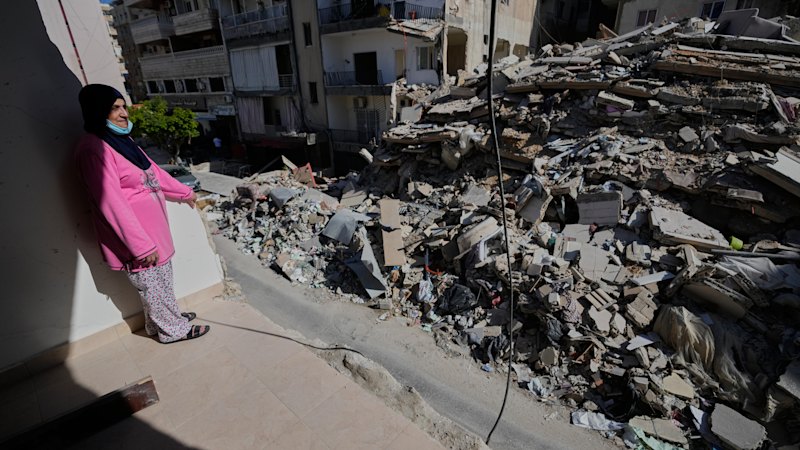
- Israeli forces are bombarding towns in southern Lebanon and demolishing buildings with bulldozers (per smh.com.au).
- Hezbollah fighters are firing rockets into civilian areas of northern Israel (per smh.com.au).
- Israeli airstrikes killed nine people, including two children, in southern Lebanon on Thursday (per smh.com.au).
- The Lebanese Health Ministry reported the casualties from the Israeli airstrikes (per smh.com.au).
- Philipose estimates that 620,000 women and girls are displaced by the war in Lebanon, including 13,500 pregnant women (per smh.com.au).
In Lebanon, the conflict between Israeli forces and Hezbollah continues to escalate despite a ceasefire that was intended to halt hostilities. Israeli airstrikes on southern Lebanon have resulted in the deaths of nine people, including two children, as reported by the Lebanese Health Ministry.
These strikes are part of a broader military campaign that includes the demolition of buildings in Lebanese villages. Meanwhile, Hezbollah fighters have been launching rockets into northern Israel, targeting civilian areas. The ongoing violence has exacerbated an already dire humanitarian situation.
Anandita Philipose, a United Nations official working in Lebanon, has highlighted the severe impact on civilians, particularly women and girls. She estimates that 620,000 women and girls have been displaced by the conflict, with 13,500 pregnant women among them. The crisis is not only a humanitarian emergency but also a protection and health crisis, according to Philipose.
Despite the nominal ceasefire, Lebanese President Joseph Aoun has expressed a desire to negotiate a peace deal with Israel. However, there are few signs of progress towards a lasting resolution. The continued hostilities underscore the challenges of achieving peace in a region marked by longstanding tensions and recent escalations.
- Civilians in southern Lebanon bear the brunt of the conflict, with Israeli airstrikes killing nine people, including children, and displacing hundreds of thousands (per smh.com.au).
- The humanitarian crisis is severe, with 620,000 women and girls displaced, including 13,500 pregnant women, highlighting the urgent need for protection and health services (per smh.com.au).
- Hezbollah's rocket attacks into northern Israel continue to threaten civilian safety and escalate regional tensions (per smh.com.au).
- The lack of progress in peace negotiations between Lebanon and Israel prolongs the conflict and exacerbates the humanitarian crisis (per smh.com.au).
- Whether Lebanese President Joseph Aoun can initiate meaningful peace negotiations with Israel.
- The response of international humanitarian agencies to the worsening crisis in Lebanon.
- Any changes in military tactics by Israeli forces or Hezbollah that could impact civilian safety.
- The United Nations' actions to address the protection and health crisis affecting displaced women and girls in Lebanon.
- smh.com.au emphasizes the humanitarian impact and displacement figures, while other outlets may focus more on military actions.
- The effectiveness of the ceasefire is unclear, as hostilities continue despite its existence.
- No source mentions the specific events that led to the current ceasefire or the terms agreed upon by both parties.
- smh.com.au reports nine casualties from Israeli airstrikes, but other sources may provide different figures.
- The sequence of actions leading to the current escalation is not fully detailed, leaving the initial trigger unclear.
- smh.com.au attributes the airstrikes to Israeli forces and the rocket attacks to Hezbollah.