
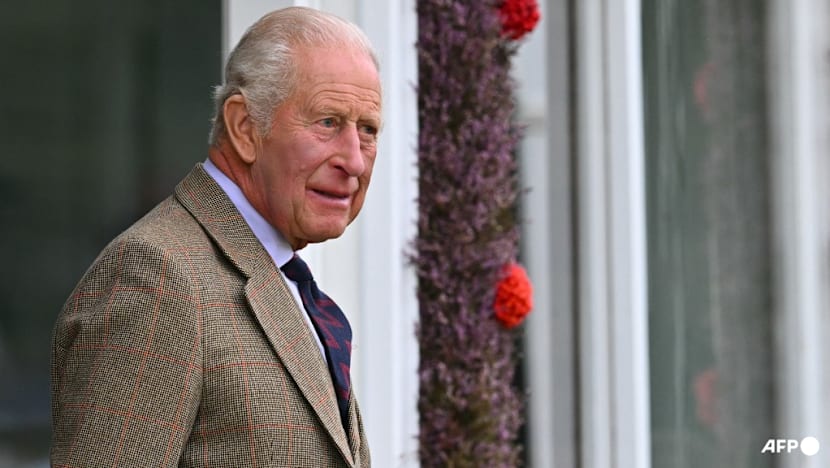
King Charles says grief can skew memory after Spencer excerpts
Topic: generalRegion: asia pacificUpdated: i3 outletsSources: 6Spectrum: Mostly Center⏱ 3 min read📡 Wire pickup
Story Summary
SITUATION
‘Like a lottery winner’: Charles ‘elated’ after Diana’s death, her brother’s new book claims London: Britain’s King Charles sounded “like a lottery winner” after the death of his late first wife Diana, her brother writes in his forthcoming book, according to newly published extracts. Diana’s brother Earl Spencer said the then-Prince Charles seemed “giddily elated” in the immediate aftermath of Diana’s death in 1997, possibly because he felt it meant he was freer to marry again, according to passages in the Daily Ma
Coveragetap to expand ▾Spectrum: Mostly Center🌍Asia: 2 · Europe: 1
Political Spectrum
Position is inferred from coverage mix.
i3 outlets · Center
Left
Center
Right
Left: 1
Center: 2
Right: 0
Geography Coverage
Distribution of where coverage is coming from.
i3 unique outlets · Dominant: Asia
KEY FACTS
- Charles Spencer wrote that the then-prince "sounded giddily elated – like a lottery winner" on the night Diana died.
- Buckingham Palace strongly pushed back against Spencer's allegations and said grief can "cloud reason, affect judgement and colour memory."
- Spencer's book is titled Swan Song: Diana, My Sister and is set to be published next week.
- Excerpts from the book are being serialised in the Daily Mail.
- Spencer added: “Looking back now, I suspect the prince’s first reaction must have been to think more of how this event might free him to marry the woman he loved, rather than appreciating the loss of one he did not.”
- Charles on Wednesday took the unusual step of responding to criticism after the first extracts of Spencer’s book were published, saying via a spokesperson that grief could impact reason, judgment and memory.
- “It is a sad fact that, in her later years, Diana drove herself more than once to Beachy Head, the highest chalk sea cliff in England, while contemplating ending it all,” Spencer wrote.
- Diana was killed at the age of 36 when the car carrying her and her lover Dodi al-Fayed crashed in Paris as it sped away from chasing paparazzi photographers on motorbikes.
HISTORICAL CONTEXT
The immediate backdrop is the active US–Israel military campaign against Iran that began with coordinated strikes in March 2026, a confrontation that has driven heightened global attention to leadership, statecraft and media scrutiny.
That standoff rests on structural frameworks including the 2015 Joint Comprehensive Plan of Action (JCPOA, signed 14 July 2015) and the United States’ withdrawal from it on 8 May 2018, subsequent reimposition of sanctions and a series of UN and unilateral measures through 2019–2025 that shaped regional tensions.
Brief
Earl Spencer’s newly published extracts from his forthcoming book allege that Britain’s King Charles sounded “giddily elated” immediately after the 1997 death of his first wife, Diana, Princess of Wales.
Spencer writes that the then-Prince Charles “sounded like a lottery winner,” suggesting he may have believed Diana’s death freed him to remarry; the passages appeared in the Daily Mail and were summarized in newly released excerpts (per smh.com.au).
The allegation has prompted an uncommon public pushback: Charles’ team said in response to criticism that grief can affect reason, judgment and memory, a statement that the book’s excerpts directly prompted (per smh.com.au).
Spencer’s extracts also revisit Diana’s struggles, saying she went more than once to Beachy Head — described as the highest chalk sea cliff in England — while contemplating ending her life, and notes the 1997 car crash in Paris that killed Diana and Dodi al-Fayed as they fled paparazzi on motorbikes (per smh.com.au).
The book frames Diana’s death not only as a personal tragedy but as a moment that shaped royal relationships thereafter; the claim that Charles was ‘elated’ is the most incendiary element and has driven media and royal household responses (per smh.com.au).
The dispute centers on memory and motive: Spencer presents a retrospective character judgment about Charles’ reaction, while the king’s spokesperson sought to contextualize such memories under the distorting effects of grief.
The source excerpts do not include a new statement from Charles himself beyond the spokesperson’s comment, and they rely on Spencer’s interpretation of events rather than contemporaneous documentation (per smh.com.au).
Why now: the publication of Spencer’s book excerpts has reignited scrutiny of royal conduct around Diana’s death and reopened public debate about how family recollections and personal memoirs shape historical narratives.
Confirmed facts in the excerpts include Diana’s age at death (36) and the circumstances of the Paris crash; interpretive claims—about Charles’ emotional state and motivations—rest with Spencer’s account and with how the king’s spokesperson chooses to frame memory and grief (per smh.com.au).
Sources
6 of 6 linked articles
Charles Spencer accuses King Charles III of being "giddily elated" after Diana's death; palace rebukes claims
channelnewsasia.com23h agoCenter
↗
Charles sounded ‘giddily elated’ after Diana’s death, claims Earl Spencer
theguardian.comSep 17Left
↗
‘Like a lottery winner’: Charles ‘elated’ after Diana’s death, her brother’s new book claims
smh.com.auSep 17Center
↗
Charles was 'giddily elated' in phone call after Diana's death, Earl Spencer claims in book
news.sky.comSep 17Left
↗
King Charles sounded like 'lottery winner' after Diana's death, her brother writes
reuters.comSep 17Left
↗
King Charles ‘Sounded Giddily Elated — Like a Lottery Winner’ After Princess Diana Died, Says Her Brother Charles Spencer
aol.comSep 17Left
↗