
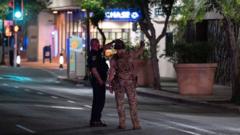
FBI fatally shoots a man holding hostages in a California office building, police say - dailyrecordnews.com
Topic: generalRegion: North AmericaUpdated: i4 outletsSources: 14⚠ Bias gap — sources divergeSpectrum: Mostly Center⏱ 4 min read⚠ 3d+ old
Story Summary
SITUATION
The FBI's intervention in a hostage situation in California highlights the escalating crisis of public safety and violent crime in the U.S., a trend exacerbated by the pandemic's social and economic fallout. This incident underscores the urgent need for effective strategies to address rising violence and protect communities.
Coveragetap to expand ▾Spectrum: Mostly Center🌍Other: 8 · US: 3 · Europe: 2 · Asia: 1
Political Spectrum
Position is inferred from coverage mix.
i4 outlets · Center
Left
Center
Right
Left: 2
Center: 11
Right: 1
Geography Coverage
Distribution of where coverage is coming from.
i4 unique outlets · Dominant: Global
KEY FACTS
- California standoff ends with suspect dead, all 10 hostages freed
HISTORICAL CONTEXT
The recent hostage situation in California unfolds against a backdrop of increasing tensions and violence in the United States, particularly in relation to issues of crime and public safety. In recent years, the country has witnessed a notable rise in violent crime rates, exacerbated by the social and economic disruptions caused by the COVID-19 pandemic.
The pandemic, which began in early 2020, led to widespread lockdowns, economic instability, and significant mental health challenges, contributing to a surge in various forms of violence, including domestic disputes and armed confrontations.
Brief
In a dramatic conclusion to a 15-hour standoff in California, the FBI shot a man dead after he took 10 hostages. The incident unfolded in a residential neighborhood, prompting a swift response from law enforcement, who engaged in negotiations with the suspect throughout the ordeal.
Ultimately, all hostages were freed unharmed, but the tense situation raised significant concerns among local residents about safety and security in their community. Authorities had been attempting to resolve the situation peacefully, but as the standoff progressed, the decision was made to intervene.
The FBI's actions have drawn attention to the challenges faced by law enforcement in managing hostage situations, balancing the need for a swift resolution with the safety of those involved. This incident highlights the ongoing risks associated with such crises and the critical role of negotiation tactics in law enforcement operations.
As investigations continue, the community is left to grapple with the aftermath of the event and its implications for public safety.
Why it matters
- The FBI's intervention in the California hostage situation highlights the ongoing challenges law enforcement faces in managing violent incidents, particularly in the context of rising crime rates.
- The successful resolution, with all hostages freed, underscores the importance of effective crisis response strategies that can protect civilians and minimize loss of life.
- However, the incident also raises concerns about public safety and mental health resources, as communities grapple with the aftermath of increased violence and the need for support systems to address underlying issues.
- For the families of the hostages, this event may lead to heightened anxiety and a demand for greater security measures in public spaces.
What to watch next
- The FBI is expected to release a detailed report on the incident within 72 hours, outlining the circumstances leading to the shooting and the response protocols followed.
- Local law enforcement agencies will hold a press conference within the next 48 hours to discuss security measures and community safety following the hostage situation.
- The California state government is likely to propose new legislation addressing hostage situations and law enforcement protocols in the coming weeks.
- Civil rights organizations are planning to issue statements and possibly organize protests within the next week, calling for accountability and transparency in law enforcement actions.
Where sources differ
Bias gap0.80 / 2.0
Left- and right-leaning outlets are covering this story differently — in which facts to emphasize, which context to include, and how to frame causes and consequences.
Left-leaning (2)
nytimes.com-0.30
FBI Kills Suspect in Hostage Situation at Building With Bank in Bakersfield, California FBI Kills Suspect in Hostage Situation at Building With Bank in Bakersfield, California FBI …
nbcnews.com-0.25
California standoff ends with suspect dead, all 10 hostages freed California standoff ends with suspect dead, all 10 hostages freed California standoff ends with suspect dead, all …
Center (11)
wpbf.comnews.sky.comfacebook.comnews8000.combbc_worldboston25news.comwwnytv.comdailyrecordnews.comchannel_news_asiawlwt.comtheguardian.com
Right-leaning (1)
washington_examiner+0.70
Suspect holding hostages at California bank killed by FBI Suspect holding hostages at California bank killed by FBI Suspect holding hostages at California bank killed by FBI The su…
Sources
14 of 14 linked articles
FBI Kills Suspect in Hostage Situation at Building With Bank in Bakersfield, California
nytimes.comJun 3Left
↗
Suspect who took 10 people hostage in California standoff shot and killed by FBI, police say
wpbf.comJun 3Left
↗
FBI shoots man dead in California after he takes 10 people hostage in 15-hour standoff
news.sky.comJun 3Left
↗
California standoff ends with suspect dead, all 10 hostages freed
nbcnews.comJun 3Left
↗
A man holding hostages inside a California office building has been shot and killed by the FBI.
facebook.comJun 3Left
↗
Suspect dead after taking hostages at California bank - news8000.com
news8000.comJun 3Left
↗