
May Day Protests in Europe and Asia Erupt into Anti-US and Anti
Coveragetap to expand ▾Spectrum: Mixed🌍US: 1 · Other: 1
- May Day protests in cities like Paris, Istanbul, Madrid, Manila, and Seoul turned into anti-American and anti-Israel demonstrations (per internewscast.com).
- In Paris, tensions escalated during the protests, leading to clashes with police who used tear gas and made arrests (per internewscast.com).
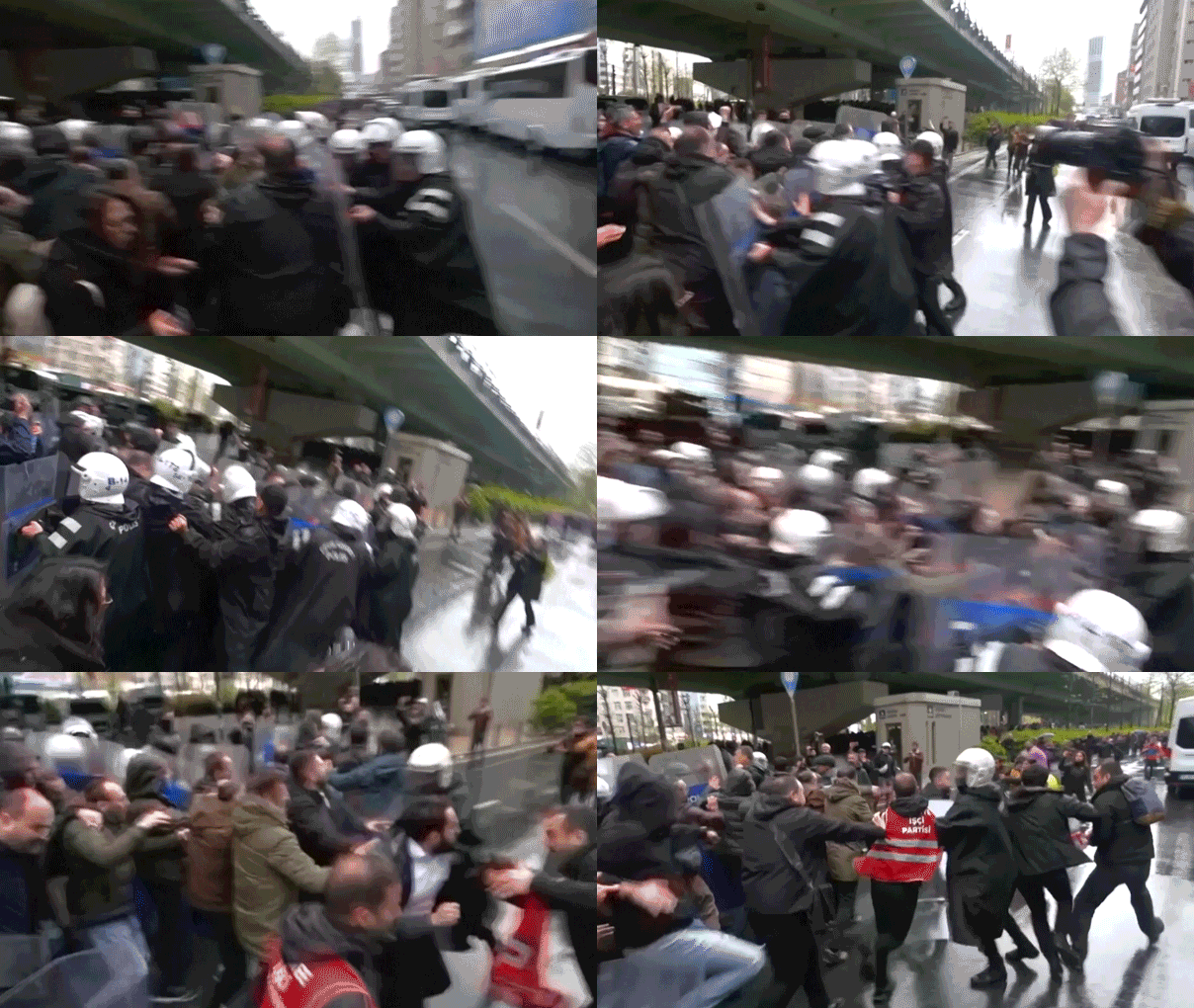
- Protests in Istanbul saw clashes between police and demonstrators during the May Day march (per foxnews.com).
May Day protests across Europe and Asia have evolved into significant political demonstrations, with anti-American and anti-Israel sentiments prominently displayed. In cities such as Paris, Istanbul, Madrid, Manila, and Seoul, what began as traditional labor rights protests expanded to include broader political grievances.
Demonstrators connected issues like rising living costs and social inequality to U.S. foreign policy decisions and ongoing conflicts in the Middle East. In Paris, the protests escalated into clashes with law enforcement. Social media footage showed police responding with tear gas and making arrests after projectiles were thrown by demonstrators.
Initially, French labor leaders had focused on issues such as inflation, wages, and social protections. However, the protests soon featured anti-war slogans, Palestinian symbolism, and criticism of military spending.
Emma Schubart, a Research Fellow at the Henry Jackson Society, observed that May Day demonstrations are increasingly serving as platforms for ideological movements that extend beyond traditional labor activism. She noted that anti-war and anti-capitalist rhetoric is now routinely accompanied by Palestinian flags and explicit anti-Israel slogans.
In Istanbul, similar tensions were reported as police and protesters clashed during the May Day march. The protests in Madrid also saw leftist groups marching, reflecting a broader trend of political discourse overshadowing labor rights advocacy. The shift in focus from labor rights to broader political issues highlights the evolving nature of International Workers’ Day.
Demonstrators are using the platform to voice their discontent with global political dynamics, particularly those involving the United States and Israel. This year's May Day protests underscore the growing intersection of labor rights with global political issues, as demonstrators link economic grievances to geopolitical actions.
The protests serve as a reminder of the interconnectedness of domestic and international issues in the current political climate.
- European and Asian cities bear the concrete costs of these protests, with clashes leading to arrests and potential injuries among demonstrators and police.
- The protests highlight the dissatisfaction with U.S. foreign policy and its perceived impact on global economic and social issues, affecting international relations.
- The shift from labor rights to broader political discourse indicates a growing trend of using traditional protest platforms to address global grievances.
- Whether French labor leaders continue to incorporate broader political issues into future demonstrations.
- The response of U.S. and Israeli governments to the growing international criticism reflected in these protests.
- Potential changes in protest strategies in Europe and Asia as demonstrators increasingly focus on geopolitical issues.
Left- and right-leaning outlets are covering this story differently — in which facts to emphasize, which context to include, and how to frame causes and consequences.
4 specific areas where coverage diverges — see below.
- internewscast.com emphasizes the ideological shift in May Day protests, while foxnews.com focuses on the clashes in specific cities.
- The specific number of arrests and injuries during the protests remains unverified across sources.
- No source mentions the specific U.S. foreign policy decisions or Middle Eastern conflicts that protesters are reacting to.
- The economic impact of military spending criticized by protesters is not detailed in any source.
- Emma Schubart stated that May Day demonstrations increasingly serve as platforms for ideological movements beyond labor activism (per internewscast.com).