
Middle East war live: Iran announces new body to manage Strait of Hormuz
Topic: defense & securityRegion: Middle EastUpdated: i4 outletsSources: 15⚠ Bias gap — sources divergeSpectrum: Mostly Center⏱ 4 min read📡 Wire pickup⚠ 3d+ old
Story Summary
SITUATION
After the US and Iran exchanged fire in the Strait of Hormuz, the ongoing ceasefire between the two nations is now at risk. The UAE has responded to Iranian missile and drone attacks, indicating a potential escalation in regional tensions.
Coveragetap to expand ▾Spectrum: Mostly Center🌍ME: 4 · Other: 4 · Europe: 3 · US: 1 · Asia: 1
Political Spectrum
Position is inferred from coverage mix.
i4 outlets · Center
Left
Center
Right
Left: 2
Center: 11
Right: 0
Geography Coverage
Distribution of where coverage is coming from.
i4 unique outlets · Dominant: Middle East
KEY FACTS
- US President Donald Trump warned that Iran must act "fast" after efforts to end the US-Israeli war with Iran appeared to have stalled.
- Iran's top security body announced on Monday the formation of a new body to manage the Strait of Hormuz.
- Saudi Arabia covertly launched strikes on Iran during war, sources say - The Times of Israel
HISTORICAL CONTEXT
The recent missile and drone attacks by Iran on the United Arab Emirates (UAE) are a significant escalation in the ongoing conflict involving the United States, Israel, and Iran. This incident, occurring on a Friday, underscores the fragile nature of the current ceasefire and the broader geopolitical tensions in the Middle East.
The UAE's response to these attacks is part of a complex web of regional dynamics that have been shaped by historical events and strategic interests. The immediate backdrop to this situation is the military campaign initiated by the United States and Israel against Iran in early March 2026.
Brief
In a significant development amid the ongoing conflict in the Middle East, Iran's top security body announced the establishment of a new entity to oversee the Strait of Hormuz, a crucial maritime route for global oil shipments.
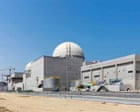
This announcement comes on the heels of escalating tensions, as the United Arab Emirates reported a fire near its Barakah nuclear power plant, which it attributed to a drone strike launched by Iran or its proxies.
The incident has raised alarms about the potential for further military escalation in the region, particularly as Saudi Arabia also reported intercepting three drones. US President Donald Trump has urged Iran to act swiftly, indicating that diplomatic efforts to resolve the ongoing US-Israeli war with Iran have stalled.
Iran, for its part, claims to have responded to a new US proposal aimed at ending the conflict, with ongoing discussions mediated by Pakistan. The UAE's accusations against Iran highlight the complex dynamics at play, as Iran has labeled the UAE an 'active partner' in the US-Israeli efforts against it.
As drone strikes continue to target US allies in the Gulf, the situation remains precarious, with both sides poised for further actions that could escalate the conflict further.
Where sources differ
Bias gap0.95 / 2.0
Left- and right-leaning outlets are covering this story differently — in which facts to emphasize, which context to include, and how to frame causes and consequences.
Left-leaning (2)
ft_world-0.70
Egypt deploys jets to UAE as Iran war strains Arab alliances Egypt deploys jets to UAE as Iran war strains Arab alliances Egypt deploys jets to UAE as Iran war strains Arab allianc…
guardian_world-0.50
UAE blames Iran or its proxies for drone strike fire near nuclear plant The United Arab Emirates has blamed a fire near its nuclear power plant on a drone launched by Iran or one o…
Center (11)
anewz.tvnews.inbox.eufrance24_enmiddleeasteye.netreuters.comndtv.comarabnews.comnews.aznaharnet.comtimesofisrael.comaljazeera.com
Sources
13 of 13 linked articles
Egypt deploys jets to UAE as Iran war strains Arab alliances
ft.comMay 24Left
↗
UAE blames Iran or proxies for strike near nuclear plant, as Trump tells Tehran ‘clock is ticking’
theguardian.comMay 18Left
↗
UAE and Saudi Arabia report drone incidents amid Iran conflict deadlock- Middle East conflict
anewz.tvMay 18Left
↗
Middle East war live: Drone strikes on UAE and Saudi Arabia fuel escalation fears
news.inbox.euMay 18Left
↗
Middle East war live: Iran announces new body to manage Strait of Hormuz
france24.comMay 18Center
↗
Saudi Arabia condemns UAE drone strike, backs security measures
middleeasteye.netMay 17Left
↗