
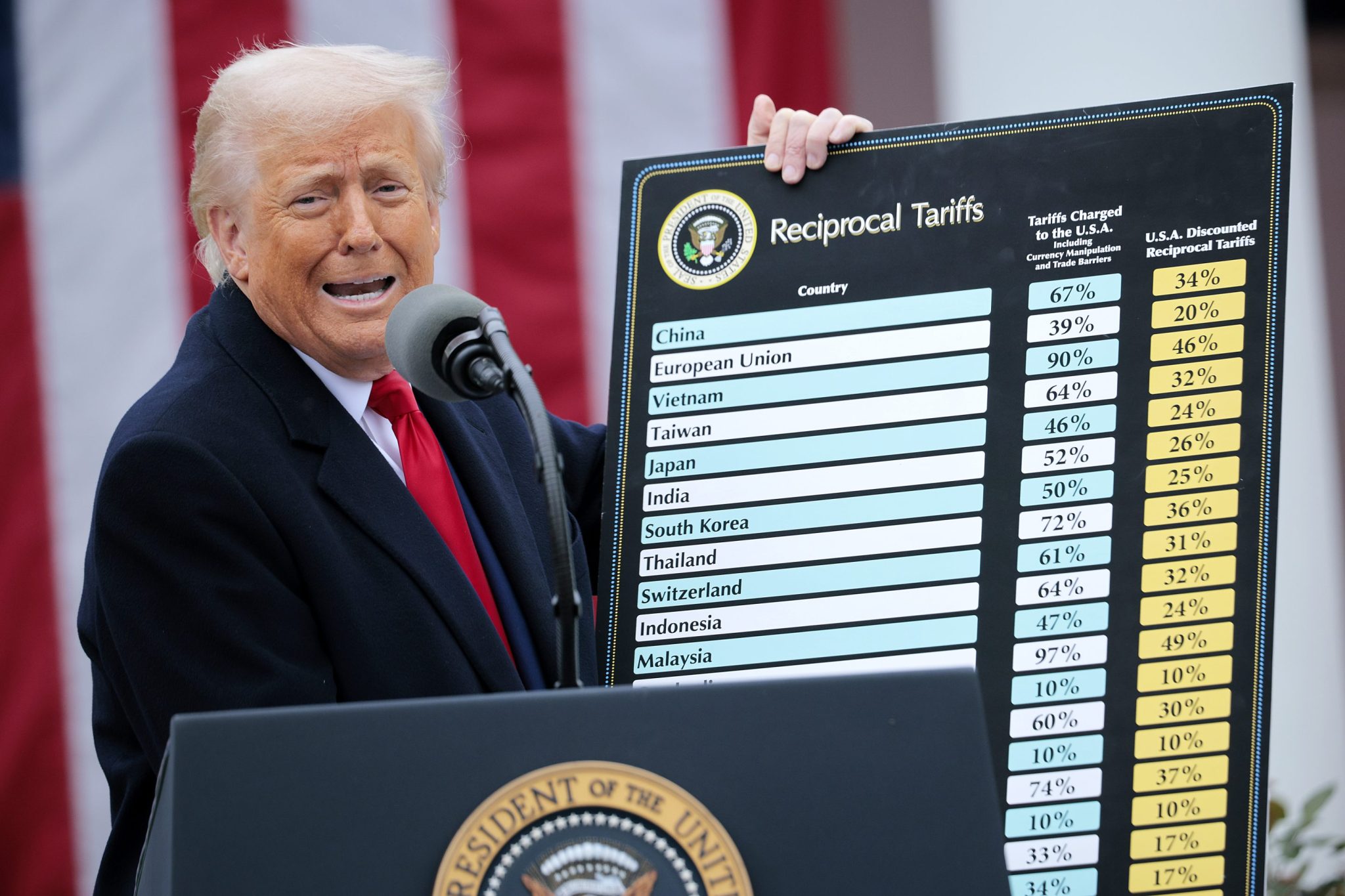
A year after Liberation Day, Trump’s tariffs have done ‘significant damage’ to the U.S.
Coveragetap to expand ▾Spectrum: Center Only🌍Other: 2 · Europe: 1
- Mark Zandi, chief economist at Moody's Analytics, reports that Trump's tariffs have done significant damage to the U.S. economy (per fortune.com).
- Economists have over a year of data to analyze the impact of the tariffs implemented on Liberation Day (per fortune.com).
- The healthcare industry is the only sector that has added meaningfully to payrolls since the tariffs were imposed (per fortune.com).
- Zandi's analysis indicates that the tariffs have not helped the fortunes of U.S. consumers (per fortune.com).
Moody's chief economist Mark Zandi has issued a stark warning about the economic impact of tariffs imposed by President Donald Trump. According to Zandi, these tariffs have inflicted significant damage on the U.S. economy, a conclusion drawn from over a year of economic data following their implementation on Liberation Day.
Zandi's analysis reveals that the tariffs have led to a standstill in job growth, with the healthcare sector being the sole industry to see meaningful payroll additions. This economic stagnation has left many U.S. families effectively living in a recession, as the tariffs have not improved their financial situations.
Zandi's concerns highlight the broader implications of trade policies on domestic economic health. While the tariffs were initially intended to protect American industries, the data suggests that the broader economic consequences have been detrimental. The healthcare sector's resilience contrasts sharply with other industries that have struggled to maintain employment levels.
As the U.S. economy grapples with these challenges, policymakers may need to reassess the long-term viability of such trade measures. The ongoing debate over the effectiveness of tariffs underscores the complexities of balancing protectionist policies with economic growth.
Zandi's findings serve as a critical reminder of the interconnectedness of global trade and domestic economic stability.
- U.S. families are bearing the brunt of economic stagnation, with many effectively living in a recession due to job growth standstill caused by tariffs.
- The healthcare sector benefits as the only industry adding jobs, highlighting disparities in economic impact across sectors.
- Policymakers face pressure to reassess tariffs as data reveals broader economic harm, impacting future trade policy decisions.
- Whether U.S. policymakers will reconsider or adjust tariff policies in response to economic data.
- Potential shifts in employment trends across industries beyond healthcare.
- Upcoming economic reports that may further illuminate the impact of tariffs on the U.S. economy.
- No source mentions the specific industries most negatively impacted by the tariffs beyond healthcare.
- The broader geopolitical context of the tariffs, including international trade relations, is not discussed.