
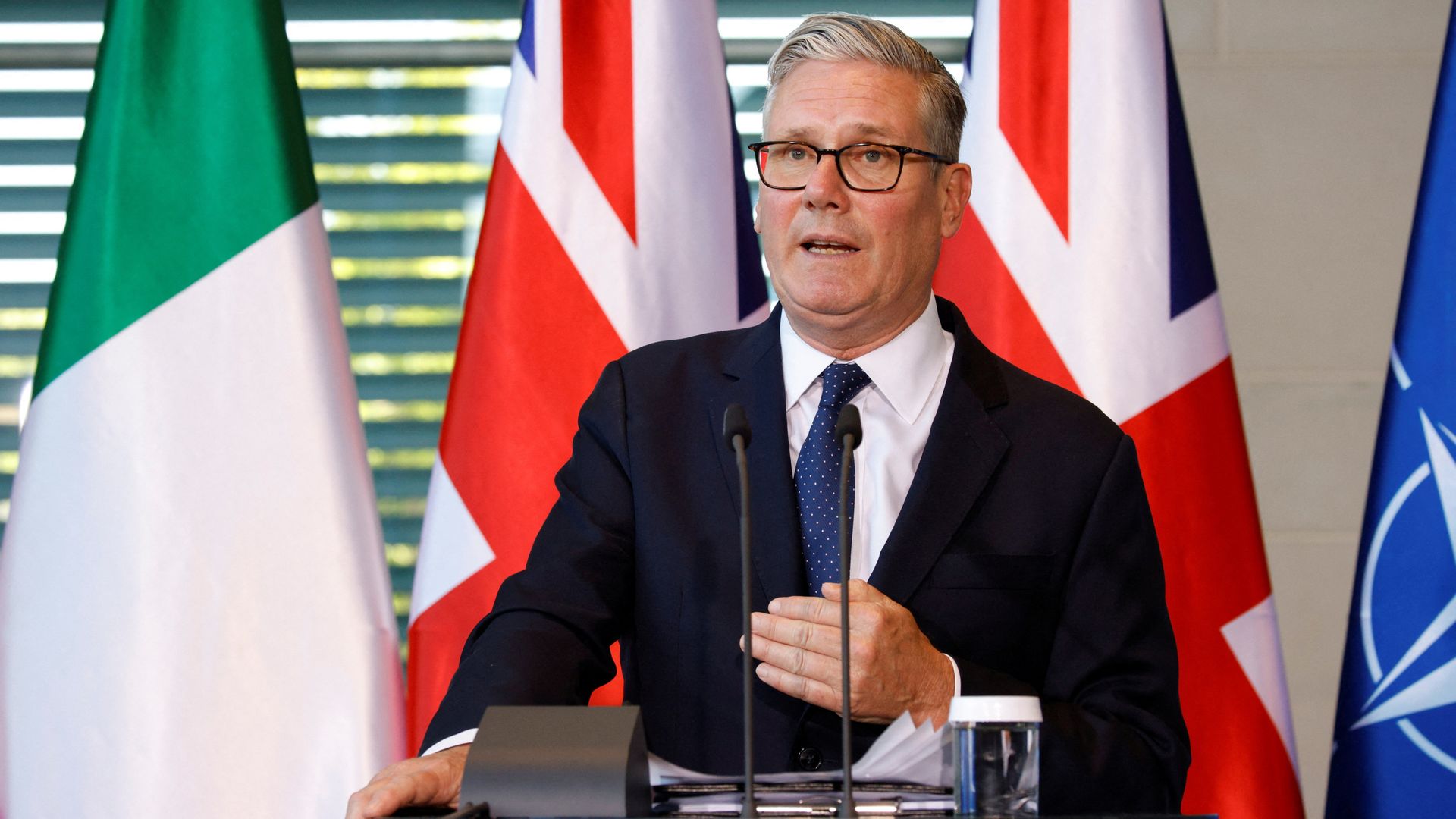
NATO Presses UK for Clear War Readiness Amid Political Turmoil
Topic: defense & securityRegion: EuropeUpdated: i1 outletsSources: 1Spectrum: Center OnlyFiltered: Global (0/1)· Clear⏱ 4 min read
Story Summary
SITUATION
NATO demands clarity on the UK's war readiness, stating it is no longer in Sir Keir's gift. This pressure reflects growing concerns over the UK's political uncertainty and its implications for NATO commitments.
Coveragetap to expand ▾Spectrum: Center Only🌍Other: 1
Political Spectrum
Position is inferred from coverage mix.
i1 outlets · Center
Left
Center
Right
Left: 0
Center: 1
Right: 0
Geography Coverage
Distribution of where coverage is coming from.
i1 unique outlets · Dominant: Global
KEY FACTS
- NATO needs to see a credible trajectory for when the UK will be ready for war - and that is no longer in Sir Keir's gift
HISTORICAL CONTEXT
The immediate backdrop to the current concerns regarding the UK's military readiness is the ongoing geopolitical tensions in Europe, particularly in light of Russia's aggressive actions in Ukraine, which began with the annexation of Crimea in 2014 and escalated significantly with the full-scale invasion in February 2022.
This invasion prompted a reevaluation of military commitments among NATO allies, including the UK, which has been a prominent member of the alliance. In response to the invasion, NATO increased its presence in Eastern Europe, deploying additional troops and resources to reassure member states bordering Russia.
Brief
NATO has issued a clear demand for the United Kingdom to provide a credible timeline regarding its military readiness, emphasizing that this responsibility is no longer solely within the control of Sir Keir Starmer.
The alliance's insistence reflects a broader concern about the UK's political uncertainty and its potential impact on NATO commitments, particularly as global tensions continue to escalate.
Sir Keir Starmer, the leader of the Labour Party, faces increasing scrutiny over his leadership and the party's stance on defense issues, which are critical as NATO seeks reliable partners in an unpredictable geopolitical landscape.
The UK's ability to respond to NATO's demands is further complicated by internal political dynamics, which could undermine its role within the alliance. As NATO navigates ongoing global conflicts, the need for strong military alliances becomes ever more pressing, making the UK's war readiness a pivotal issue.
The situation underscores the delicate balance between domestic politics and international military obligations, with NATO looking for assurances that the UK can fulfill its commitments in times of crisis.
Sources
0 of 1 linked articles · Filter: Global