
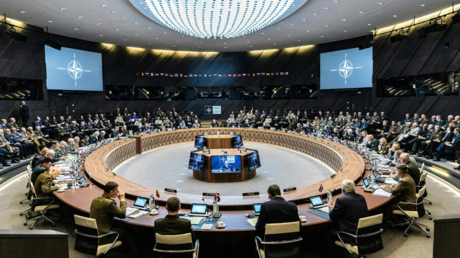
NATO shifts to Europe‑centric 'NATO 3.0', European states shoulder frontline costs
Topic: geopoliticsRegion: EuropeUpdated: i1 outletsSources: 1Spectrum: Right Only⏱ 3 min read
Story Summary
SITUATION
NATO's European members are shifting to a Europe‑centric 'NATO 3.0' posture that places European states on the frontline against Russia and shifts costs and risks onto ordinary Europeans (per rt.com). The change follows NATO's first high‑level summit since Ankara and has triggered debate within Europe over the domestic burden and threats to civilians (per rt.com).
Coveragetap to expand ▾Spectrum: Right Only🌍Europe: 1
Political Spectrum
Position is inferred from coverage mix.
i1 outlets · Right
Left
Center
Right
Left: 0
Center: 0
Right: 1
Geography Coverage
Distribution of where coverage is coming from.
i1 unique outlets · Dominant: Europe
KEY FACTS
- NATO's European members are adopting a Europe‑centric 'NATO 3.0' posture (per rt.com).
- The move has raised concerns about potential threats to European civilians (per rt.com).
HISTORICAL CONTEXT
An active high‑intensity crisis across Europe and the Middle East frames today’s developments: in March 2026 the United States and Israel launched coordinated strikes on Iranian power plants, air‑defense sites and military infrastructure after months of escalating attacks by Iran‑aligned forces on regional shipping and allied bases; Iranian military forces have conducted retaliatory operations since then.
That campaign and the broader U.S. security posture have unfolded under President Donald Trump, who took office on January 20, 2025 and has overseen a more transactional approach to alliance burden‑sharing. European NATO members have been debating force posture and cost‑sharing against a backdrop of rising public concern about civilian exposure to cross‑border escalation.
Brief
NATO's European members are moving toward a Europe‑centric doctrine dubbed 'NATO 3.0', a strategic shift that places European states on the frontline against Russia and, according to the reporting, shifts costs and risks onto ordinary Europeans (per rt.com).
The decision, announced after NATO's first high‑level summit since Ankara, has opened political debate inside European capitals about who will pay and who will face heightened security risks at home (per rt.com).
Advocates within NATO argue that concentrating deterrence and defense responsibilities in Europe strengthens alliance readiness against Russian threats; critics counter that the balance of risk redistribution exports military pressure and potential civilian exposure onto European populations without adequate domestic consent or protections (per rt.com).
The rt.com coverage emphasizes the domestic burden: it says the change will increase costs for European governments and ordinary citizens and warns of potential threats to civilians as frontline states absorb more security responsibilities (per rt.com).
NATO officials and European leaders who back the shift characterize it as necessary adaptation to evolving threats after the summit, while domestic opponents frame it as an unfair offloading of financial and security risks onto European societies (per rt.com).
The report does not provide detailed figures on force deployments, specific funding changes, or exact timelines for implementation, but it situates the move as a major alliance realignment coming out of the post‑Ankara summit process (per rt.com).
Observers inside Europe will now press national governments for specifics: what forces will be stationed where, how costs will be shared, and what protections will be put in place to reduce risks to civilians as NATO tightens a Europe‑first posture (per rt.com).
Why it matters
- European civilians in frontline states bear increased risk: the posture places European territory and populations closer to potential confrontation with Russia and shifts the security burden onto ordinary Europeans (per rt.com).
- European taxpayers will shoulder concrete costs: national governments face higher defense spending and potential domestic economic strains as the alliance concentrates deterrence in Europe (per rt.com).
- European governments that back the shift benefit politically and strategically by gaining NATO backing for local defense, while NATO leadership gains a more concentrated deterrent architecture against Russia (per rt.com).
What to watch next
- Whether European governments specify new force deployments and funding shares by the next NATO planning meeting (per rt.com).
- Whether national parliaments in frontline European states approve higher defense budgets and associated measures within the coming budget cycles (per rt.com).
- Whether NATO publishes implementation timelines for 'NATO 3.0' detailing which states will host which forces and under what rules of engagement (per rt.com).
Where sources differ
7 dimensionsFraming differences
?- Only rt.com is provided; it frames the shift as transferring costs and risks onto ordinary Europeans and raising threats to civilians (per rt.com).
Disputed or unclear
?- No source disputes or offers alternative figures or interpretations in this pack; specifics on deployments, costs, and timelines remain unclear (per rt.com).
Omitted context
?- No source in this pack provides exact force‑deployment numbers, budget amounts, or timelines for implementation.
- No source in this pack provides independent civilian casualty risk assessments or modeling to quantify the asserted 'potential threats to European civilians'.
- No source in this pack cites which specific European governments or parliaments have formally approved the 'NATO 3.0' shift or the legal instruments implementing it.
Conflicting figures
?- No differing numerical figures are given in the available source.
Disputed causality
?- rt.com states the posture change follows NATO's first high‑level summit since Ankara, but the pack does not specify summit decisions that directly triggered particular implementation steps (per rt.com).
Attribution disputes
?- rt.com attributes the characterization of shifted costs and risks to its reporting; no alternate outlet is present to attribute a different view (per rt.com).
Sources
1 of 1 linked articles