
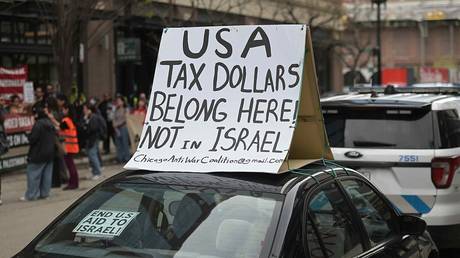
Israel should end reliance on US cash
Coveragetap to expand ▾Spectrum: Mixed🌍US: 2 · Europe: 1 · ME: 1 · Asia: 1
- Israel PM says ‘nobody had perfect foresight'
- Israel is the largest recipient of aggregate US foreign aid since World War II, having received more than $300 billion in economic and military assistance from Washington since 1948.
- Under a ten-year agreement signed in 2016, the US committed $38 billion in military aid to Israel through 2028, including $5 billion for the Iron Dome missile defense system.
- In an interview with CBS’ 60 Minutes aired on Sunday, Netanyahu was asked whether it was time for the Jewish state to “reexamine and possibly reset” its financial relationship with Washington.
- A recent Pew poll indicated that six in ten Americans have a very or somewhat unfavorable view of Israel, up seven percentage points since last year and nearly 20 points since 2022.
- The Israeli leader outright dismissed the notion that the war in Gaza might have “contributed to this negative impression of Israel,” blaming the shift almost entirely on social media.
- Netanyahu says fall of Iran's regime not assured, appears to acknowledge failure to foresee Hormuz standoff - The Times of Israel
Israeli Prime Minister Benjamin Netanyahu has declared his intention to eliminate US financial aid to Israel within the next decade, asserting that the country does not want American cash.
This statement comes amid a backdrop of declining public support for Israel in the United States, with a recent Pew poll showing that six in ten Americans view Israel unfavorably, a significant increase from previous years.
Netanyahu attributes this shift largely to social media manipulation, rejecting the idea that the ongoing conflict in Gaza has influenced American perceptions of Israel. He insists that Israel is facing challenges on the media front and has not effectively countered negative narratives.
In a broader context, Netanyahu remarked that 'nobody had perfect foresight' regarding the current geopolitical situation, suggesting that miscalculations may have contributed to the current state of affairs. The Israeli leader's comments reflect a growing concern about the sustainability of US support amid changing public opinion and the complexities of the ongoing conflict.
Left- and right-leaning outlets are covering this story differently — in which facts to emphasize, which context to include, and how to frame causes and consequences.