
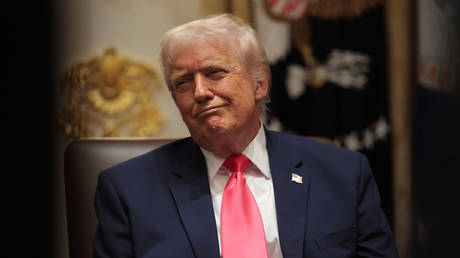
Trump’s latest prediction is far from his first.
Topic: generalRegion: North AmericaUpdated: i2 outletsSources: 2⚠ Bias gap — sources divergeSpectrum: Mixed⏱ 4 min read⚠ 3d+ old
Story Summary
SITUATION
Donald Trump faces increasing challenges as both Israel and Iran seem to be outmaneuvering him in the ongoing war. Tensions between Trump and Netanyahu are rising, with Netanyahu reportedly having 'no choice' regarding the Iran deal (per RT).
Coveragetap to expand ▾Spectrum: Mixed🌍Europe: 1 · Asia: 1
Political Spectrum
Position is inferred from coverage mix.
i2 outlets · Center
Left
Center
Right
Left: 0
Center: 1
Right: 1
Geography Coverage
Distribution of where coverage is coming from.
i2 unique outlets · Dominant: Europe
KEY FACTS
- According to Trump, Iranian officials are seeking a “very good deal” and are prepared to give the US “everything,” including a pledge not to pursue a nuclear weapon.
- Over the past two months, Trump has said or suggested at least 37 times that a breakthrough was near or that Tehran was eager to strike an accord, according to CNN estimates, yet no deal has materialized.
- Donald Trump and Benjamin Netanyahu claim a close friendship, but relations are strained.
HISTORICAL CONTEXT
The ongoing military conflict between the United States and Israel against Iran, which began with coordinated strikes in March 2026, marks a significant escalation in a long-standing regional tension.
The strikes targeted critical Iranian infrastructure, including military installations and air defenses, in response to a series of Iranian military actions that were provoked by earlier Israeli strikes.
Brief
In a complex geopolitical landscape, Donald Trump is grappling with the challenges posed by both Israel and Iran as the war continues to unfold.
Tensions have escalated between Trump and Israeli Prime Minister Benjamin Netanyahu, with reports suggesting that Netanyahu feels he has 'no choice' regarding the Iran deal, a situation that reflects the mounting pressure on both leaders.
Trump, who has historically emphasized his close relationship with Netanyahu, now finds himself in a precarious position as he confronts the realities of the ongoing conflict.
The president has set yet another timeline for achieving 'total victory' over Iran, claiming that Tehran is willing to concede significant terms, a statement that raises questions about the feasibility of such a deal. Meanwhile, both Israel and Iran appear to be pursuing their own agendas, which complicates Trump's efforts to maintain control over the situation.
As the war progresses, the dynamics between the U.S. and its allies in the region are becoming increasingly strained, highlighting the challenges facing Trump's administration in navigating this multifaceted conflict.
Where sources differ
Bias gap0.80 / 2.0
Left- and right-leaning outlets are covering this story differently — in which facts to emphasize, which context to include, and how to frame causes and consequences.
Center (1)
abc_australia
Right-leaning (1)
rt_world+0.70
Trump sets yet another timeline for ‘total victory’ in Iran Netanyahu has ‘no choice’ on Iran deal Trump sets yet another timeline for ‘total victory’ in Iran Trump sets yet anothe…
Sources
2 of 2 linked articles