
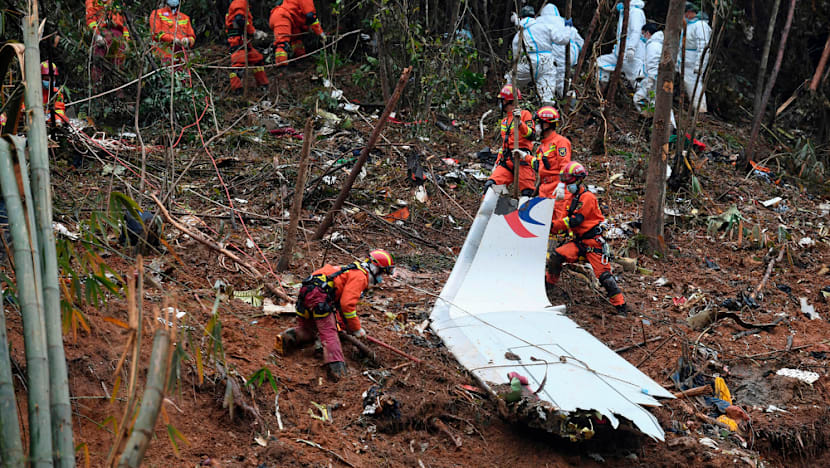
NTSB Data Reveals Engine Shutdown and Cockpit Struggle Before 2022 China Crash
Coveragetap to expand ▾Spectrum: Mixed🌍US: 3 · Asia: 1 · Other: 1
- A struggle in the cockpit was detected prior to the crash, according to the NTSB report (per Indiana Gazette Online).
- The NTSB's findings suggest possible human interference, but no definitive cause has been established (per Indiana Gazette Online).
- The NTSB report is part of a broader investigation into the crash, which killed all passengers and crew on board (per Indiana Gazette Online).
The National Transportation Safety Board (NTSB) has released data suggesting that both engines of a China Eastern Airlines flight shut off before it crashed in 2022. The report also indicates a struggle occurred in the cockpit prior to the crash, raising questions about potential human interference.
These findings are part of an ongoing investigation into the tragic event that resulted in the deaths of all passengers and crew members on board. The NTSB's preliminary findings have not yet established a definitive cause for the crash, but the data points to possible human involvement.
This has led investigators to consider various scenarios, including intentional actions by individuals in the cockpit. However, further analysis is required to confirm any such theories. The crash, which occurred in 2022, has prompted a comprehensive investigation by both Chinese and international aviation authorities.
The NTSB's involvement underscores the complexity of the case and the need for a thorough examination of all available evidence. While the NTSB report provides new insights into the events leading up to the crash, it also highlights the challenges faced by investigators in piecing together the final moments of the flight.
The shutdown of both engines and the cockpit struggle are critical elements that require further scrutiny to understand their role in the crash. The investigation continues to be a priority for aviation safety experts, as they seek to prevent similar incidents in the future.
The NTSB's findings will likely influence safety protocols and training procedures for airlines worldwide. As the investigation progresses, the families of the victims await answers and closure. The aviation community remains focused on uncovering the truth behind this tragic event, with the hope of enhancing safety measures and preventing future tragedies.
- The families of the victims bear the emotional and financial costs of the crash, with the loss of loved ones and potential legal battles for compensation.
- China Eastern Airlines faces reputational damage and potential regulatory scrutiny, impacting its operations and financial stability.
- The aviation industry benefits from the investigation's findings, which could lead to improved safety protocols and prevent future incidents.
- Whether the NTSB releases further findings that clarify the cause of the engine shutdown and cockpit struggle.
- The response of China Eastern Airlines to the NTSB's findings and any subsequent changes in their safety protocols.
- Potential regulatory actions by Chinese aviation authorities based on the investigation's outcomes.
Left- and right-leaning outlets are covering this story differently — in which facts to emphasize, which context to include, and how to frame causes and consequences.
5 specific areas where coverage diverges — see below.
- AP News emphasizes the potential for human interference, while Indiana Gazette Online focuses on the ongoing nature of the investigation.
- The exact cause of the engine shutdown and cockpit struggle remains unverified, with no definitive conclusions drawn.
- No source mentions the specific safety protocols in place at China Eastern Airlines prior to the crash.
- Sources agree on the sequence of events but differ on the implications of the cockpit struggle.
- Both sources attribute the findings to the NTSB but differ in their emphasis on potential human interference.