
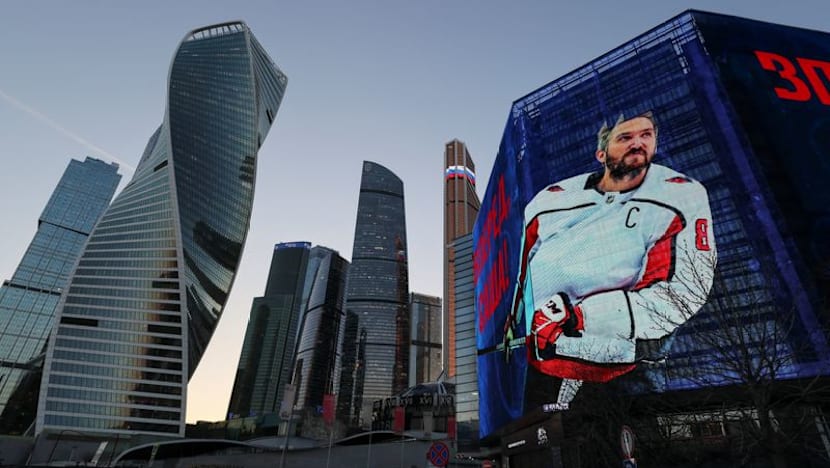
Alex Ovechkin says Capitals were asked to film United Russia campaign ad during his summer visit
Topic: politicsRegion: EuropeUpdated: i2 outletsSources: 5⚠ Bias gap — sources divergeSpectrum: Mixed⏱ 3 min read
Story Summary
SITUATION
Alex Ovechkin was asked to appear in a campaign ad for the Putin-backed United Russia party while he was home this summer, the Washington Capitals say. Outlets differ on whether Ovechkin actually filmed or appeared in the ad and on how the request was reported by Russian media versus North American outlets (per Yahoo, SRN News).
Coveragetap to expand ▾Spectrum: Mixed🌍US: 1 · Asia: 1
Political Spectrum
Position is inferred from coverage mix.
i2 outlets · Center
Left
Center
Right
Left: 0
Center: 2
Right: 0
Geography Coverage
Distribution of where coverage is coming from.
i2 unique outlets · Dominant: US/Canada
KEY FACTS
- The Washington Capitals said Alex Ovechkin was asked to film a campaign ad for the United Russia party while he was home this summer (per Yahoo.com).
- Multiple outlets reported the Capitals' statement that Ovechkin received the request to appear in a United Russia ad (per SRN News, The Tribune-Democrat).
- Left-leaning outlets reported that Alex Ovechkin appears in a campaign ad for United Russia, while the Capitals framed the reporting as Ovechkin being asked to appear (per The Guardian, Yahoo.com).
- Coverage differs over whether the footage shown in Russian media constitutes a formal campaign endorsement by Ovechkin or a requested appearance that may not have been filmed (per The Guardian, SRN News).
- The reports place the request during Ovechkin's summer stay in Russia while he was off the Capitals' NHL schedule (per The Tribune-Democrat).
HISTORICAL CONTEXT
The immediate backdrop is the broader geopolitical crisis that escalated after coordinated U.S. and Israeli military strikes on Iranian infrastructure in March 2026; those strikes and the subsequent Iranian military responses have reshaped regional alignments, intensified international sanctioning and information campaigns, and put great-power relationships under acute public scrutiny.
Domestically in Russia, the political environment in which partisan messaging and state-aligned campaigning operate has been shaped by a sequence of laws, institutional arrangements and precedents: United Russia’s formal establishment in December 2001 as the Kremlin-aligned dominant party; the 2012 “foreign agents” and related NGO laws that expanded state authority over civil society and media narratives; and the 2020 constitutional amendments that reset presidential term limits and consolidated executive continuity.
Brief
The Washington Capitals told reporters that Alex Ovechkin was asked to film a campaign ad for the Putin-backed United Russia party while he was home this summer, according to multiple U.S. outlets.
The Capitals' statement frames the item as a request the team learned about, not an unequivocal endorsement; left-leaning coverage, including The Guardian, presented footage that purports to show Ovechkin in a United Russia ad.
Outlets differ on the core fact: Yahoo, SRN News and The Tribune-Democrat cite the Capitals saying he was asked to film, while The Guardian's reporting highlights apparent footage of Ovechkin in a pro-United Russia spot.
The discrepancy centers on whether Ovechkin consented to, filmed, or simply was asked about participating; the Capitals' release emphasizes the team was informed of the request during his summer visit.
Neither the Capitals' statement nor the U.S. reports in this pack quote Ovechkin directly, and the available articles do not specify whether the footage shown in Russian outlets was shot with his participation or compiled from existing materials.
This story matters because Ovechkin is a high-profile NHL star and Washington Capitals figure whose image appearing in a United Russia political ad raises questions about athlete involvement in partisan campaigns abroad; the outlets here emphasize different evidence — a team statement versus media-published footage — and thus present competing narratives about what actually occurred.
Expect follow-ups to seek direct confirmation from Ovechkin, clarification from the Capitals on what they were told, and verification from the publishers of the Russian ad about how the footage was obtained.
Why it matters
- - Washington Capitals fans and NHL viewers who follow Alex Ovechkin bear reputational costs if a prominent player appears in a United Russia campaign ad; the mechanism is public association with a Putin-backed political party documented by footage and team statements. - The Capitals organization bears institutional reputational risk because the team publicly reported being asked about a political ad that used a current player's image (per Yahoo.com, The Tribune-Democrat). - United Russia and Russian media benefit from any perceived endorsement because a globally recognized athlete amplifies the party's domestic messaging (per The Guardian).
What to watch next
Whether Alex Ovechkin issues a direct public statement confirming or denying that he filmed or approved the United Russia ad within the next week. 2) Whether the Washington Capitals release additional details about when and how they were notified about the request and whether the team sought or received proof the footage was filmed with Ovechkin. 3) Whether the outlets that published the footage — including The Guardian's cited sources — provide sourcing or metadata confirming when and where the ad footage was recorded.
Where sources differ
7 dimensionsBias gap0.60 / 2.0
Left- and right-leaning outlets are covering this story differently — in which facts to emphasize, which context to include, and how to frame causes and consequences.
Left-leaning (2)
srnnews.com-0.80
Capitals say Alex Ovechkin was asked to film United Russia ad while home this summer - SRN News
theguardian.com-0.50
NHL star Alex Ovechkin appears in campaign ad for pro-Putin United Russia party - theguardian.com
Center (3)
yahoo.comchannel_news_asiatribdem.com
7 specific areas where coverage diverges — see below.
Framing differences
?- The Guardian frames coverage around apparent footage of Alex Ovechkin in a United Russia campaign ad, while Yahoo.com and SRN News frame it as the Capitals saying Ovechkin was asked to appear.
- SRN News and The Tribune-Democrat emphasize the Capitals' account that the request happened during his summer home visit; The Guardian emphasizes the content of the ad itself.
Disputed or unclear
?- Whether Ovechkin actually filmed new material for the United Russia ad is unclear: the Capitals say he was asked, while The Guardian presents footage that it says features him (per The Guardian, Yahoo.com).
- No source in this pack provides a direct quote from Alex Ovechkin confirming participation.
Omitted context
?- No source here provides direct confirmation from Alex Ovechkin about whether he filmed or approved the ad.
- No outlet in this set details how the Russian footage was sourced or whether it was archival, repurposed, or newly recorded.
- None of the sources mention any NHL policies or NHL Players' Association rules regarding players appearing in foreign political advertising.
Conflicting figures
?- No sources in this pack provide numerical counts or differing figures related to the event.
Disputed causality
?- All sources agree the reported sequence is: Ovechkin was home this summer → he was asked to film a United Russia ad; disagreement is over whether the request led to filmed participation.
Attribution disputes
?- The Capitals attribute the information as a team statement that Ovechkin was asked to film (per Yahoo.com); The Guardian attributes the existence of an ad containing Ovechkin imagery to Russian media outlets (per The Guardian).
Sources
5 of 5 linked articles
NHL-Ovechkin was asked to appear in ad for Putin-backed United Russia, Capitals say - yahoo.com
yahoo.comSep 15Left
↗
NHL-Ovechkin was asked to appear in ad for Putin-backed United Russia, Capitals say
channelnewsasia.comSep 15Center
↗
Capitals say Alex Ovechkin was asked to film United Russia ad while home this summer
srnnews.comSep 15Left
↗
Capitals say Alex Ovechkin was asked to film United Russia ad while home this summer - The Tribune-Democrat
tribdem.comSep 15Left
↗
NHL star Alex Ovechkin appears in campaign ad for pro-Putin United Russia party - theguardian.com
theguardian.comSep 15Left
↗