
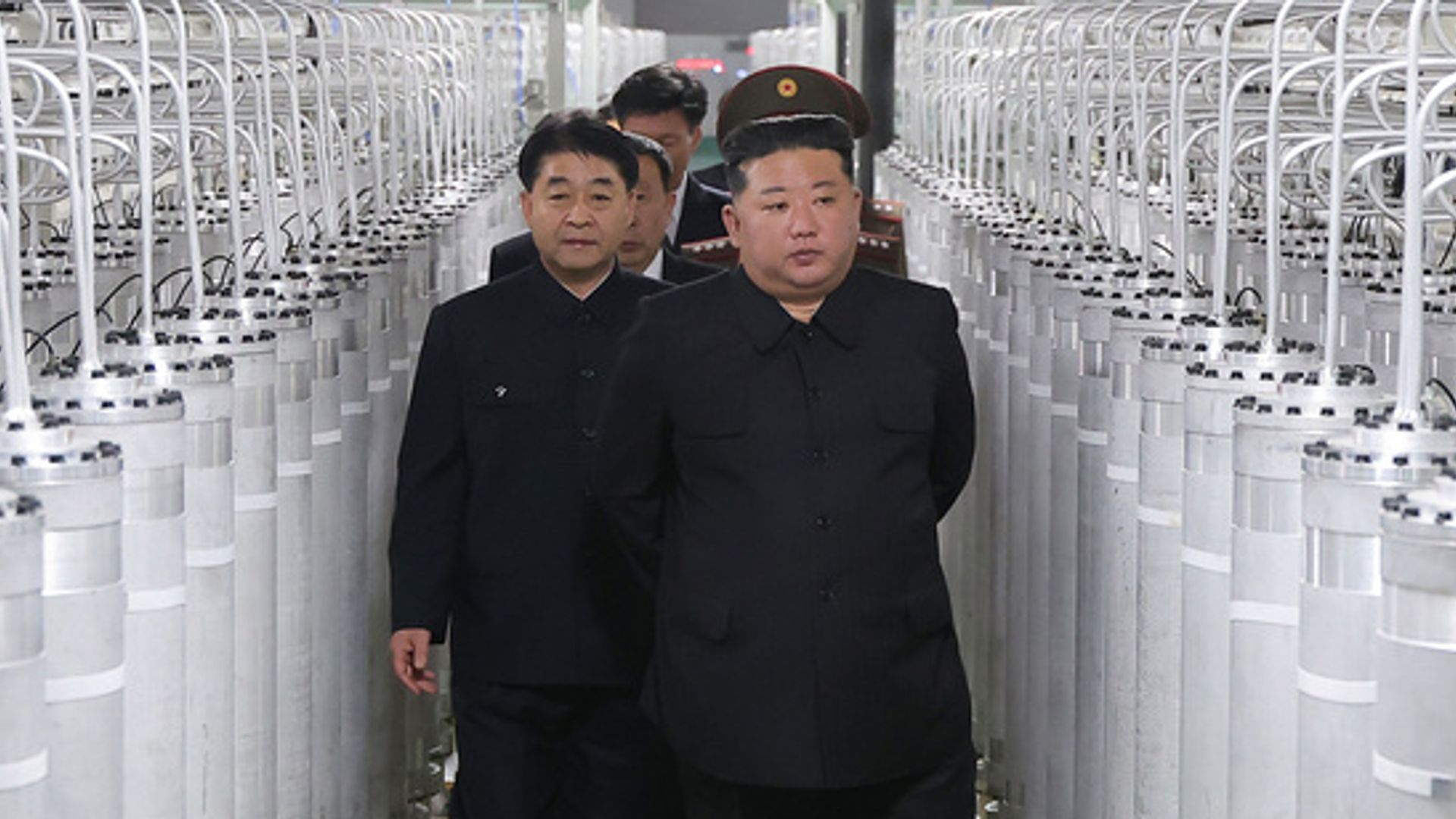
Kim Jong Un's sister asserts North Korea's commitment to nuclear weapons
Topic: defense & securityRegion: AsiaUpdated: i2 outletsSources: 5Spectrum: Center Only⏱ 4 min read⚠ 3d+ old
Story Summary
SITUATION
Kim Yo Jong stated that North Korea will never surrender its nuclear status. This declaration underscores the regime's unwavering stance amid ongoing international tensions.
Coveragetap to expand ▾Spectrum: Center Only🌍Other: 4 · Asia: 1
Political Spectrum
Position is inferred from coverage mix.
i2 outlets · Center
Left
Center
Right
Left: 0
Center: 5
Right: 0
Geography Coverage
Distribution of where coverage is coming from.
i2 unique outlets · Dominant: Global
KEY FACTS
- Kim Jong Un's sister vows North Korea will never give up nuclear weapons - Manx Radio
- North Korea will never surrender nuclear status, Kim Jong Un's sister says
- Kim Yo Jong says North Korea's nuclear status is final - MSN
- North Korea says it will never give up its nuclear status — Reuters - UA.NEWS
- Kim Jong Un’s sister says North Korea will never give up nuclear weapons - Malay Mail
HISTORICAL CONTEXT
The ongoing tensions surrounding North Korea's nuclear program have been a significant point of contention in international relations, particularly since the late 20th century.
As of 2026, North Korea, under the leadership of Kim Jong Un, has firmly maintained its stance on retaining its nuclear arsenal, a position that has been echoed by key figures within the regime, including Kim's sister, Kim Yo Jong.
Brief
In a bold declaration, Kim Yo Jong, sister of North Korean leader Kim Jong Un, affirmed that North Korea will never surrender its nuclear status. This statement comes amid heightened tensions with the United States and its allies, who have long sought to curtail North Korea's nuclear program through sanctions and diplomatic efforts.
Kim Yo Jong's remarks highlight the regime's defiance in the face of international pressure, signaling that North Korea remains committed to its nuclear program as a means of ensuring its security. The regime's stance is rooted in a belief that its nuclear capabilities are essential for deterring perceived threats, particularly from the U.S. and South Korea.
This declaration is not merely rhetoric; it underscores a broader strategy by North Korea to assert its sovereignty and resist external demands for denuclearization.
As the geopolitical landscape evolves, North Korea's commitment to its nuclear arsenal poses significant challenges for diplomatic efforts aimed at resolving tensions in the region. many governments continues to grapple with the implications of North Korea's nuclear status, as the regime's actions could further destabilize an already volatile situation in East Asia.
Sources
5 of 5 linked articles
Kim Jong Un's sister vows North Korea will never give up nuclear weapons
manxradio.comJun 7Left
↗
North Korea will never surrender nuclear status, Kim Jong Un's sister says
news.sky.comJun 7Left
↗
Kim Yo Jong says North Korea's nuclear status is final
msn.comJun 7Left
↗
North Korea says it will never give up its nuclear status — Reuters
ua.newsJun 7Left
↗
Kim Jong Un’s sister says North Korea will never give up nuclear weapons
malaymail.comJun 7Left
↗