
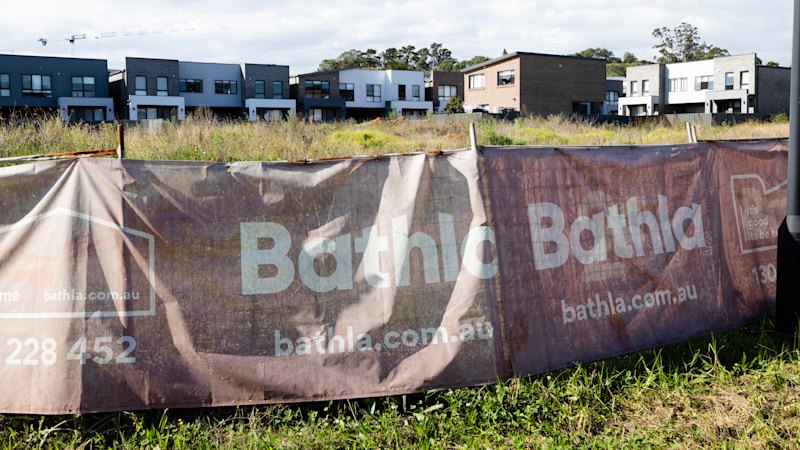
NSW Supreme Court gives Bathla Group 12-month lifeline, tied to lender backing
Topic: politicsRegion: North AmericaUpdated: i2 outletsSources: 2Spectrum: Center Only⏱ 3 min read
Story Summary
SITUATION
Bathla Group secured a 12-month extension from the NSW Supreme Court to finalise construction projects, conditional on additional lender funding (per smh.com.au). The extension follows a short-term funding package that kept the group's 542 entities operational for two weeks and comes as six lenders provide interim support while Teneo seeks further commitments (per smh.com.au).
Coveragetap to expand ▾Spectrum: Center Only🌍Asia: 1 · Africa: 1
Political Spectrum
Position is inferred from coverage mix.
i2 outlets · Center
Left
Center
Right
Left: 0
Center: 2
Right: 0
Geography Coverage
Distribution of where coverage is coming from.
i2 unique outlets · Dominant: Asia
KEY FACTS
- A short-term funding package secured last week to keep the group operational for two weeks is drawing to a close.
- Teneo's Stephen Longley said the extension is intended to allow projects to be progressed and completed in an orderly way but remains dependent on further lender support.
- Six lenders are currently providing additional funding while Teneo is negotiating with other potential lenders.
- Last week 213 staff members were stood down and construction on many projects halted.
HISTORICAL CONTEXT
The immediate backdrop is the broader market shock that followed the March 2026 coordinated United States and Israeli military strikes on Iranian infrastructure and air-defence systems; those strikes provoked a series of Iranian military responses and a wave of sanctions, insurance-rating downgrades and risk repricing in global credit and commodity markets that tightened lending conditions for exposed developers and contractors through 2026.
Domestically, Australia’s corporate-insolvency framework — principally the Corporations Act 2001 with its statutory administrators, deed of company arrangement and convening/creditor-voting mechanisms — and the Personal Property Securities Act 2009, which governs secured-lender priority, have long provided the legal architecture under which troubled corporate groups seek short-term funding and creditor approvals.
Brief
The NSW Supreme Court has given embattled developer Bathla Group a 12-month extension of its convening period, but the survival of large parts of its construction portfolio now hinges on more lender money.
Administrator Teneo said the court-approved extension moves the convening deadline to September 13, 2027 and is intended to allow projects across the group's 542 entities to be progressed and completed in an orderly way (per smh.com.au).
Bathla owes creditors A$3.4 billion, a debt pile that underpins why lenders' continued participation is decisive for whether sites restart and contracts are fulfilled (per smh.com.au).
A short-term funding package arranged last week bought the group a fortnight of runway for operations, but that support is drawing to a close; six lenders are currently providing additional funding while Teneo seeks commitments from other potential lenders (per smh.com.au).
The immediate human cost of the funding squeeze is evident: last week 213 staff members were stood down and construction on many projects halted, raising the prospect that further project stoppages or insolvency outcomes would imperil jobs and subcontractor claims (per smh.com.au).
Teneo's Stephen Longley framed the extension as recognition of the scale and complexity of Bathla's construction portfolio, while making clear the court order does not replace the need for fresh lender support to deliver on-site work (per smh.com.au).
For lenders, administrators and creditors the coming weeks are a test: without additional finance, the extension merely delays difficult decisions about restructures, sales or potential winding-up processes. For buyers and residents of Bathla projects, the extension offers conditional continuity but no guaranteed completion timetable until funding is secured (per smh.com.au).
The case illustrates how court-ordered breathing space can preserve options but still leave ultimate outcomes determined by creditor willingness to fund ongoing operations; Teneo must convert interim lender support into durable financing or negotiated exits.
Expect lender negotiations to dictate whether the extension yields completed projects or a stepped series of insolvency events that will redistribute losses among banks, contractors and homeowners (per smh.com.au).
Why it matters
- Homebuyers and residents of Bathla projects face concrete risks to completion and occupancy because Bathla owes creditors A$3.4 billion and construction work has already halted for many projects (per smh.com.au).
- The immediate economic burden falls on 213 stood-down staff and subcontractors who lose wages and payment certainty if lenders do not convert interim funding into longer-term support (per smh.com.au).
- Six lenders currently providing interim funding stand to lose or restructure exposure if Teneo cannot secure additional lenders and viable financing for project completion (per smh.com.au).
- Administrator Teneo and its advisers benefit from the court extension by gaining time to negotiate sales, restructures or refinancing, preserving options that an immediate winding-up would remove (per smh.com.au).
What to watch next
- Whether Teneo secures additional lender commitments beyond the six currently providing funding before the short-term package runs out (per smh.com.au).
- Whether any of Bathla's lenders convert interim support into a lasting funding facility or demand receivership or winding-up steps at a creditor meeting (per smh.com.au).
- Whether Teneo moves to sell specific Bathla assets or projects as part of a restructure before September 13, 2027 (per smh.com.au).
- Whether stood-down staff return to work and construction restarts on key projects if new financing is formalised (per smh.com.au).
Where sources differ
7 dimensionsFraming differences
?- Only smh.com.au is in this pack; it frames the court extension as a conditional lifeline tied to lender support (per smh.com.au).
Disputed or unclear
?- No other outlet in this pack disputes figures or offers alternative explanations for the extension; lender appetite and the precise terms of any further funding remain unclear (per smh.com.au).
Omitted context
?- No source in this pack details the specific projects or locations most at risk within Bathla's portfolio.
- No source lists the identities of the six lenders providing interim funding or the additional lenders in discussions.
- No source provides detailed creditor ranking, amounts owed to major secured vs unsecured creditors, or the exposure of major banks.
- No source gives detailed timelines or milestones that Teneo and lenders have agreed to during the 12-month extension.
Conflicting figures
?- All figures in this pack come from smh.com.au: creditors owed A$3.4 billion; Bathla has 542 entities; 213 staff stood down; convening period extended to September 13, 2027 (per smh.com.au).
Disputed causality
?- smh.com.au presents the court extension as enabling project progression but clearly states the extension is dependent on further lender support; it does not claim the court order itself provides funding (per smh.com.au).
Attribution disputes
?- smh.com.au attributes the extension and statements about its purpose to administrator Teneo and quotes Stephen Longley (per smh.com.au).
Sources
2 of 2 linked articles