
↑Part of: Amodei and Altman ask US to curb AI risks; Trump and Johnson push back
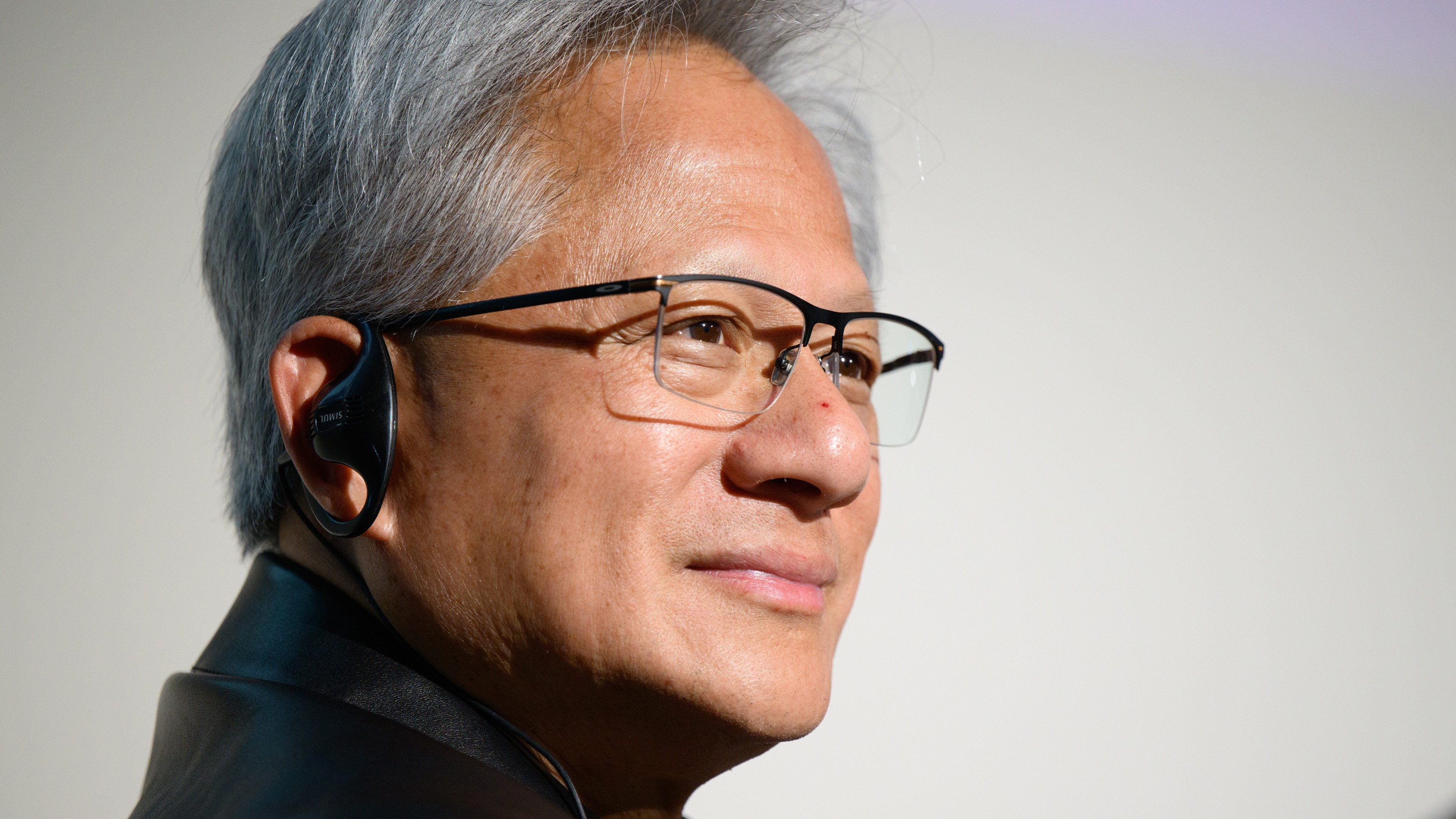
Nvidia CEO Jensen Huang Dismisses AI-Existential Fears, Says Execs Stoked Cybersecurity Panic
Topic: technologyRegion: north americaUpdated: i2 outletsSources: 2⚠ Bias gap — sources divergeSpectrum: Mixed⏱ 2 min read⚠ 48h+ old
Story Summary
SITUATION
Jensen Huang, CEO of Nvidia, publicly dismissed existential AI concerns and accused industry executives of fomenting cybersecurity fears to boost demand (per theatlantic.com). Donald Trump called Jensen Huang mid-interview, a detail noted in reporting that emphasizes the public attention around the exchange (per news.google.com).
Coveragetap to expand ▾Spectrum: Mixed🌍US: 1 · Asia: 1
Political Spectrum
Position is inferred from coverage mix.
i2 outlets · Center
Left
Center
Right
Left: 1
Center: 1
Right: 0
Geography Coverage
Distribution of where coverage is coming from.
i2 unique outlets · Dominant: US/Canada
KEY FACTS
- Jensen Huang publicly dismissed existential AI concerns and accused industry executives of fomenting cybersecurity fears to boost demand (per theatlantic.com).
- The Atlantic reported that Huang faced no blowback for his remarks and that neither Dario Amodei nor Sam Altman can afford to alienate him (per theatlantic.com).
- News.google.com noted that Donald Trump called Jensen Huang mid-interview, drawing additional public attention to the exchange (per news.google.com).
HISTORICAL CONTEXT
The immediate backdrop is the active US–Israel campaign against Iran that began with coordinated strikes on Iranian nuclear-related facilities, air defenses and military infrastructure in March 2026; Iranian military moves throughout 2026 have been described as responses to that campaign.
Structurally, the present crisis is shaped by the 2015 Joint Comprehensive Plan of Action (JCPOA, signed July 14, 2015), the unilateral US withdrawal from the JCPOA announced May 8, 2018, and successive layers of US and international sanctions on Iran implemented under executive orders and UN/US measures thereafter.
Brief
Jensen Huang, CEO of Nvidia, publicly dismissed fears that artificial intelligence poses an existential threat and accused fellow industry executives of fomenting cybersecurity panic to drive demand, according to reporting in The Atlantic.
The Atlantic said Huang’s comments drew little pushback inside the industry and observed that influential AI figures such as Dario Amodei and Sam Altman have limited room to oppose him without risking access.
Separately, a center-aggregated report noted that Donald Trump called Jensen Huang mid-interview, a moment that underscored how broadly the exchange resonated beyond tech circles.
The outlets differ in emphasis: The Atlantic treated Huang’s remarks as a decisive industry posture and highlighted the power dynamics between Nvidia and other AI leaders, while the aggregated news item highlighted the episode’s political visibility by reporting the presidential call.
Confirmed is that Huang made the dismissive public statement and accused unnamed executives of stoking cybersecurity fears (per theatlantic.com); reported but less substantiated is the political overlay of the Trump phone call during the interview (per news.google.com).
This conversation comes as AI companies, customers, and policymakers debate whether to prioritize rapid deployment, regulation, or more caution; The Atlantic’s account places Nvidia’s commercial leverage at the center of that debate.
How industry leaders respond to Huang’s framing — whether by publicly distancing themselves, reiterating risk concerns, or continuing collaboration with Nvidia — will shape both market demand for specialized hardware and the tone of regulatory conversations in the months ahead.
Why it matters
- Nvidia customers and enterprise procurement teams bear concrete costs if cybersecurity fear is used as a sales lever: procurement may override longer review cycles and buy expensive hardware (per theatlantic.com).
- AI researchers and safety advocates face reputational costs because the Atlantic reports Huang’s position could limit public dissent by influential figures like Dario Amodei and Sam Altman, reducing visible pressure for stricter safeguards (per theatlantic.com).
- Nvidia benefits commercially from Huang’s framing: portraying existential risk as overstated can accelerate demand for Nvidia products and maintain the company’s market leverage (per theatlantic.com).
What to watch next
- Whether Dario Amodei or Sam Altman issue public statements by the end of the quarter addressing or countering Jensen Huang’s claims (per theatlantic.com).
- Whether Nvidia’s sales guidance or procurement announcements show increased enterprise purchases in the next earnings cycle, signaling demand shifts tied to the debate (per theatlantic.com).
- Whether political figures who referenced the interview, including Donald Trump, make follow-up comments or meetings with Jensen Huang within 30 days (per news.google.com).
Where sources differ
7 dimensionsBias gap0.50 / 2.0
Left- and right-leaning outlets are covering this story differently — in which facts to emphasize, which context to include, and how to frame causes and consequences.
Left-leaning (1)
the_atlantic-0.50
Jensen Huang, CEO of Nvidia, publicly dismissed existential AI concerns and accused industry executives of fomenting cybersecurity fears to boost demand. He faced no blowback, and …
Center (1)
timesofindia.indiatimes.com
7 specific areas where coverage diverges — see below.
Framing differences
?- The Atlantic frames Huang’s remarks as a powerful industry posture that undermines AI-safety critics and highlights his leverage over figures like Dario Amodei and Sam Altman (per theatlantic.com).
- News.google.com highlights the political spectacle of Donald Trump calling Jensen Huang mid-interview, emphasizing public and political attention rather than industry power dynamics (per news.google.com).
Disputed or unclear
?- No source disputes that Huang made the dismissive comments, but the degree to which his remarks will silence critics or change industry behavior remains unverified in the available reporting (per theatlantic.com, news.google.com).
Omitted context
?- No source in this pack details specific cybersecurity incidents or audits that executives cited to justify raising alarm, leaving the exact claims Huang disputed undocumented.
- No source provides quantified effects on Nvidia sales or procurement decisions following Huang’s remarks.
- No source mentions regulatory or legislative steps that might follow from this public debate, such as formal inquiries or hearings.
Conflicting figures
?- Sources provided no differing numerical figures for casualties, sales, or timelines in the available excerpts (per theatlantic.com, news.google.com).
Disputed causality
?- The Atlantic presents Huang’s accusation that executives stoke fear to boost demand as a claim by Huang; neither source documents the specific prior actions by those executives that Huang referenced (per theatlantic.com).
Attribution disputes
?- The Atlantic attributes the accusation directly to Jensen Huang that 'industry executives' foment cybersecurity fears (per theatlantic.com).
- News.google.com attributes the mid-interview phone call to Donald Trump contacting Jensen Huang (per news.google.com).
Sources
2 of 2 linked articles