
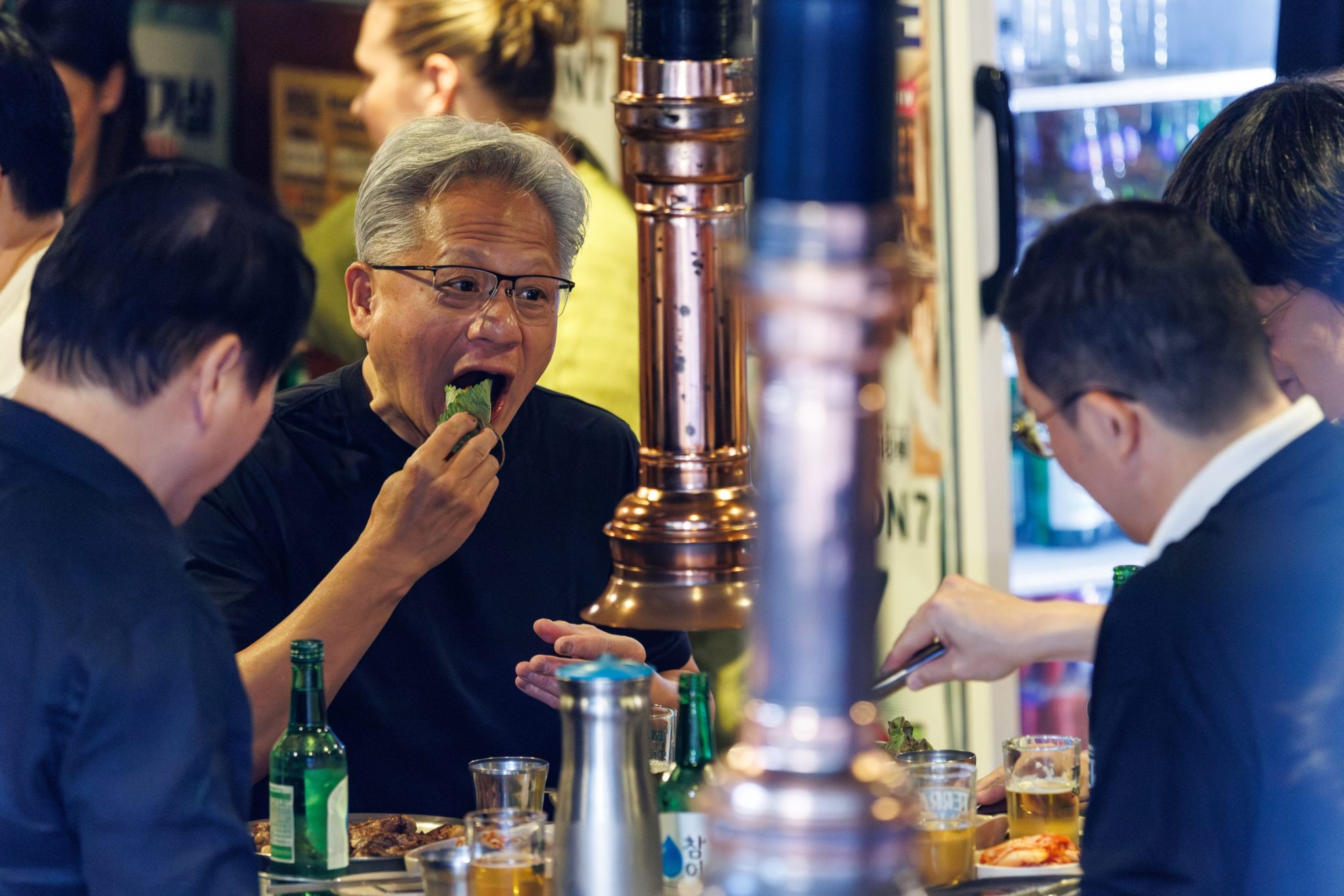
But that doesn’t mean the company is giving away lunch for free.
Topic: technologyRegion: north americaUpdated: i3 outletsSources: 3⚠ Bias gap — sources divergeSpectrum: Mostly Center⏱ 4 min read
Story Summary
SITUATION
Nvidia, valued at $4.8 trillion, requires its employees to pay for meals at the company cafeteria. While many tech firms offer free meals as perks, Nvidia's approach reflects its unique corporate culture and focus on profitability.
Coveragetap to expand ▾Spectrum: Mostly Center🌍Other: 2 · ME: 1
Political Spectrum
Position is inferred from coverage mix.
i3 outlets · Center
Left
Center
Right
Left: 0
Center: 2
Right: 1
Geography Coverage
Distribution of where coverage is coming from.
i3 unique outlets · Dominant: Global
KEY FACTS
- The chipmaker fueling the AI boom, led by CEO Jensen Huang, is the most valuable company in the world by market cap, towering above other tech giants like Google, Apple, and Amazon.
- “Snacks and coffee are not free: You have to pay for them.
- Former employees who spoke to Business Insider clarified that the company’s cafeteria meals are subsidized, not free.
HISTORICAL CONTEXT
Nvidia's rise to a $4.8 trillion valuation is situated within a broader context of explosive growth in the technology sector, particularly in artificial intelligence (AI) and semiconductor manufacturing.
This valuation milestone was achieved in mid-2026, following a series of significant advancements in AI technology and a surge in demand for AI-driven applications across various industries.
Brief
Nvidia, the chipmaker valued at $4.8 trillion, has garnered attention not only for its market cap but also for its cafeteria policy, which requires employees to pay for their meals. This practice stands out in an industry where many tech giants offer free meals as part of their employee benefits, reflecting Nvidia's unique corporate culture and focus on profitability.
While the cafeteria meals are subsidized, they are not free, and employees must also pay for certain drinks, a policy that some former employees have described as not being a major concern for developers. CEO Jensen Huang's leadership has positioned Nvidia as a key player in the AI boom, contributing to its substantial market valuation.
The contrast between Nvidia's cafeteria policy and those of its competitors highlights the company's approach to employee perks amid a competitive talent landscape. As Nvidia continues to thrive in the tech sector, its cafeteria policy raises questions about the balance between employee benefits and corporate profitability.
Where sources differ
Bias gap0.75 / 2.0
Left- and right-leaning outlets are covering this story differently — in which facts to emphasize, which context to include, and how to frame causes and consequences.
Center (2)
finance.biggo.comfortune_business
Right-leaning (1)
jerusalem_post+0.75
AI doesn't replace good writers, it demands better judgment, researchers find - study AI doesn't replace good writers, it demands better judgment, researchers find - study AI doesn…
Sources
3 of 3 linked articles
AI doesn't replace good writers, it demands better judgment, researchers find - study
jpost.com9h agoRight
↗
No Free Lunch at Nvidia: How Frugality and Jensen Huang’s Philosophy Shape the AI Giant’s Culture - finance.biggo.com
finance.biggo.com15h agoLeft
↗
But that doesn’t mean the company is giving away lunch for free.
fortune.com20h agoLeft
↗