
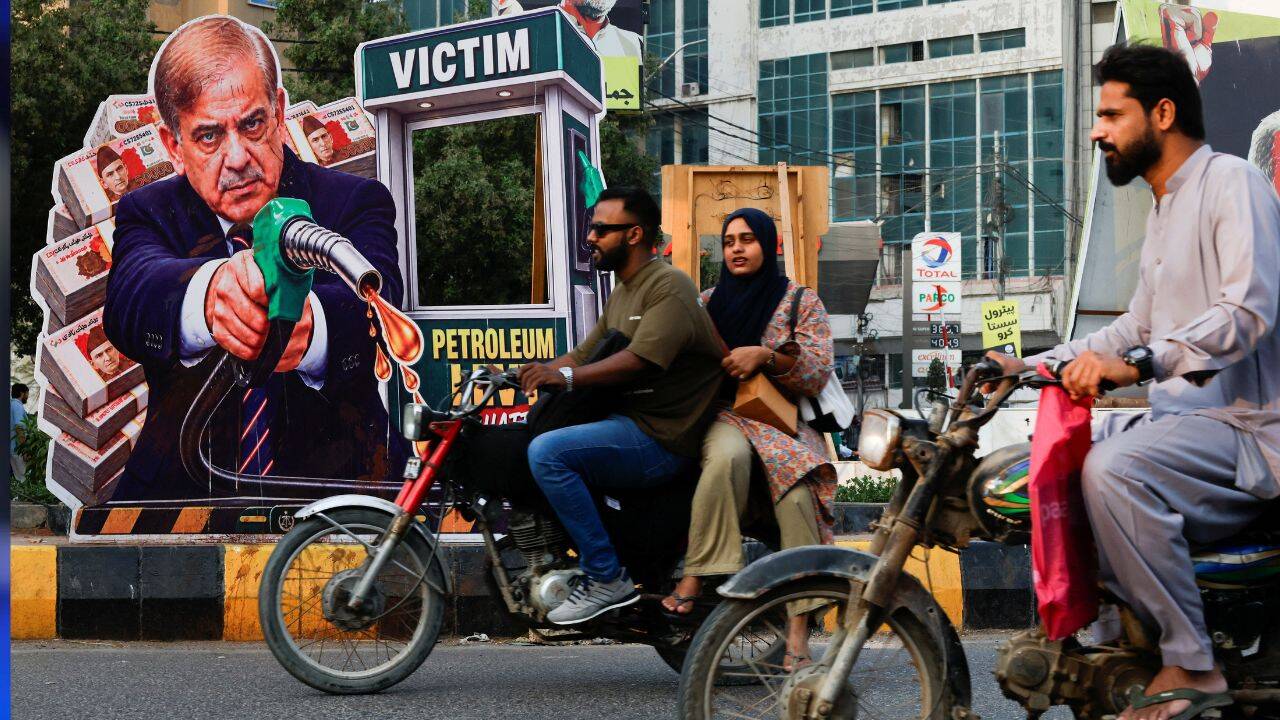
Pakistan cuts government fuel allocations 50% and bans official travel, limits dinners
Coveragetap to expand ▾Spectrum: Center Only🌍Asia: 2
- Pakistan's cabinet approved austerity measures that will remain in force for three months (per timesofindia.indiatimes.com).
- Fuel allocations for government vehicles will be cut by 50%, with exemptions for armed forces, law enforcement agencies and essential services (per timesofindia.indiatimes.com).
- Official foreign travel and domestic travel for meetings have been prohibited; officials are directed to use virtual meetings (per timesofindia.indiatimes.com).
- Official dinners have been banned except those hosted for foreign visitors and delegations (per timesofindia.indiatimes.com).
- Purchase of new government vehicles has been prohibited and procurement of durable goods has been restricted, with IT purchases exempted (per timesofindia.indiatimes.com).
- The government ordered a five per cent reduction in non-employee-related expenditure (per timesofindia.indiatimes.com).
Pakistan's cabinet moved to sharply reduce public-sector fuel use as rising global oil prices strained the country's energy supplies, approving a package of austerity measures that cut fuel allocations for government vehicles by 50% and banned official foreign travel and new government-vehicle purchases.
The restrictions, approved by the cabinet, will remain in force for three months and immediately limit official dinners, constrain procurement and push officials to rely on virtual meetings.
The measures exempt vehicles used by the armed forces, law enforcement agencies and essential services, and exempt IT purchases while ordering a five percent cut in non-employee-related spending.
The government also set specific curfews for commercial activity — markets must close by 9 pm, marriage halls by 10 pm and restaurants by 11 pm — while protecting drug stores and medical laboratories from the restrictions.
Officials framed the package as a short-term response to rising global oil prices that threaten fuel, gas and power supplies; the cabinet presented the measures as aimed at reducing fuel consumption and public expenditure (per timesofindia.indiatimes.com).
The measures combine operational limits (travel bans, vehicle-purchase restrictions) with behavioral controls (bans on official dinners except for foreign delegations) to produce immediate fiscal and fuel-use savings, but they leave core security and emergency services exempted.
Implementation over the coming quarter will test whether administrative enforcement can deliver meaningful fuel savings without disrupting essential services or diplomatic obligations.
- - Ordinary government operations and officials in Pakistan bear direct costs: a 50% cut in fuel allocations will constrain official vehicle use and commuting for ministries outside the armed forces and law enforcement (per timesofindia.indiatimes.com). - Domestic service providers tied to government activity — e.g., protocol caterers and procurement vendors — will lose contracts because official dinners are banned except for foreign delegations (per timesofindia.indiatimes.com). - The civilian population using markets and restaurants faces shorter operating hours (markets close by 9 pm; restaurants by 11 pm), which reduces evening economic activity and income for small business owners (per timesofindia.indiatimes.com). - The government benefits politically and fiscally if the measures reduce fuel consumption and public expenditure quickly; Ministries and the finance apparatus retain discretion over exemptions for armed forces and essential services (per timesofindia.indiatimes.com).
Whether Pakistan's cabinet extends or renews the three-month measures when the period ends in approximately 90 days. 2) Whether ministries report actual fuel-consumption reductions and submit compliance reports on the five percent cut in non-employee-related expenditure to the finance ministry. 3) Whether any ministry seeks exemptions beyond armed forces and law enforcement for critical operations and whether the cabinet approves those exemptions. 4) Whether the travel ban is enforced for scheduled diplomatic visits or whether foreign-delegation exceptions lead to ad hoc approvals.
- Only one source is provided; no framing differences between outlets are available in this pack.
- No source in this pack disputes facts; details on enforcement mechanisms and projected savings remain unclear.
- No source mentions prior specific government steps or fuel-import contracts that triggered this package; the export/import or subsidy arrangements that caused the fuel shock are not detailed. No source provides quantified estimates of expected fuel or fiscal savings from the measures. No source cites potential impacts on diplomatic schedules or on specific provincial governments' budgets.
- Only timesofindia.indiatimes.com provides figures: 50% cut in fuel allocations; three-month duration; five percent reduction in non-employee-related expenditure.
- The source links the measures to rising global oil prices threatening fuel, gas and power supplies; no prior domestic policy action is named as the trigger.
- The cabinet approved and ordered the measures (per timesofindia.indiatimes.com).