
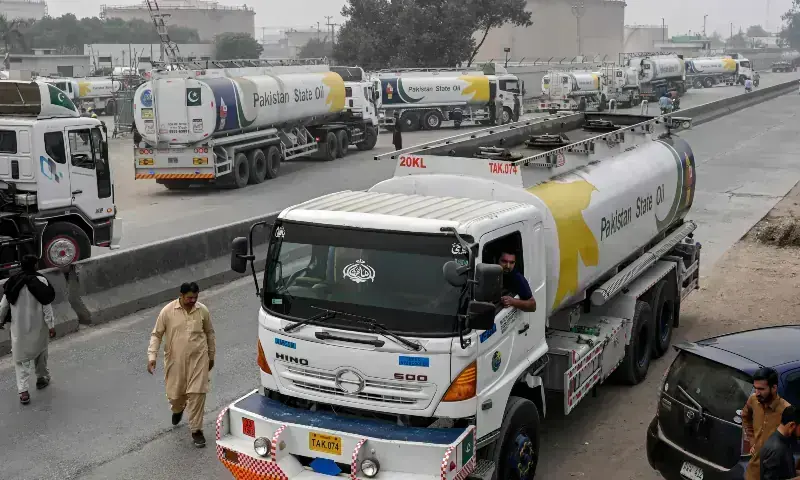
Rising energy costs and inflation are expected to weigh heavily on economic growth.
Coveragetap to expand ▾Spectrum: Center Only🌍ME: 1 · Asia: 1
- Pakistan's inflation rate is projected to average 9-10% over the next 12 months, with expectations to exceed 11% in the fourth quarter of FY26.
- The State Bank of Pakistan is considering policy rate hikes to protect real returns in response to rising inflation and energy costs.
- The global energy crisis that began in 2007-08 saw oil prices increase from approximately $60 per barrel in early 2007 to over $140 per barrel by mid-2008, severely impacting Pakistan's economy.
- At an oil price of $120 per barrel, average annual inflation in Pakistan could reach 10-11% if current conditions persist.
- The rise in energy costs and inflation in Pakistan is part of a broader trend affecting the Asia Pacific region, impacting economic stability.
The global energy crisis that began in 2007–08 marked a particularly severe episode for Pakistan, where the doubling of oil prices had profound economic repercussions. This crisis was not an isolated event; it was part of a broader trend of energy shocks that have occurred in less than two decades, with significant implications for the country's economic stability.
As oil prices surged, the Pakistani economy, which heavily relies on imported fuel, faced destabilization that strained external balances and reshaped political dynamics. The previous energy shocks in 2008 and 2022 further exacerbated these challenges, highlighting a pattern of vulnerability in Pakistan's economic structure.
Policymakers are now confronted with the critical question of whether they will continue to rely on short-term fixes or implement more sustainable strategies to address these recurring crises. The current situation underscores the urgent need for a comprehensive approach to energy policy that can mitigate the impacts of future shocks and stabilize the economy in the long run.
- Rising energy costs and inflation are poised to exacerbate the financial strain on low-income households in Pakistan, where families already struggle to afford basic necessities.
- As inflation is projected to reach 10-11% over the next year, these households will face steep increases in food and fuel prices, potentially pushing many into deeper poverty.
- This economic pressure may lead to reduced consumer spending, further stalling economic growth and complicating efforts to stabilize the country’s financial situation.
- The Pakistani government is expected to announce new energy subsidies within the next 72 hours to alleviate the burden of rising oil prices on consumers and businesses.
- Major oil-producing nations in the Asia Pacific region will hold an emergency meeting before the upcoming OPEC+ summit to discuss potential production adjustments in response to soaring energy costs.
- The State Bank of Pakistan is likely to review its monetary policy in the next month, with a potential interest rate hike to counteract inflationary pressures.
- Key economic indicators, including inflation rates and energy prices, will be released by the Pakistan Bureau of Statistics next week, providing insights into the economic outlook.
- The International Monetary Fund (IMF) is expected to release a report within the next quarter assessing the economic impact of rising energy costs on Pakistan's growth trajectory.